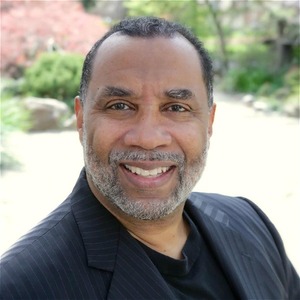
I want to ask you to realize that in your life, God is up to more than you think He is. I want to ask you to realize that God has given you a calling that will sometimes challenge your prejudices and your presuppositions. And you and I have to be prepared for that. Peter learned it, the Apostle Paul learned it, and Pastor Paul Shepard learned it too. Whatever you think God is doing, He's doing a whole lot more than that.
Hello, and thanks for stopping by for today's Destined for Victory. Always a pleasure to have you with us. When a church is at its best, it's a serving church, a courageous church, and a growing church. And in order to grow, sometimes you've got to change. Today's message is straight ahead, so please stay tuned.
But just in case your schedule won't allow it, remember you can listen to any of our recent messages on demand at our website, pastorpaul.net. That's pastorpaul.net.
Now, let's get started with today's Destined for Victory message when growth requires change. But then, as we continued to grow very slowly in those early years, God kept sending people. And he kept diversifying the group so that six years later, by my seventh anniversary, the church had about 250 members, and a full 20% of them were non-black. And it was already very unusual even in those years.
Somewhere in that process, I don't remember exactly when, but somewhere in that process, I realized God is doing something here. I'm slow, but I'll get there. Get down. I realize God's up to something here. I don't know what He's doing.
I've never seen it happen in any of the ministries I'm personally familiar with, and God didn't ask me what I thought about it. And so it dawned on me: God's at work.
Now you can either impose what you want or what you think on it. Which means you'll miss his move. Or you can celebrate what he's already doing. And I learned to do the latter. I learned to say, Lord, this is you.
I want to be where you are, so I'm going with this. And when we learned to welcome and celebrate what God was doing, he started doing it more. And as he grew the church, then he said, I'm going to show you not only racial diversity, let me show you a little bit of socioeconomic diversity.
So some folk were very poor, and then he started bringing in a couple of wealthy folk. And he brought in people with high-class educations and master's degrees and PhDs and people with really intimidating resumes. I mean, I'm telling you, we got some members here who's just, their resume is just frightening. It's just so, like. Good Lord, have mercy.
These people are heavy, man. And he brought him into the fellowship, put him right in the fellowship with some people who are undereducated. Who have gone through poor school systems or who dropped out or whatever, but He has saved them by His grace. And God brought them in, and he said, Now, when I bring them, don't act like one group's important and the other one's unimportant. In fact, what he's hardest to do over the years is to ignore people who are important in the world.
so that we can celebrate people who don't get much attention in the world. And you know, that concept is taught in 1 Corinthians 12. Paul said that we give honor. To those parts of the body, even your physical body, he says you take special care of those parts of your body that are modest, that need modesty. The conspicuous parts you don't have to take special care of.
But he says sometimes you've got to go find those little members and insignificant members and give them more treatment. And I discovered God was in that. And he started bringing people who were very important in the world, but they didn't even ask to be important in the church. Every now and then somebody does, but for the most part, he was sending people who didn't even ask to be recognized. And the few who asked, we told them: no, no, we don't do that here.
If you want your money to buy you special treatment, you've got to go down somewhere else. Because this is God's house. This is God's house. You don't throw money around in God's house and think it buys you something. If you give here, you ought to give because God's been good to you, and to whom much has given, much is required.
And so he started doing that. And I'd see him bringing people. And so I can look out in a lot of services and see a doctor or a high-powered attorney or a corporate CEO standing to somebody who just got out of jail for some common street crime. But God saved them while they were in jail. And they've come into the fellowship, and now they are full-fledged members of the body of Christ.
And God was doing all of that, and we had to learn to celebrate what He was already doing. Because Ian asked us what we thought. He says, my church. Church belongs to Jesus. And we'll be better off when we give him his church back.
When we stop imposing our rules and our regulations and our traditions. But nah, that's all the good shouting part. Oh, thank God, isn't that wonderful?
Now let's get down to the business. That kind of growth. And that kind of change can be challenging. Because it moves us out of our comfort zones. It forces us to deal with things we never had to deal with before.
We have people say, I never knew I was prejudiced. Until God sent me to a church where there were people who were unlike me. Because I never got close enough to people. who were unlike me enough for them to push my buttons.
Now that my buttons are being pushed, I realize I have some work to do here. I have some old attitudes. I have some old opinions that need to be worked through. Look at what happened here with Peter. God is setting him up.
Now the next thing that happened with Peter is when these Gentiles get to the house, Peter has never broken bread with a Gentile in his life. He has never darkened the doorstep of a Gentile in his life. In fact, it wouldn't be uncommon for him to not have said many words at all. to a Gentile in his life. If you have to cross them somewhere in some setting, you would just speak as quickly as you can and get away.
And so now you got Gentiles downstairs knocking on the door. Asking for Peter. And God, rather than to leave Peter to respond in his customary way, God said now Peter they're down there asking for you He said, I want you to go. with them. to the house that they're going to take you to.
Full of Gentiles. And I'll tell you what to say when you get there. That's challenging, man. God tells you to go. Into territory that not only haven't you been to, but you have been prejudiced against.
See, it can be challenging. God will expose our prejudices and our presuppositions in the course of changing our lives. There are some things we assume, and those are our assumptions, but God says it's not necessarily so just because you think it. And so God tells him, I want you to go.
Well, the Bible says the next day they go on a journey. And when Peter gets there, I love what happens. When Peter gets there, they greet him. They're very warm and welcoming to him. In fact, the Bible says that Cornelius falls at his feet in reverence.
Look at the heart of this Gentile. He's a man who he could be proud and stubborn because he's a big shot Gentile. And he knows that the Jews despise Gentiles. And he could have had a very proud attitude. He could have said, Well, you know, that here I am.
You are in my house now. This is my house. And in my house, I'm the king. Could have taken that attitude. Cornelius only wants to be in the move of God.
And so he doesn't mind humbling himself. And perhaps Cornelius is thinking, well, Peter's a Jew, he's an outstanding man in this new church that's broken out in Jerusalem, and so let me give him honor. And the Bible says he falls at his feet. in reverence. That's humility.
Has God ever asked you to humble yourself? When nothing in you made you want to go low. When you wanted to fight, you wanted to stand for your rights, you wanted to get people straight, you wanted to get them told, wait just one minute, hold on. But look at Cornelius. He falls at his feet in reverence.
And Peter makes him get up. Peter said, stand up. I'm only a man myself. And then they go inside, there's a large gathering of people. And Peter begins to talk.
And says, you're aware that it's against our law for a Jew to associate with a Gentile or visit him, but God has shown me that I shouldn't call any man impure or unclean.
So when I was sent for, I came without raising any objection. May I ask why you sent for me? Cornelius responds and tells him the story of the visitation he received. And he said, So we're all here in the presence of God to listen to everything the Lord has commanded you to tell us. House full of Gentiles standing there.
God sent you here. Go ahead, talk.
Sometimes God Doesn't tell you what you need to know till you need to know it. And Peter opens his mouth. And then the anointing hits, and he begins to say, Well, I now perceive that God is no respecter of persons. I now realize that my assumptions were very raw. I thought God would only save the Jewish community.
But now I see God's doing something bigger than I could have imagined. I want to ask you to realize that in your life, God is up to more than you think He is. I want to ask you to realize that God has given you a calling that will sometimes challenge your prejudices and your presuppositions. And you and I have to be prepared for that. We have to be prepared to say, just because it is my personal view, doesn't mean everyone shares it.
And so you've got to learn to do a couple of things. You have to learn to become what I call a world-class Christian. Still ahead, the second half of today's Destined for Victory message, featuring the teaching ministry of Pastor Paul Shepard. If you haven't already, don't forget to download our free mobile app. Search Destined for Victory at the App Store so that you can listen to Destined for Victory wherever you go.
You can also visit pastorpaul.net for more details or find out how you can listen on your favorite digital platform. God asked the early church to make a few changes. He once asked Pastor Paul to make a few as well.
Now, let's get you back to the rest of today's Destined for Victory message: when growth requires change. You have to learn to realize that there are persons who love God just like you, but in many other ways, there are a lot of differences. In their lives. For instance, some churches fight over worship styles. Worship styles.
And there's some people who only want traditional music. That's all they want. Don't you bring those courses in here. Give me the old hymns. If it's not in a hymn book, I don't want it.
And that's the way some folks are. And so, some churches accommodate that by they'll have a traditional service and they'll have a contemporary service.
So, if you want the pipe organ and the robe choir and all that, you show up at 8 o'clock or whatever the time is. And then, if you want the guitars and all of that, then you show up at 11. And that's fine. Style-specific worship is fine. If that's the way a certain church needs to do it, they should go on and do it.
I'm not passing judgment in the least. But what I'm seeing God do in my own ministry is to challenge people to learn to accept what He is doing and to establish values that go beyond your comfort zone. And so, in our church, we have blended worship style. What that simply means is, some of the songs are contemporary, and some of them are older hymns. And we challenge people, don't try to pick out a service with stuff you like in it.
You'll never grow spiritually and emotionally if you keep trying to be picky. This is what I want. No, no, I don't sing those kind of songs.
So we teach our older people. By the way we practice worship here. That you should learn, in addition to loving those great old hymns that many of us cut our spiritual teeth on, you should learn to be blessed by many of these courses that are being written today by modern psalmists who are in God's presence and writing wonderful songs.
Some of these courses that have been written over the past 20, 30 years, some of them more recently are wonderful. Lord, I lift your name on high. That's a great chorus. That's full of worship. Shout to the Lord.
Wonderful. And I will bless you, Lord. All of these songs are wonderful. They're not in a hymn book, but they'll lead you into the presence of God. But you have to be open enough.
To say, Lord, I'll go that way. And then the younger generation, we've got to learn that we have a real big flaw. Our tendency as younger people, baby boomers and younger, our tendency in all of our life is to throw away things because they're old. You gotta watch it. It's a tendency in our generation.
And when it comes to the things of God, it's a grave mistake. What we have to learn is that some of the most valuable things are things that have stood the test of time. including songs. You don't throw away hymn books because, well, modern people won't sing them. Teach them to sing them.
Don't cave into their presuppositions and their prejudices. Teach them that there's wonderful stories and there's wonderful worship behind many of those songs. Why in the world would we throw away amazing grace? Why in the world would you throw away what a friend we have in Jesus? Why in the world would you throw away and can it be or the church is one foundation or how firm a foundation?
Why would you throw away an old song like Be Thou My Vision that was sung as early as the eighth century? When the church was in catacombs. They were singing, Be Thou My Vision. And we have to learn, you don't throw something away because it's old. The fact that it stood the test of time may tell you how valuable it really is.
But we have to discipline our minds. to think that not everything needs a beat. You don't get the boogie all the time.
Now, if you like it, if you hang around long enough, some boogie ought to come down the road. But no, you got to learn to worship God sometimes that you get beyond your feelings and you move into the experience that someone else wrote about. And we have to discipline ourselves to do that.
Song like It Is Well With My Soul.
Some younger folks say, Oh, that's so boring. Do you understand? It is well with my soul, was written by a gentleman when those words first came to him. He was on a ship. Passing by the place in the ocean where his wife and his children had died as a ship they were on sank.
And they had met a watery grave, and he took a voyage to mark the spot where his family died. And as he stood on the deck and was told by the voyagers, here is the place where that ship went down, where your family lost their lives. As tears streamed down his face, these words came to his mind: when peace like a river attendeth my way. When sorrows like sea billows roll. Whatever my lot thou hast taught me to say, it is well.
It is well with my soul. God taught him in the crucible of his trouble that your soul is anchored in me. You're sorrowful now, but I've got you steady. I'm gonna finish the work I started in you, and you lost your family, but you haven't lost your relationship with me. It is well with your soul.
Let me tell you something, folks. We should never throw away music like that. And so what God will do is just teach you to broaden your horizons and your perspective. And I'm learning that. I was speaking at a conference and they had a guest lady.
She was going to be the soloist before the speaking. And I saw her. She was sitting on the platform, a nice, attractive black woman. And I said, okay, oh, cool. We're going to get a little soul music before I preach.
Because I saw her color and assumed, you know, she must be a nice little soulful gospel artist. Gonna give us a little RB gospel actions. I said, okay, we're gonna boogie a little bit before I preach. Man, she got up there. They struck up the music, and it was country music.
And I couldn't believe it. And she could sing it too. And I said, there you go with your presuppositions. You assume that you knew how she would sound by what she looked like. But straight out of Nashville, that sister was singing the praise God.
And we have to learn to experience Him beyond our comfort zone. Stop having that consumer mentality that everything has to suit me. Instead, learn to adjust your comfort zone to say, whatever God is blessing, I'm going to get in on it. And I'm learning that. I've learned that over the years.
And we're learning that as a ministry. When we said we want to reach people for Christ, then we had to challenge some of our presuppositions. One of them was you dress up to come to church.
Now, to be sure, that's a wonderful tradition, but now we're ministering to a generation of people who, for the most part, are unchurched. And if we're going to reach them, we have to decide that the Bible doesn't say thou must wear thy best clothing to church. We gotta just make that decision. That it's okay to dress up. Many of us are used to that and comfortable with that, and that's fine.
But don't make it an unspoken dress code. Do you know churches have unspoken dress codes? It's not written anywhere, but if you violate it, you'll know. Cause they will look at you all kinds of funny. Because you didn't come in here looking right.
And when we were a small church, when we had about 40 people, we had a meeting and we talked about it. We said, if we're going to reach folks, I was back when I thought they were coming, quick. I said, we're going to reach them. We got to get ready. And these people don't have church clothes.
And one of the common reasons why some people don't want to visit church is they say, I don't have anything to wear. And so we said, we want to be able to say to them, No, no, you can dress casually and come to our services. And so a bunch of us, all of us with suits and ties on. And the ladies with nice pretty dresses, we sat in a meeting. In 1989, and said, let's change the dress culture of our church.
Let's make it okay for you to either dress up, but also to dress down. I said, all I need y'all to do is do me a favor, make sure you're clean. Don't take dress down too literally now. Don't just roll out of bed. You know grab a couple of locks of hair and come on to church.
No, no. Let's be clean. I said, the other thing is, be modest. And we still have to repeat that even in these days, especially when the weather starts breaking, getting warmer. Let people know.
Now you're free to dress casual, but now when we come to church, we come to see Jesus. We're here to see Jesus. He's the one we're looking for.
So do us a favor, make sure we don't see too much of you. We want to see Jesus. I'm preaching some of these folks out of the world. We're trying to get them sanctified, but you got to work with me now. Work with me, some of them aren't quite there yet.
And if you show up showing too much of you, you'll take their mind and their eyes off of Jesus. Trying to train these brothers. Look at the words of the song, worship God. Trying to train them, worship God. When the lyrics go away, look at the pastor.
Just worship God. Just stay focused.
Some of them aren't there yet.
So you got to help them along. But with those things in place, we said, let's make the changes. Because we want to reach people and we don't want anything to be a barrier. We want to have the privilege of sharing with them that God loves them. And so we changed our comfort zone.
We redefined our comfort zone. And I found out I could still be anointed without a tie on. I didn't know it until I tried it. Yeah. Because all I had ever preached was with ties.
In fact, I used to preach with robes on. And so I thought I was doing good when I dropped my robe and was just preaching in my suit and my shirt and my tie. Looking all GQ and stuff. And I began, along with the other saints, to come sometimes casually to church. And we found out.
That God was still in the midst of it, that He wasn't displeased. He didn't lift His present because we weren't dressed right. See what I mean? But we had to challenge our presuppositions. And every now and then we still have folk, you know, those tradition-bound folks stop by and say, it's a shame.
Look at the way these people look. But we had to know what we're doing is pleasing to God, and that it's helping us to reach the people He sent us to reach. And that it's okay to redefine your comfort zone in order to do his will. And just like he's doing in the church. Broadly, he's doing it in our lives individually.
And God will teach you. to be open, and you'll discover that when you move with God, You will find that he has some things. In fact, there's a scripture that says, eye hasn't seen, ear hasn't heard. nor has it entered into your heart. what God has prepared for you.
If you will learn to love him and be open to what he's doing.
So glad you stopped by for today's Destined for Victory message when growth requires change. If you joined us late, or if you want to hear the full message one more time, stop by pastorpaul.net. That's pastorpaul.net.
You know, one of the reasons Jesus sets us free from bondage is so that we can go out and help others find that same freedom in Christ. And it takes all of us working together to reach the world with the gospel. Today we're inviting you to help us do just that through Destined for Victory. When you choose to invest, we have a great thank you gift to share with you. It's our latest booklet, Clothed in Love: 7 Gifts for the Ones Who Matter Most.
In this message, drawn from Colossians 3, verses 12 through 15, Pastor Paul Shepard challenges us to direct our best selves towards the ones who matter most. As you learn about the seven powerful virtues-compassion, kindness, humility, gentleness, patience, forbearance, and forgiveness, you'll discover what it truly means to honor your mother and how giving these gifts can transform your most important relationships. That's clothed in love, seven gifts for the ones who matter most, are gifted to you today by request for your generous gift to Destined for Victory. Give that gift by phone by calling 855-339-5500. That's 855-339-50500.
Or visit Pastor Paul dot net to make a safe and secure donation online. You can also mail your gift to Destined for Victory, Post Office Box 1767, Fremont, California, 94538. You need to thank God, not only for the folk who always make you feel so very wonderful about yourself, you need to thank God for the people who love you enough to tell you the truth. Who will tell you some things that are uncomfortable to hear. but they have your best interests at heart.
That's next time in our Destined for Victory message when growth requires change. Until then, though, remember. He who began a good work in you will bring it to completion. In Christ, you are destined for victory.