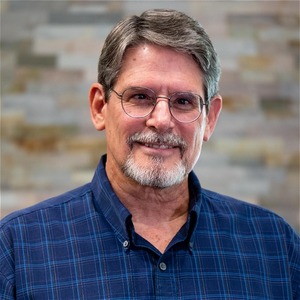
Welcome to Delight in Grace, the teaching ministry of Rich Powell, Pastor of Grace Bible Church in Winston-Salem. CS Lewis said, The Christian does not think God will love us because we're good, but that God will make us good because He loves us. See, goodness is a natural outflow of a life of faith in Christ. A life surrendered to Him will be a life that leaves footprints to help others move toward the Lord. We're continuing through Psalm 37 in this series titled Living by Faith, and in today's message, Pastor Rich focuses on how goodness is branded into the life of God's people. Let's listen in. This is part three of a message that was first preached on March 17th, 2019 at Grace Bible Church in Winston-Salem.
If you'd like to hear more messages from this series, you can visit www.delightingrace.com. The family was shattered emotionally, physically and spiritually. They were moved to a safe house for a year with help from Voice of the Martyrs and with discipleship from Colombian believers and pastors, the family was ready to move on. Liliana had been touched by a missionary to Palestine, and God provided healing. And she said, and I quote, many things I could not do before because I was afraid, but there was a restoration in my relationship with God in seeking Him and communicating with Him.
It was arranged for her to study at a discipleship school in Chile to pursue her calling to missions to the Palestinian people. And she said, My life and my testimony are going to help people. Through faith, though her faith had been threatened to crumble beneath her feet after her father's murder, today Liliana stands firmly on the spiritual foundation he helped build.
God used these trials and setbacks to direct His purpose for her life. Though he fall, he shall not be cast headlong, for the Lord upholds him with His hand. That's a life of goodness, but that means you're following in the steps.
You have the right reference. Your desires are His desires, and you are intentionally taking the steps to follow in His steps, even if those steps are hard. You do that and you leave a legacy of goodness, a legacy of goodness. This is what the psalmist is telling us. I have not seen the righteous forsaken, verse 25. I have been young and now I'm old, yet I have not seen the righteous forsaken, nor his children begging for bread. Listen to this. No one, no one who has built his life upon God has ever said, Well, that didn't work.
That doesn't happen. If you feel like you are on the precipice of abandoning God and saying that didn't work, it only means one thing. It means you don't know God. You need to get to know Him. You need to build your life upon Him. And God also is not like us in that He does not use us and then abandon us. You are an instrument in His hands.
He's like, Okay, I'm done with Him. Now I'm going to go on to something else. He does not abandon His own. David said, The Lord is my shepherd. I shall what? Not want.
I will not be in lack. We have a great cloud of witnesses in Hebrews chapter 11. Those who have gone on before us and not mentioned and there is also the apostles and all the martyrs of church history, because Hebrews was written after that.
I mean, before that. So we have this great cloud of witnesses that's gone on before us that says, You know what? Yes, life is hard. You will experience adversity. Did not Deontay say the same thing to us? My life has been harder since coming to Christ, but it's what? You remember what he said?
It's worth it. That's the great cloud of witnesses. Ravi Zacharias, in speaking at the dedication of his new training center down in Atlanta, was recounting how so many times he's gone to very, very dangerous for 40 years. He's been traveling sometimes to very, very dangerous places. And his wife set up an appointment one time for him to go to a very dangerous place. And he's like, Honey, you I really don't want to go here.
And his wife's response to him was, God will protect you until he wants you back home. Do you believe that? Yeah, but I don't want to go home. I said it, didn't I? That's what you're thinking. I'm sorry.
I'm sorry you feel that way. Because all the time in my growing up when I went camping, that's all we were doing is just camping. It was a temporary stay. But you know what?
I really looked forward to getting back home. Do you know dad? Do you know dad to where you desire to be with him? Because you know what? The Lord will protect us until he wants us back home. And then what? Where are you?
You're home with dad. I hope you know God that way. It's very, very difficult to make sense of this journey if you don't know God that way. I feel a lot of American Christians are struggling with that because we're so cushioned by our prosperity. But we can leave a legacy of goodness. And it's important that we do this and we as we walk the steps, the faithful steps that the Lord has left for us, and then we leave footprints for others to follow. And in that way, we pass on the baton of faith. We pass the baton of trusting in God's goodness, intentionally trusting God's goodness.
His children know the one who sustains and they don't go looking for other sources of satisfaction. That's the legacy of goodness, of trusting in God's goodness. And it says of the righteous man that he is ever lending. He is ever lending generously.
Isn't that an interesting thing to say? In other words, the entrusted resources that I have as a righteous man, the entrusted resources are a benefit to others. God doesn't entrust stuff to you just so you can hoard them for your own pleasure. God, whatever stuff God has given to you is for the benefit of others, for your enjoyment and the benefit of others to his glory. And so the entrusted resources are a generous benefit to others.
They're a helping tool. And the reason why he says lend, he lends generously is because he's not just giving a handout. Giving a handout to people is never really a help to them, but you give them means as a catalyst to improve, a stimulus to further goodness. And then it says of the righteous man, his children become a blessing. His children become a blessing. When you pass the baton of living in the outflow of God's goodness and living in line with God's character and purpose, you leave a legacy of goodness. There's an example of that right here in North Carolina, the Braswell family farm in Nashville, North Carolina.
It's down near Rocky Mount. Terry Braswell is the fourth generation president of this major egg and feed producing farm. He says, and I quote, we seek to honor God and glorify him in the way we run this business and how we take care of our people. We are building upon the foundations laid by the generations before us. A sign sizable portion of the 230 employees, the Braswell family farm have worked there for 20 years or more.
It means they take care of their people. John Watson is the vice president of the farm. He says it's all about our core values. This company was founded 75 years ago as God's business and we are stewards of his business. How we conduct the business to be God's stewards has transitioned through four generations and it's stronger with each shift. Longtime employees share stories about how the company has developed over the years and yet maintains an unwavering commitment to the values of family, accountability, integrity, teamwork and humility, leaving a legacy of goodness. Work is mission.
Work is a form of worship if we are following in the Lord's steps, if we desire the things that he desires. So what does David tell us here? Verse 27, turn away from evil and do good. Turn away from evil and do good. So shall you dwell forever. There's the legacy.
There's the promise. That is wisdom. That is how you leave a legacy of goodness, by turning away. Why does he say turn away from evil? We can only do so by the grace of God. Because evil is man's natural inclination to drift away from God and that's why, listen to what he's saying, we need to intentionally turn away from drifting away from God. And we can only do so by the power of God and the grace of God as he gives us his word, as he gives us his self-disclosure and his spirit. That is the only way that we can intentionally turn away from drifting away from God. Turn away from evil and do good. So shall you dwell forever. God is good and his ways are good and I am a part of his story.
He is the main character of my life. And James says, I will show you my faith by my works. Listen, you can say you have faith till you're blue in the face, but no one will believe you if your steps are not consistent with the one you purport to follow. Jesus said, let your light shine before men that they may see your good works and glorify, not you, glorify your father who is in heaven. You see the steps that you take are established their legacy.
Why? Because they point people to God. That's a life of goodness and that's what leaves a legacy of goodness. So we come across at the end to the last two verses of this paragraph today are reoccurring themes that we find throughout the psalm on the study of living by faith.
And the first one is this. There is a future for those who trust and walk with God. There is a future for those who trust and walk with God. The Lord does not forsake his saints. They are preserved forever.
They are the ones who inherit the land and will dwell there forever. The Lord is my portion. He is my secure plot of ground for my satisfaction.
That's why I'm walking in his steps and towards him. This is a good life and that is a legacy of goodness. The second point is this. There is only despair for those who counter God. There is only despair for those who counter God. No good, meaningful or lasting legacy is there for those who actively counter God or passively marginalize God. Listen to me. It is not worth it to marginalize God. It's not worth it.
So don't do it. As the auntie said this morning, coming to church, do you know why you come here? Do you have a walk with God outside of here? Or is this just a habit?
Is this just a hobby? We do it because that's what Christians are supposed to do. If that's the only answer that you can give, then I challenge you to really research that and understand why is it that we do this? How do I live a life of goodness and leave a legacy of goodness only by God's grace? By answering those initial three questions. Do I have a good reference? Am I following Jesus Christ? Are my desires his desires?
And secondly, am I actually taking those steps intentionally even if those steps are hard? God is good and everything he does is good. That's why I close with this verse from Titus 3 that was read earlier, Titus 3. I want you to insist on these things so that those who have believed in God may be careful to devote themselves to good works.
These things are excellent and profitable for people. This is a life of faith. This is living by faith. It is a life and legacy of goodness. This is what the church is. This is what the church is called to. This is why I believe that when the church is the church, she is beautiful.
She is called the bride of Christ and she is intended to be attractive. Listen folks, let's do this. Let's be attractive. Let's follow in the Lord's steps. Let's make his desires our desires and let's intentionally take those steps even if those steps are hard and let's leave that legacy. As we live a life of goodness, we will leave that legacy of goodness and point people to God. You've been listening to Rich Powell, the lead pastor at Grace Bible Church in Winston-Salem. The Delight in Grace mission is to help you know that God designed you to realize your highest good and your deepest satisfaction in him, the one who is infinitely good. We hope you'll join us again on weekdays at 10 a.m.