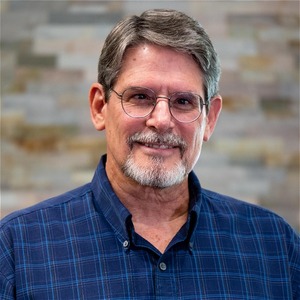
Welcome to Delight in Grace, the teaching ministry of Rich Powell, pastor of Grace Bible Church in Winston Salem. In this Western world we're living in, we may find ourselves ever so busy with achievement and abundance. That perhaps spiritual apathy has crept in. In a Baylor University study, 44 percent of respondents said they spend no time seeking eternal wisdom. From the ancient city of Babylon, a pagan king begs us to awake.
Nebuchadnezzar speaks of his own wake-up call, one he experienced when he was at ease in his house, prospering in his palace. Let's listen to this message from Daniel four one through seven. The title of today's message is "Good to Declare." Those are Nebuchadnezzar's words. The theme of this book is the Most High rules in the kingdom of men. It is in this chapter, particularly, where Nebuchadnezzar comes to grips with that statement.
With that theme of this book, what we have in Daniel chapter four is a record of scripture, a chapter of scripture written, authored, if you will, under the supervision of the Babylonian king. He's got something to tell God. The benevolent sovereign did something to get my attention," says Nebuchadnezzar. "Let me tell you about it." According to Amazon, the most highlighted passage in all books read on Kindle. This was as of November two thousand fourteen, and this passage is highlighted almost twice as often as any other passage.
is from the second volume of the Hunger Games, and it's this. Because sometimes things happen to people, and they're not equipped. To deal with them, sometimes things happen to people and they're not equipped to deal with them. In this chapter, something happens to Nebuchadnezzar. We need to learn from this chapter.
We need to proclaim this chapter because the message is clear in this and that is that the Most High rules in the kingdom of men. We are not masters of our destiny, but that is very. Much against the grain of what many people think today, on this text here, University Professor Mark Shifman comments, saying, "This it's easy to see why The Hunger Games is the novel of a generation. Adolescence, rigorously trained by adults for desperate but meaningless life or death competitions, resonates with students who worry that they're all honed up with no." Place to go. They rack up majors, minors, certificates, credentials, and internships to keep them in the running for what they feel to be an ever more elusive success.
They're driven by fear. They clothe themselves in an armor of achievement that they hope will protect them against uncertainties of the job market, of course, but also deeper uncertainties about their status, their identities, their self-worth. They are trying to gain more control over an uncertain future.
Sometimes things happen to people and they're not equipped to deal with them. The Bible gives us a glimpse of what is to come. The Bible also informs us how to be equipped to deal with what is to come. We have that to learn from Nebuchadnezzar this morning. I want to begin here at verse four, because this is chronologically this is what's going on.
Verse four: I, Nebuchadnezzar, was at rest in my house and flourishing in my palace. Doesn't that sound nice? At rest in my house and flourishing in my palace.
Now you know he was an extremely wealthy man. Had all the power he wanted, he could do whatever he wanted. And this idea of flourishing in my palace, Walverd says the word flourishing is the idea to be green.
So it's the idea of a tree just flourishing, like we're really looking forward to when spring finally comes, you know, and the leaves come on the trees, and and the flowers and the leaves and everything turns green. It's that idea of. Flourishing, Nebuchadnezzar says, "I was flourishing in my palace." It's the context of security and prosperity, surrounded by monuments of his wealth and power.
Now. All the wars are in the past. His conquests, as his vast domain has been made secure, Nebuchadnezzar was fulfilling his heart's desire by making Babylon one of the most fabulous cities in the ancient world, and indeed, the evidence is there that it was. Nebuchadnezzar was living a luxuriant life. He was content.
He was at ease. And if we could say one thing about Nebuchadnezzar at this time in his life, what he's telling us in verse four is this: Nebuchadnezzar was at home, and he was like this. Life is good. Life is good. What more could I want?
Life is good. I'm okay. Everything's good. You know that's not necessarily a good thing. It is my contention, as it is that of many others, that the American dream is often a common inhibitor to faith.
Because we're looking for the good life, and we think we can achieve the good life, but the problem is the good life is measured by stuff, and this is what Nebuchadnezzar was experiencing. We are looking for just. The normal life where I have everything, I'm content. Everything's okay. I'm not really at risk about anything.
I'm not in danger about anything. Life goes on. I have solid, meaningful routines. Life is good. In my challenge this morning, as it was for Nebuchadnezzar, is be careful.
When you get to the point where you think you are just satisfied with life and life is good, you've arrived at what life ought to be. Expectations have been met. We have a tendency to forget ultimate questions, ultimate issues. C.S. Lewis said, "Christianity, if false, is of no importance, and if true, is of infinite importance.
The one thing it cannot be is moderately important. And yet, for how many is Christianity or faith just?" Something else that they can, another trophy that they can put on the shelf and say, "Okay, I have this in my life, therefore I have a well-balanced life." Chuck Colson relates the following story about his hometown of Naples, Florida, and this is in Eric Metaxas's book, Socrates in the City. Naples is what he calls one of the garden spots of the world, which is what ancient Babylon was to a large degree. Chuck Colson says it's an absolute nirvana for all golfers, and they all come there. They're all CEOs of major corporations, and they retire to Naples.
And this is it: twenty-seven golf courses and miles of sparkling beach and the best country clubs. I watch these guys; they're powerful people. They have this New York look on their face. They're determined. But now, all of a sudden, they start measuring their lives by how many golf games they can get in.
I often say to them, "Do you really want to live your life counting up the number of times you chase that little white ball around those greens?" And they kind of chuckle, but it's a nervous chuckle because in six months they've realized how banal their lives are. And they've got beautiful homes, castles, and when they get bored with that, they build a bigger castle, and they're miserable. The object of life is not what we think it is, which is to achieve money, power, pleasure. That's not the holy grail. The object of life is the maturing of the soul.
There is a, an article in USA Today. That analyzed a surge in a group of Americans called the spiritually apathetic. Spiritually apathetic—they're not atheists. Instead, according to the article, they simply shrug off God, religion, heaven, or the ever-trendy search for meaning or purpose. Their attitude could be summed up as "So what." I'm good.
Life is good. What do I need God for? We've got our secure routines. Don't need God. They're flourishing in their palaces.
The article pointed out the following statistics from recent surveys: 44% of respondents told a Baylor University study that they spend no time seeking eternal wisdom, and 19% said it's useless to search for meaning. 46% of respondents to a Lifeway research that they never wonder if they will go to heaven. I'm good. One professor concluded, "The real dirty secret of really religiosity in America is that there are so many people for whom spiritual interests, thinking about ultimate questions, is minimal. Thinking about ultimate questions is minimal.
Why? Because life is good. We're prosperous. We're okay." We are so cushioned with the comforts and the securities of life here that we're not even thinking about what comes next. We just push it aside.
We're flourishing in our palaces, and we're not answering ultimate questions. But the one thing Christianity cannot be is moderately important. Jesus recorded in Luke 12. It was the rich fool who said, "I will say to my soul, 'Soul, you have ample goods laid up for many years. Relax, eat, drink, be merry.'" And what did God say to him next?
"You fool! This night your soul." Will be required of you. You see, this rich man was flourishing in his palace. It's not the riches that were the problem. The problem was he was looking to them for his meaning, his comfort, and his security, and they can't provide that.
And so, when we look to those things, and when we're flourishing in our palaces, we don't think of God. We don't recognize our desperate need for the infinite, benevolent sovereign who made us for Himself. Nebuchadnezzar is going to learn this in this chapter, because what he describes next becomes a significant wake-up call. A wake-up call. What he says in verse five, as he was flourishing in his palace at ease, he said, "Verse five, I saw a dream which made me afraid, and the thoughts on my bed and the visions of my head troubled me." He went from flourishing to fear.
He moved from abundance to alarm. All of a sudden, things aren't okay.
Something woke him up that alarmed him. I'm not sure things are right, and here's the problem: that we find out the wisdom that he usually relied on failed. They couldn't give him an answer to this. They couldn't give him an answer at all, because he was looking for reason without revelation. Reason without revelation is at best limited; more often than not, flawed.
And there are many today who will say that science is the only means by which we can arrive at truth. And this chapter will inform us that science is not, and cannot be, the exclusive means to truth. Not even close. Reason without revelation will fail us, as it failed Nebuchadnezzar in this case, and that's what you have in verses, in verses seven, in verses six and seven. He issued a decree to bring all the magicians, Chaldeans, astrologers.
They could not make known to the king its interpretation. I've heard this said to me. It was Chad Walsh who said the true function of a preacher is to disturb the comfortable and to comfort the disturbed. Nebuchadnezzar said, "It's good to declare. It's good for me to declare this, because I was comfortable, and God had to disturb me." I was consumed and preoccupied with the here, the now, the me, and God had to disturb me.
Ralph Waldo Emerson says, "People wish to be settled. Only as far as they are unsettled is there any hope for them." Let's learn from that. That is a truth.
Now he's given us the beginning point of this story, but you know what's amazing about this? Chronologically, we've with this particular chapter in Nebuchadnezzar's life, we've begun with what he says he was at ease in his home, flourishing in his palace, and then he had this dream, and things fell apart for him mentally, emotionally. He's like he's living in alarm.
Now, how does this chapter begin? Because we've got something to learn from this chapter. He begins by getting right to the point. He begins this chapter before he starts recounting the tale. He begins by getting right to the point.
Verse one: Nebuchadnezzar, the king, to all peoples, nations, and languages that dwell in all the earth. His whole empire, the greatest empire in the ancient world at this particular time. Peace be multiplied to you. Verse two. I thought it good to declare the signs and wonders that the Most High God has worked for me.
Look at verse three. This is the point right here. How great are His signs and how mighty His wonders! His kingdom is an everlasting kingdom, and His dominion is from generation to generation. That's what he begins with.
That's his thesis. Before he goes on with the rest of the account in chapter four, he got right to the point. He starts with the point of reference, and so as he's getting right to the point, he begins by looking at God's power. The point of reference, of course, is God, and so he's looking at God's power, what God can do, and what He did, and what He did for me, what He did to me, what He did for me is in what He did to me. Nebuchadnezzar could identify with the psalmist who said, "It is good for me that I have been afflicted, because it was my wake-up call." Lest I become flourishing in my palace and ignore God.
We have a propensity to do that, you know. It was in Moab when when Moses was speaking to the children of Israel. This is a significant part of the book of Deuteronomy. Before Moses died, before the children of Israel crossed the Jordan River. Moses speaks to them, and he says, "You're going to go into this land that God is giving you.
You're going to live in houses you didn't build. You're going to reap from vineyards that you didn't plant. You are going to flourish because you are under God's blessing. Be careful. Be careful, lest you forget God.
Loved ones, listen to me." It is our natural propensity to forget God when we are prosperous, when we are at rest and flourishing in our palaces. That's why the Bible is full of calls to remember who God is and what God has done, and who we are. In that context, and so Nebuchadnezzar begins with God's power, and he says, "This is what God can do. It's what He has done, and it's what He has done to me." And he begins by mentioning great signs. Great signs.
These are large, great, meaning large, inescapable. You know, you travel the highway, the interstate system, and you have these massive green signs that tell you what's coming up next. And if you need to make a turn, this turn is coming up next. That's exactly what this is. Great signs, you can't miss them, and they're pointing you.
They're saying, "This is the way." And so the great signs that Nebuchadnezzar saw were just simply that inescapable pointers. God shows Himself. It is God's self-disclosure. The infinite sovereign of the universe communicates in self-disclosure, and He communicates to this ancient king. And that is the purpose of His work, and that's why we can confidently say God is like what God has done.
If there is a key value to the Old Testament, listen to this: it is this. God is like what God has done. Let's look at the Old Testament. What has God done? That shows us what God is like.
And so Nebuchadnezzar mentions great signs as a manifestation of God's power, and then after great signs, he mentions mighty wonders. Mighty wonders. These are miracles. Clearly, in Nebuchadnezzar's mind, these are works where God is overriding natural law. And these are mighty wonders.
They are strong and powerful. They are to Nebuchadnezzar. They are for Nebuchadnezzar. They are witnessed by Nebuchadnezzar. Great signs and mighty wonders.
And what does he learn from these? What is the point of these great signs and mighty wonders? It points out God's infinitude. He is infinite person. He is not only the living God; he is the Most High God, and there is nothing that can stand in His way.
He is the God who transcends space and time. He's not bound by them; otherwise, He would be ruled by the laws of nature. But He is not. And we see then that he recognizes the omnipotence of God. The omnipotence of God.
The Most High God has worked. After pointing out God's power, then he points to God's place. What do you mean by God's place? God's rightful place. How we need to look at him and recognize his place.
His place is the place of preeminence. His place is the place of worship. His place is the place that is highest. He is the most high. And he says in verse three, his kingdom is an everlasting kingdom.
This is his kingship; that he has the right, the authority to reign, to rule, like no other does, and above any other. That's why he is King of Kings and Lord of Lords. But it also it says it is an everlasting kingdom, which speaks to its perpetuity. It is His kingdom, past, present, and future. Before Nebuchadnezzar, there was God.
Before all the ancient kings, there was God. While Nebuchadnezzar, there is God. After Nebuchadnezzar, there will still be God, and it's still His kingdom. To everlasting kingdom. But then he mentions at the end of verse three, his dominion is from generation to generation, described as I just did.
Before, during, and after. We who are limited by space and time have to recognize that this God transcends all of that. And his dominion is from generation to generation. Speaks of his sovereignty.
Sovereignty being defined as he is free to do as he wants. He is free to do as he wants. He is limited and inhibited by nothing outside of himself. Time, space, man's will, man's power—none of that limits God. Nothing changes His will and His purpose.
Unlike Nebuchadnezzar, who thought himself sovereign, he is going to find out that he is answerable to a higher authority, and it is this one. Whose kingdom is an everlasting kingdom, and his dominion is from generation to generation. Not only Nebuchadnezzar, but also his imagined gods, which can do nothing. What does he learn from this? Man and his kingdoms come and go.
On the face of this earth, in our consciousness, in the presence, in the reality, among humanity, man and his kingdoms—they come and they go. But God is.
So what's the point? It is this. It is not that. As it was with Nebuchadnezzar and his gods, it is not that okay. Here I am in existence.
This is my life. I have a plan and a purpose. Let's see. I need to somehow make God a part of my plans. Doesn't work.
The fact that His dominion is from generation to generation means simply this: You are a part. Of his plan and his purpose, and by his revelation, by his self-disclosure, it is your privilege and responsibility to discover what part you have in his plan and his purpose. I think. One of the most powerful tactics of the adversary, in history and particularly in our prosperous cultures and societies, is simply to make ourselves think that we are the center of reality. And yes, there is God, and somehow, out of a sense of responsibility, I need to make Him a part of my life.
And many people are damned because they simply make God a part of their life. God says no, no. His dominion is from generation to generation. It is an everlasting kingdom. You are a part of His plan and His purpose.
Do you know what your part is? How do you fit into God's plan and God's purpose? Because it's all His dominion. He is the sovereign one. This is the living God who has revealed Himself, and this is Nebuchadnezzar's firsthand encounter with God and what God has done.
This is why he said, "It is good to declare." I thought it good to declare the signs and wonders that the Most High God has worked for me. Here, Nebuchadnezzar is the preacher. God did something to get my attention. C.S. Lewis wrote in *The Problem of Pain*.
He said this in in in how we sometimes approach the issue of God. He says, "What would really satisfy us would be a God who said, 'Of anything we happened to like doing, what does it matter?
So long as they are contented.' What, in fact?" What we want, in fact, not so much a father in heaven as a grandfather in heaven, a senile benevolence who, as they say, liked to see young people enjoying themselves, and whose plan for the universe was simply that it might be truly said at the end of each day, a good time was had by all. When we read God's self-disclosure, it becomes abundantly clear to us that's not the God who has created us and revealed Himself to us. Patrick Morley said very. Very well," he said. "The turning point in our lives, and this is true of Nebuchadnezzar.
The turning point in our lives is when we stop seeking the God we want, and start seeking the God who is. Do you see why it's important that Nebuchadnezzar began this chapter the way he did? He got right to the point. The God who is." Is the one who works signs and wonders, powerful and great. His is an everlasting kingdom.
His dominion is from generation to generation. It's all his. We fit into his plan, his purpose. Do I know where I fit? Do I know?
The direction I ought to be moving. The God who is the sovereign one, the Creator of all, the infinite Person, He has revealed that time and space is moving in a specific direction, and it is going to arrive. At the destination of his choosing. The question this morning is this: Are you equipped to deal with that? Are you equipped to deal with that?
At the end of chapter three, Nebuchadnezzar was not what he is confessing in chapter four. Is this is what God did to get my attention, to see that I was equipped to deal with something that God brought into my life. The God who is is the sovereign one, and the only appropriate response to sovereignty. Is surrender. That surrender will equip you to face what's coming.
Conclude this morning with a part of the prayer from Sir Francis Drake. Disturb us, O Lord. When, with the abundance of things we possess, we have lost our thirst for waters of life; having fallen in love with life, we have ceased to dream of eternity. May God challenge our hearts and our minds this morning through His self-disclosure to us. This message titled "Good to Declare" was first preached on March 1st, 2015, at Grace Bible Church in Winston Salem.
If you'd like to hear more from this series, you can tune in next Monday for the next message here at www.delightingrace.com. Find us on Spotify; it really helps out.