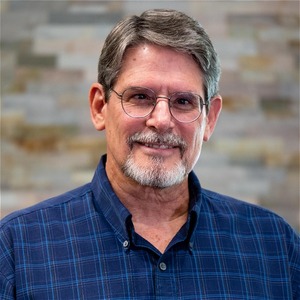
Welcome to Delight in Grace, the teaching ministry of Rich Powell, pastor of Grace Bible Church in Winston Salem. God creates man out of nothing; therefore, until a man is nothing, God can make nothing out of him. That's a quote from Martin Luther. In today's text, Daniel brings King Nebuchadnezzar a message from God. A warning that God will not allow His pride to continue.
See, Nebuchadnezzar had magnified himself, considering all his own accomplishments as proof of his greatness. But you don't have to be a king to live life for your own glory. After all, self preeminence is man's natural bent. This message from Daniel four nineteen through thirty three has anchoring truths for all of us. Let's listen in now.
Have your copy of the scriptures open for the exposition of God's word. The title of today's message is "A Humbled King." The theme of the book of Daniel: the Most High rules in the kingdom of men, and this now is the lesson that is going to be learned by this ancient emperor—very powerful, very wealthy emperor. And this is the lesson that he has to learn. He is now going to be a humbled king. He has had a dream.
Daniel is in his kingdom. Daniel is serving the king in his court. He's one of his upper cabinet members, and the king has had a dream, and all the wisdom that surrounds him is not able to provide him with the answer that he's looking for. But Daniel comes, and Nebuchadnezzar says, "Finally, someone who can give me truth." That is the role of God's people, is it not? And Daniel gives him the interpretation to the dream.
Now I want you to notice something because even though the king is going to be humbled, I want you to notice something here. It begins with kind of a, well, look what Daniel says. Then Daniel, whose name was Belteshazzar, was astonished for a time, and his thoughts troubled him. And the king had to bring it out of him. Nebuchadnezzar looked at Daniel.
Daniel, go ahead, tell me.
Something's troubling you, but please tell me what's going on. And Daniel said, end of verse 19, "My Lord, may the dream concern those who hate you, and its interpretation concerning your enemies." The first thing I want to point us to this morning is what I would call a paradox. Daniel, do you remember who Daniel is? He's a Hebrew. He is in exile.
Who brought him into exile? The very king before whom he stands.
Now, if you were in Daniel's shoes, your first response—if you knew this dream and you knew the interpretation of the dream and you knew what was going to happen to Nebuchadnezzar—you would have a tendency to respond, "How? You get him, Lord. He deserves this." Stick your finger in his eye. Daniel was troubled. This points us to a paradox, and because as we look at this, Daniel was genuinely troubled at the interpretation because of the implications for Nebuchadnezzar.
Let me use the term that C.S. Lewis used, and that's the two-edged character of God's people. This is the paradox: the two-edged character of God's people. As we are in this world, God's people in this world, the two-edged character is this: we are world-denying and world-affirming. World-denying, because Of the doctrine of the fall, we are world denying because, as John says, under the inspiration of the Holy Spirit, First John five nineteen, the whole world lies under the sway of the wicked one.
Though we know that we are of God, the whole world lies under the sway of the wicked one. We have different values. We march to a different drumbeat. We're also world-denying in the sense of what John says in First John two fifteen to seventeen. Love not the world or the things in the world.
The lust of the flesh, the lust of the eyes, and the pride of life. These things are not of the Father, but they are of the world. In other words, these are things the world represents that which is contrary to the character and the purpose of God. And we deny that because we are people of God. That which is the product of the fall, the brokenness of mankind, that which is contrary to God's character and purpose.
The world is the philosophy, the thinking of the world is inherently self-centered, and we, as God's people, are in the business of denying that. We're also world-denying in the sense of the understanding that we are not home. This is not home. We are temporary residents here. We're just passing through.
We don't belong here. We are passing through, and yet we have a job. We're ambassadors of that kingdom to which we belong, and therefore we have different values. We have different motives. We have a mission as we are passing through.
That's world denying, but the paradox is the two-edged character of God's people is we're not just world denying. Because if we were, then the world would look at us and just look at us as those people over there who really don't want anything to do with us. Christians, is that what we're called to? Absolutely not. Not only are we world denying, but we are also world affirming.
World affirming, Rich. What do you mean by that? Isn't that a contradiction? No, it's the paradox that we're talking about. We're world affirming in which in which way?
Well, it's based on the doctrines of creation and redemption. World affirming in the sense that Jesus taught in Matthew chapter five, verses forty four and forty five, he said, "This love your enemies, bless those who curse you, do good to those who hate you, and pray for those who spitefully use you and persecute you, that you may be sons of your Father in heaven." That's the character of God flowing through His people. Because we don't belong here, this is not our home, but we are passing through, and we have a mission. But also with the understanding that we identify with all people at the level of humanity, we are fellow image bearers of God, and therefore every human being. Based on that, deserves my respect, and and needs for me to show them the love of God.
That's world affirming. Paul was very clear on this as he writes to his young protege Titus. In Titus, in chapter two of Titus, chapter Titus chapter two, Jesus Christ, our Redeemer, He gave Himself for us that He might redeem us from every lawless deed. You see, that's not where the gospel ends. Jesus didn't come to just redeem us from every lawless deed, and now I'm saved, and now I'm a special person.
But where does it go on from there? And purify for Himself, His own special people, zealous for good works. That's world affirming, world denying, world affirming. He says this in chapter three, verse eight, Titus three eight. Those who have believed in God should be careful to maintain good works.
These things are good and profitable to men. Peter says that by doing good, we may put to silence the ignorance of foolish men. World denying and world affirming, we are ambassadors of God's character and purpose. As world deniers, we are contrary; we live contrary to that which contradicts God's character and purpose. But as world affirming, We represent that which is God's character.
We are ambassadors for God's character and purpose. God's creation is good. All that God made is good, and therefore we are called to be stewards of it, not owners, but stewards of it. And we offer respect and care for our fellow image bearers. That's world affirming.
We see that here in Daniel as he was genuinely troubled at the interpretation because of its implications on Nebuchadnezzar. I have been actually rather pleased in the last couple of weeks. Two Sundays ago, we were looking at verses eight and nine. The title of the message was Christians at work, and how we, as God's people, are a bridge. To friend, friends, relatives, associates, and neighbors, we are a bridge to them.
In the context of when a crisis touches their lives, we can be a bridge to them to the community of faith.
So that there's two ways, so that we can show the love of Christ, so that we can we can point them to the one who has answers when they reach the end of their resources. And I've been so in the in the numerous personal conversations I've had with so many people, people who are showing showing genuine Concern for their colleagues, or their neighbors, or their family who are going through a crisis, and they want to know how can I reach out to these people? How can I be a bridge to them? You see, that's world affirming, because we show genuine care and concern for our fellow image bearers. We know that we can introduce them somehow, show them the love of Christ, the one who gave Himself for them.
We are called to be a blessing to the community, which is why more and more we are wanting to encourage it and become a catalyst for those of you who have an idea. This is what I would love to do, and we want to say, "Then go for it, do it." And several others in the church bring them along with you and dive into this. There's a group that goes down to the rescue mission on the Friday nights, and they give snacks to the men. They teach the men. They fellow they they interact with the men and there's a group that visits people who don't get to come to church very much.
Julia Anx has started up a group and she's pulling along others with her. Jenna Penner has established the Sit Servants in Training and she's pulling others in with her. Things like that.
So many people that can be ministered to. Groups that minister in schools. Good news clubs, that kind of thing. You can minister to, let's say, teenage sons of unwed mothers, or single moms. All kinds of opportunities.
If you're passionate about ministry, dive into it. Go for it. We want to encourage you, and we might even be a catalyst for that ministry as we provide others that can come alongside you and with you in that ministry. Because we are called to be a blessing to the community. That's what the church is here for.
Because we are world denying and we are world affirming both. I look forward to seeing that develop. We're going to be seeing a lot more of that. Nevertheless, Daniel, even though he's troubled, he still has a job he has to do, doesn't he? He's got to give Nebuchadnezzar the interpretation of this dream.
It's not really what he wants to do, but you look at it. The next point is is pointing the finger. God's going to be pointing his finger right at Nebuchadnezzar. And say, Nebuchadnezzar, this is for you. The point of this is that this is God's revelation.
There's a definite meaning here. There's no ambiguity. This is God's revelation. Daniel is not offering his opinion here. Said Neb, this is for you.
Verse verse twenty, the tree that you saw, which grew and became strong. Verse twenty one, whose leaves were lovely and its fruit abundant. Verse twenty two, it is you, O King. It is you, O King. This is the identification.
You're the one, Nebuchadnezzar.
Now let's let's understand this very very clearly here.
Okay, Daniel presented this message. He did not do it arrogantly. He did not do it happily. He was obedient, yes, but he didn't do it like he was in Nebuchadnezzar's face, glad to give him the message. Daniel did it humbly, and he did it fearfully.
He did it reluctantly. He delivered the message reluctantly. Why? Is it because God is unjust and unfair? No, that's not it at all.
That's not why he was reluctant. He was reluctant to give the message because Nebuchadnezzar needed this level of confrontation. There might be some of us in here who might need similar levels of confrontation, if God knows that this is what it will take to get us to surrender to Him. To recognize him for who he is, but there's also the interpretation, and this is the pronouncement we find in verses 23 to 25. Verse 24.
This is the interpretation, Okey, and this is the decree of the Most High, which has come upon my Lord, the King. Because the proclamation was made, chop down the tree. He says, "This is the decree of the Most High. This is what God has said." And this is what's going to happen to you, Nebuchadnezzar, until you come to know that the Most High rules in the kingdom of men.
So Daniel gave him the interpretation, and we went through it last week. You know what the interpretation—what's going to happen to him, okay? But you get to verse 26. Not only was there a pronouncement, Nebuchadnezzar, this is you—you're going to be humbled in this way. But following that, there was a promise.
Verse twenty six, and inasmuch as they gave the command to leave the stump and the roots of the tree, your kingdom shall be assured to you after you come to know that heaven rules. You see, there's a promise attached to this. That stump will be left; it's going to grow back after you have come to know that heaven rules. You see, God knows the beginning from the end. Nebuchadnezzar would acknowledge.
That the Most High rules in the kingdom of men. After Daniel gives the interpretation, then he gives Nebuchadnezzar a plea. He pleads with him. Look at verse twenty-seven. With me, therefore, O King, let my advice be acceptable to you.
Break off your sins by being righteous, and your iniquities by showing mercy to the poor. Perhaps there may be a lengthening of your prosperity. As king. You know what we have here. We have the precise scalpel of correction versus the blunt axe of criticism.
That's what Daniel did. Listen to me, Christians. This is what Christians are called to do. Our authority is the truth, the clear truth of the Word of God. And what God's design and desire is, what His character and purpose is, let's use that as a precise scalpel of correction in presenting truth.
And let us not be guilty of using the blunt axe of criticism, even for those who are in authority over us, as we learn from the example of Daniel. Daniel spoke truth, and he had to speak truth to Nebuchadnezzar. But here's the important point: He spoke truth out of genuine concern for Nebuchadnezzar. God calls us to do the same. Do we speak truth just because it makes us win an argument, or elevates us, or brings us better security as a people?
No, we are to speak truth out of genuine concern for the person who is the recipient of truth. That's the power of truth. In that way, truth becomes very powerful. It is necessary to speak truth. Imagine going to the shop.
You take your car into the shop, get it back, and the mechanic says your car is in great shape. And later that day, the brakes quit on you, and you look, and underneath, there's there's no brake fluid under there. You go back to the shop, and you say, "Why didn't you tell me?" And the technician says, "Well, I didn't want you to feel bad." Plus, to be honest, I was afraid you might get upset with me if I told you the truth. Right? I want this to be a place where you feel loved and accepted.
Would you keep that mechanic? You think he's crazy? Or imagine going to the doctor's office for a checkup, and the doctor says, "You are magnificent physical specimen." Now, some of us would know right away that he's lying, right? You have the body of an Olympian, and later that day, while you're climbing the stairs, your heart about gives out on you, and you find later that your arteries are so clogged that you're like one jelly donut away from the grim reaper. You go back to the doctor and say, "Why didn't you tell me?" And the doctor says, "Well, I knew your body is worse in worse shape than the Pillsbury Doughboy, but if I tell you stuff like that, you know people get offended when I say stuff like that, and and I, it's bad for business.
They won't come back. I want you to feel loved and accepted. It's ridiculous, isn't it?" Listen. Speaking truth is a loving thing. If we don't speak truth, we love ourselves more.
But we speak truth out of genuine concern for the individual, regardless of how they might respond to it. That should be our message, even to those who are in authority over us. That we humbly speak to them the wisdom of God, helping them to understand that they need to follow God's design because their authority came from God. But let's make sure that it's not the blunt axe of criticism. Daniel did that to Nebuchadnezzar.
He spoke truth to him. He was obedient to his calling, as a world denier and a world affirmer. But we see then that the story continues, verse twenty-eight. All this came upon King Nebuchadnezzar at the end of twelve months, as he was walking the royal palace in Babylon. The king spoke, saying, "Is not this great Babylon that I have built for a royal dwelling by my mighty power and for the honor of my majesty?
Pride." Now, Daniel. Plead, pleaded with Nebuchadnezzar. Nebuchadnezzar, amend your ways, change your tactics, change how you rule this kingdom. You're oppressive to the poor. He says, if you do this, maybe God will give you some more time.
You know, it's really quite possible between verses 27 and 28 that Nebuchadnezzar actually did amend his ways. And maybe he changed a little bit how he ruled his kingdom. Maybe he wasn't so oppressive to the poor. He became more understanding that way. It's possible that could have happened.
But even if it did, there's one thing that remained. What was it? Pride. Pride. He's walking on the portico.
Of his palace, grand and magnificent, and he's looking over Babylon. I did this. I did this. By my mighty power, I did this. And he ignores the grace of God that enabled him to do anything at all.
He speaks as a self-sufficient, self-existent one. I did this, and then he says it's for the honor of my majesty, which, being translated, means it's about me. You know, some ruins have been recovered of ancient Babylon from that time period, and there are inscriptions that have been attributed to Nebuchadnezzar himself. And one of them says, "I established my reign forever." Now think about that. This is a mortal being saying, "I established my reign forever." Something going on in his mind there.
Something that's not right. It doesn't correspond with reality.
Now here we are talking about Nebuchadnezzar, an ancient, powerful monarch, extremely wealthy, probably sent to freedom to do whatever he wanted to do. And he's talking like this.
Okay, let's bring this home. You don't need to be a king to think like this. We all have this problem. I like what A. W.
Tozer says. This is in the knowledge of the holy. Sin has many manifestations, but its essence is one. A moral being created to worship before the throne of God sits on the throne of his own selfhood, and from that elevated position declares, "I am." That is sin in its concentrated essence. Yet, because it is natural, it appears to be good.
Man is a usurper and sits on a stolen throne. This is the problem in every one of our hearts. Nebuchadnezzar is not alone here, but we see this permeating mankind, and it becomes greater and greater in its manifestations and its extent. I believe we might be witnessing the next Tower of Babel. Remember the Tower of Babel, Genesis 11.
They built this tower to build a great name for themselves, to reach to the heavens, seeing themselves as the the greatest entity in existence. The next Tower of Babel might be something that comes through technology, coupled together with medicine. Listen to this. There's a new movement. That has emerged.
It's a combination of philosophy and science, known as transhumanism. An article in the Futurist magazine described transhumanism as a radical life extension and life expansion. Those devoted to the movement perceive the human body as a work in progress. These are people who are deeply entrenched in philosophy and medicine and technology. And they believe that evolution took humanity this far, and only technology will take humanity further.
As for sickness, aging, and death, adherents call these three unnecessary hindrances that we have the right and responsibility to overcome. Our bodies, frail and unpredictable, are just another problem to solve. I remember visiting Mary in the hospital. She had just come out of a surgery, and someone in the room says, "Mary, you're good to go for another 50 years." Remember her response? The goal of the world transhumanist association is to transcend all human limitations.
That sounds lofty, doesn't it? Transcend all human limitations. They believe the body is a machine, the brain a computer. With quickly advancing technology, man can be upgraded. Transhumanists are convinced that one day artificial limbs will be more efficient than real limbs.
Our brains will be vastly superior too.
Some of us might be interested in that. Ray Kurzweil, who's a part of this movement, he's an inventor. He forecasts that around the year 2030, cybernetic implants will greatly augment human intelligence, and all of the world's common diseases will have been cured. By 2040, we will see the rise of an artificial intelligence that is thousands of times smarter than all of humanity combined. You see, through science, this philosophy, and technology, and medicines, we're going to elevate humanity to where death becomes optional.
Some of them believe that. This could be the next Tower of Babel. Do you remember what God did at the Tower of Babel? He kind of confused things a little bit. We'll see.
God sometimes has to humble man, and we see here Nebuchadnezzar in all of his glory and his pride takes a plunge. Verse thirty one. While the word was still in the king's mouth, a voice fell from heaven. King Nebuchadnezzar, to you, it is spoken: the kingdom has departed from you. Who is speaking?
A sovereign God. The kingdom has departed from you. And Nebuchadnezzar was sent out, and he became like a beast. He was given the heart of a beast. His hair grew long and matted, his nails thick like claws, and he was eating grass.
I say, Richard, I've never heard of anything like this before. Is this even possible? What kind of thing was this?
Well, in Walford's commentary, he says Raymond Harrison is a physician. He recites a personal experience of a modern case similar to this that was observed in a British mental institution in 1946. He says the patient was in his early twenties. He was average height and weight, good physique, and was in excellent bodily health. His mental symptoms included pronounced antisocial tendencies, and because of this, he spent the entire day from dawn to dusk outdoors in the grounds of the institution.
His daily routine consisted of wandering around the magnificent lawns. He his custom was to pluck up and eat handfuls of grass as he went along. An observation. On observation, he was seen to discriminate carefully between grass and weeds. And on inquiry from the attendant, the writer was told that the diet of this patient consisted exclusively of grass from hospital lawns.
He never ate institutional food. With other inmates, and his only drink was water. The writer was able to examine him curiously, and the only physical abnormality noted consisted of a lengthening of the hair and, of course, thickened condition of the fingernails. Without institutional care, the patient would have manifested precisely the same physical conditions as those mentioned in Daniel chapter four, verse thirty-three. In an instant, God brought this upon Nebuchadnezzar.
He needed to be brought down a notch. He needed to recognize that he was not sovereign, but there is but one sovereign. Martin Luther said, "God creates out of nothing. Therefore, until a man is nothing, God can make nothing out of him." Which is why I often say, if we if we acknowledge that God is sovereign, there is but one appropriate response to sovereignty, and that is surrender. Nothing else makes sense.
We don't come to God on our terms. We certainly are not God ourselves. We are not self-sufficient beings. The point is this: that we learn from Nebuchadnezzar is that God is fine with doing what it takes to get us beyond our pride and self-sufficiency in order to acknowledge Him. To get us beyond our pride and self-sufficiency in order to acknowledge Him.
And there's something else we learn from this too: is that this is this is given to us from God's perspective. We have here in this narrative, God is getting the attention of a specific influential man in history, because He knows He will get the attention of this man. That is why. In chapter four, verse three comes at the beginning, towards the beginning of the chapter. Verse three says, "How great are his signs and how mighty his wonders!
His kingdom is an everlasting kingdom, and his dominion is from generation to generation." Who is that? That's the living God, the Holy One of Israel, Daniel's God. All the other gods are created beings; they are but projections of the human imagination. But this is the living God. He rules in the kingdom of men.
And as Nebuchadnezzar acknowledged that, that is spoken in the narrative before the actual events happen. That's God's perspective. That's how God sees things. And God knows the end from the beginning, and He will do what is necessary to humble a person, or a church, or a country. He's perfectly fine to do what it takes to humble us, because.
He is our soul's reward, and as he humbles us, he rescues us from our pride and self-sufficiency and self-exaltation, which can only destroy us. Aren't you glad we have a God like that? Proverbs eleven twelve: When pride comes, disgrace follows, but with humility comes wisdom.
Next week, we are going to look at the wisdom that Nebuchadnezzar gained from this incident. May we learn from it, too. This message, titled "A Humbled King," was first preached on March 22, 2015, at Grace Bible Church in Winston Salem. You can continue listening through this series every Monday here at www.dot.delightingrace.dot.com, or you can listen on Spotify.