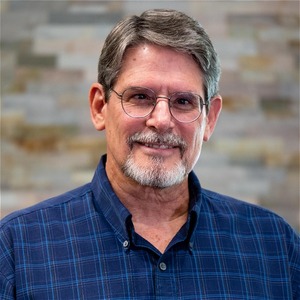
Welcome to Delight in Grace, the teaching ministry of Rich Powell, pastor of Grace Bible Church in Winston Salem. Christ sends none away empty, but those who are full of themselves. That's a quote from Donald Gray Barnhouse. In today's message, we'll be reminded that God is the sovereign one. The great Nebuchadnezzar saw clearly that God alone rules in the kingdom of man, and that He resists the proud and gives grace to the humble.
Let's listen to this message from Daniel four, ten through eighteen. You have your copy of the scriptures open to Daniel chapter four. Title of today's message is that the living may know.
So let's get the context once again. This is an ancient Babylonian kingdom. It's actually the Neo Babylonian kingdom in about the fifth century BC. King Nebuchadnezzar is the emperor of a vast empire reaching all the way over to the lands bordering the Mediterranean Sea. He has taken, he has conquered Israel, Judah.
Taken many captives from there. Among them were Daniel, Hananiah, Mishael, and Azariah, royal heirs. And they are serving in his court.
Now Nebuchadnezzar is thinking, "I did this." This is my doing, and yet because God's people are in His court, God is doing a work in this man's heart and mind. He has something for him to learn. He's already had one dream, and Daniel interpreted that for him.
Now he's had a second dream. And it troubled him. Remember, he said he was flourishing in his palace, and then he had this dream, and now he's very troubled by it. And all the wisdom with which he surrounded himself couldn't help him out with this dream. And then Daniel comes, and the king says, "Finally, somebody who has answers." And this is the dream.
Wouldn't it be great if the things that are going to happen in your life that haven't happened yet, that before they happened, you were given the reason why they were going to happen? We seek that often, don't we? This is exactly what happened to Nebuchadnezzar.
Now, if you know the whole story, he still had to go through the circumstances. He still had to experience it. But the title of the message today of this text is that the living may know. This is what's going to happen. Nebuchadnezzar's had the dream.
Daniel, let me tell you what the dream was.
So here it is in Daniel chapter four, beginning at verse ten. I was looking, and behold, a tree in the midst of the earth. And its height was great. The tree grew and became strong, and its height reached to the heavens, and it could be seen to the ends of the earth. And its leaves were lovely; its fruit abundant, and it was food for all.
The beasts of the field found shade under it. The birds of the heavens dwell in its branches. And all flesh fed from it. A tree is a common metaphor in Scripture for several things: majesty. Beauty, strength.
You're saying, "Rich, that's not a tree. That's a bush." No, this is a common tree in the Middle East. Remember, this is the region we're talking about. This is a date palm. These get very, very tall.
They're very decorative, but they're also very productive. I love dates. I'm not talking about going out to dinner, okay? But I love date. You know, dried dates.
They're sweet. They're they're very, very delicious. And these are all over that region. And trees are representative of majesty, of beauty, of strength. But they also provide shelter.
They also provide sustenance. They are a picture of prosperity, particularly fruit trees. We see that picture in Psalm one three. He shall be like a tree planted by the rivers of water that brings forth its fruit in its season. It's speaking of the successful, prosperous man who delights in the law of God.
So that that metaphor is very clear there, but not only that, the tree becomes a blessing to many around, and in this text here, it speaks of the tree with world impact and the benefit to so many because it grew beyond heights, and it says here even that it reached the heavens. That's just simply to say this: the majesty, the grandeur. The prosperity of this tree. Looking at it from down here, you could say, "It just doesn't get any greater than this." We know who this tree is and who it represents. It just doesn't get any greater than this.
It's a marvelous, majestic, phenomenal. Prosperous tree, but that's from the perspective down here, as the writer of Ecclesiastes would say, under the sun. But look what comes next, verse thirteen. I saw in the visions of my head while on my bed, there was a watcher, a holy one, coming down from heaven. He cried aloud and said, "Thus, chop down the tree!
What this beautiful, majestic, prosperous tree that's abounding in fruitfulness?" And providing for so many, chop it down," says this messenger. It brings dismay to us to see a beautiful, thriving tree just chopped down like that. But this chopping down is a form of judgment. In other words, there is purpose in this. It needs to be brought down a notch.
This is something that we all need to deal with and experience from time to time. A humbling. Because from our perspective down here, we could be looking at ourselves, our success, our work, and we could say it just doesn't get any greater than this. But that's from the perspective down below, under the sun. God is faithful to bring us down a notch from time to time.
David Nicosia, a 55-year-old business owner in Chicago, was outside the Cook County courthouse when he became angry at a 79-year-old African American woman. After arguing with her, Nicosia spat on the woman and called her Rosa Parks. Then he turned and allegedly slapped the silver-haired woman on the left side of her face with an open hand. That was a bad move for Nicosia. The woman happened to be Judge Arnett Hubert, president of the National Bar Association, and the Cook County Bar Association.
Oops. He thought a little too highly of himself in that incident, didn't he? And so Nicosia was arrested and charged with four counts of aggravated battery. And a hate crime. Let's look at this text.
I saw in the visions of my head while on my bed, and there was a watcher, a holy one. Who is this Watcher, the Holy One? It's the title that it's given, and and the Watcher, the Holy One, is a messenger. In the in Hebrews, the writer of Hebrews tells us that under the inspiration of the Holy Spirit, that angels are ministering spirits to the children of God, to the creation of God.
Okay, so. And the angels in Scripture are also referred to as sons of God, meaning they are representatives. They come to us from the presence of God. They're doing His business. You know, sometimes these watchers, as ministering spirits, they're caring for us.
They're often guarding us.
Sometimes these watchers can be loved ones. God can use them in such a way. Not long ago, there was a CEO of a Fortune 500 company who pulled into a gas station and went in to pay for the gas, and came out and noticed that his wife was engaged in deep discussion with a service station attendant. And it turned out that she knew him. In fact, back in high school, she used to date him.
The CEO got in the car. The two drove in silence. He was feeling pretty good about himself when he finally spoke. I'll bet I know what you're thinking. I bet you are thinking you're glad you married a Fortune 500 CEO and not him, a service station attendant.
And her reply: No, I was thinking if I'd married him, he'd be a Fortune 500 CEO, and you'd be a service station attendant. Need to be brought down a notch. Chop it down and cut off its branches. Strip off its leaves and scatter its fruit. Let the beasts go out from under it, and from the birds, and the birds from its branches.
Strip off its leaves. In other words, take away the beauty, remove the prosperity of this tree. It's an act of humiliation. It's an act of affliction. And removing the beauty of it, and the prosperity of it, that speaks of the humanity that separates mankind from animal, the attributes of humanity that allow us to relate to the Creator.
That make us human with reason and creativity, and to be able to conceive of the future. Remove all that. But then it says in verse fifteen: Nevertheless, leave the stump and roots in the ground. What does this mean? This tree is going to grow back.
The tree will return. But it's interesting what he says. Bound with a band of iron and bronze, let the tender grass of the field let it be wet with the dew of heaven. What we have here in verse fifteen is a transition. We transition from type to person.
If you look from the beginning of verse fifteen to the end of verse fifteen, the pronouns change. It goes from it to Him or his, and so it's moving from the idea of the tree to moving the symbolism to understand if this is referring to a person. Let it be wet with the dew of the heaven, and look at the end of verse fifteen, and let him graze with the beasts on the grass of the earth. And so that that band of iron and bronze is speaking of this person being bound and restricted. I like how Kyle and Dalech describe it.
They say, "Withdrawal of free self determination through the fetter of madness." Something similar to this in in Job thirty six eight, where Job speaks of bound in fetters, held in the cords of affliction. Psalm one hundred seven ten, bound in affliction and irons.
So it's a it's a serious restriction of a person. And for Nebuchadnezzar, it was going to be more than just a physical restriction. It was going to be a mental, even a spiritual, intellectual, and spiritual restriction. It says, verse sixteen, at the end of verse fifteen, "Let him graze with the beasts on the grass of the earth. The dew will fall on his back." Means he's going to be crawling on all fours.
This is no gravitas for a monarch. He's going to be abased. He's going to be humbled, and notice what it says in verse sixteen: "Let his heart be changed from that of a man. Let him be given the heart of a beast." Again, going back to what it says before, he's going to be stripped of the attributes of humanity that separate mankind from beast. He will be given the heart of a beast.
The heart is the center of the intellectual, of the intelligent soul. The heart is the seat of moral reflection. All of that is going to be gone from him. There is no animal that reflects on morality. It also speaks that he will have no acknowledgment of the Creator during this time.
All sense of meaning and purpose will escape him during this time. There will be no interpersonal relationships during this time. No creativity. No sense of beauty. No sense of morality.
None of that. It will all be gone from him. And then it says, at the end of verse sixteen, and let seven times pass over him. That is a mystery to some degree, but we can look at other portions of Scripture. If you were to look ahead to seven twenty-five in chapter twelve, verse seven, when it mentions times, it seems fairly clear from the text, from the context, that times is referring to years.
So this could mean that this affliction will come upon this individual for seven years, or it could mean seven seasons. One thing for sure, it does mean is that it's going to be an extended time. This is not going to be an overnight experience. It will be an extended time. After all of that is given, the dream is communicated, and then.
It is made known to us. This decision, verse seventeen. This decision is by the decree of the Watchers, and the sentence by the word of the Holy Ones. In order that the living may know, this is the why. This is what's going to happen, and before it even happens, we are told why it's going to happen.
What is this? In this revelation, this divine disclosure, purpose is communicated by the One who creates all things. He, as it says in Isaiah forty-five seven, I create peace and I create calamity. He is the One who is sovereign Lord over the elements of creation. He can cause peace, and he can cause a storm.
When the disciples were crossing over the Sea of Galilee in the boat, and all of a sudden a storm arose, it was divinely ordained. And Jesus is awakened, and they say, "Don't you care about us?" And he says three words: "Peace, be still," and everything becomes smooth. This one, that kind of power, and you remember the disciples' response: "What sort of man is this that even the wind and the waves obey him?" It means he is sovereign over creation, and that is what is going to be communicated in this in this event. The purpose is communicated with the understanding that there is purpose even in affliction. This is not saying that all affliction is divinely caused.
Most of the affliction that we feel and sense and experience is a direct result of the groaning creation, the creation that was subjected to futility. Not willingly, but because of Him who subjected it in hope, looking forward to the redemption of creation. That's Romans eight. But still, God is the one who causes calamity. He's free to do that when He chooses to accomplish His purpose in that way.
So, what is the purpose? As it says here, in order that the living may know, the purpose of this affliction is for man to gain understanding and perspective. Remember, the tree. Looking at it from down here, it couldn't get any greater than this. This tree was it.
It was a supreme tree, and God says, "I'm going to let you look at it from my perspective for just a moment. This is for man to gain understanding and perspective. In other words, God is going to say, in a very subtle way, this is truth. This is reality." As this majestic, fruitful, strong, prosperous tree, what are you apart from me? This is reality.
This is truth. It was Pilate, Roman governor, who said, "What is truth?" This is one way that. Truth, reality, is made known through such affliction that the living may know. Secondly, that the Most High rules in the kingdom of men.
So there you go. That's the theme of the book. Here it is: that the living may know that the Most High rules in the kingdom of men. That means there is one sovereign, there is one supreme being. He's not a concept; he is person.
He rules, and it also brings us to the realization that man is not the master of his own destiny. He can't be because you didn't create yourself. You are not the master of your own destiny.
So, as we're discussing this, we get together Thursday mornings for a Bible study at Panera, and I'm going to quote Colin Lavoy here, and I have his permission to do this. He says the biggest things that happened in my life were not planned by me, and he's had to deal with some adversity in his life. But he says the biggest things that have happened in my life were not planned by me because if I were to plan them, I wouldn't plan them that way. But they, in fact, were the biggest things that have happened in my life. Colin Law also says, and he's said this many times: if you want to make God laugh, tell him your plans.
Psalm two kind of indicates that, doesn't it? Why do the heathen rage and the wicked plot a vain thing? What this is telling us that the living may know that the Most High rules in the kingdom of men is that there is one reference point for meaning and morality. One, one reference point. Whatever is true, whatever is right, whatever is good, it all relates back.
To this one reference point, who is the point to our existence? The writer of Hebrews makes this very clear in Hebrews chapter four and verse thirteen. And there is no creature hidden from his sight, but all things are naked and open to the eyes of him to whom we must give account. All things are open to the eye, to the eyes of him to whom we must give account. It's his creation that the living may know that the Most High rules in the kingdom of men, and this is something that Nebuchadnezzar is going to find out firsthand.
That he, as the quote-unquote sovereign over his empire, still must give account. He is not supreme. And then it says, "And he gives it to whomever he will. He gives it to whomever he will. This is divine ownership.
Ownership. Human rulers, Gleason Archer says, human rulers exercise their authority only by the permission of God, not because they are masters of their fate or captains of their soul." The harsh reality is that on this side, on the lower down here under the sun, most of them think that they are rulers because they are masters of their fate and captains of their soul. But they are not, and this is what God taught Nebuchadnezzar. And this divine ownership tells us that God is free to accomplish His purpose with whomever is in the position of leadership. Isaiah two.
Verses twelve and thirteen make this clear. For the day of the Lord of hosts shall come upon everything proud and lofty, upon everything lifted up, and it shall be brought low. Upon all the cedars of Lebanon that are high and lifted up, and upon the oaks of Bashan. Again, the metaphor of trees: cedars of Lebanon, the oaks of Bashan, which is a southern portion of the eastern side of the Jordan River. Known for its mighty oaks, and this was often a picture of the leaders of those regions and and what they were so proud of.
This text makes it clear that it's not one's talent, character. Or even noble birth, but God's will that establishes who the influencers are. It is God's will who establish that establishes who the influencers are. Because leadership is influence, but you know, just because you have a position doesn't necessarily mean that you're the influencer. Not only does he give it to whomever he will, but he sets over it the lowest of men, the heads, the rulers of peoples.
We see this in the history of Israel. Normally, in ancient customs, it was the firstborn who was the heir, who then became the head of the family. But not so of the sons of Jacob. It was Judah who was chosen, and then with Jacob and Esau. Remember who was born first?
Esau was, but God chose Jacob. I'm going to rule my people through Jacob. Joseph became a mighty ruler. He was sold as a slave and served as a slave, and then he became a mighty ruler in Egypt over his brothers. David.
David was not the oldest son of Jesse. In fact, he was the youngest, and God says, "I choose him to rule my people." As opposed to Saul, who was chosen by the people because he was tall, dark, and handsome, he was royal material, and his attitude showed it. And God said, "I'm going to raise up a humble shepherd to rule my people." God does things like that. Influencers. It's by God's will.
That the influencers are where they are, and God has chosen, as was mentioned earlier by Incandenza's testimony, God has chosen the lowly, the foolish, and base things to confound and to put to shame the wise. Why has He done that? It says in the First Corinthians two text, First Corinthians one text, it says that no flesh should glory in His presence.
So the whole point that he sets over it, the lowest of men, that is so that we are not looking at men, but we are looking at God, who is our reference point, and He is the one who defines our meaning and our purpose, and we're looking to Him for our authority. No authority comes from man; it comes from God. And rulers today would be wise to understand that many, most, are going to learn the hard way. Nebuchadnezzar had to learn a very difficult way that no flesh should glory in his presence. We need to be very careful about this.
One of my concerns that is happening, particularly in America, and I hear this as I listen to the radio and and see what's happening in so many churches, they're becoming very celebrity driven. And that's not to say that a man who has has raised up a lot. I mean, I'm in May. I'm going to Parkside Church. I'm going to listen to Alistair.
Beg God has blessed Alistair with a phenomenal ministry in the pulpit, on the radio. I love to listen to him. He's an excellent expositor of the scriptures, and God has blessed him with a very large congregation. That's not what I'm talking about. But so many today, if you listen to the radio, things are promoted by this great person is coming.
You should go hear him. I'm a bit troubled by that because we are we so tend to follow celebrity. And one of the problems with that is we start comparing ourselves to celebrity. You know what that's like. I might be a twenty-five watt light bulb.
You might be a twenty-five watt light bulb. But you know there might be other Christians, other believers, who you think they're more like a hundred watt. They're just they're out there. They're just they are really shining, and people are noticing. My twenty five watt is is nothing compared to this hundred watt light bulb, and we start comparing.
And the 25 watt might think, you know, I'm just not as special. The 100 watt might start thinking, I'm pretty special. But what do we compare them to? What happens if we compare those two light bulbs to the sun? Then how special are they?
There is no comparison. And that's what the Lord says: that no flesh should glory in my presence. This is why this event is going to happen, in order that the living may know that the Most High rules in the kingdom of men and gives it to whomever He will and sets over it the lowest of men.
So declare its interpretation, Daniel. This dream, I, King Nebuchadnezzar, have seen.
Now you, Belteshazzar, declare its interpretation. Since all the wise men of my kingdom are not able to make known to me the interpretation, but you are able, for the spirit of the Holy God is in you. Declare its interpretation, please, Daniel. Search and rescue experts say. That the key to survival, when when one gets lost out in the wild, and it happens from time to time, the key to survival often hinges on one thing: knowing and admitting that you're lost.
It's one thing to know that you're lost. It's an entirely different thing to admit that you're lost. Wives, I'm waiting for you to go like this to your husband, right? My wife has done that to me a time or two, but here's an interesting twist on this. Kids get lost, adults get lost.
Guess who gets guess who gets found more often? Kids do. Do you know why? Because they're willing to admit that they're lost, and they don't try to save themselves. They find a place.
They try to stay warm and dry, and they wait for someone to get them. Kids get found much more often than adults do when they get lost in the wild. They actually admit that they need help. Nebuchadnezzar said, "The wise men of my kingdom are not able to make known to me the interpretation." You know what I think? I think they might have been a little bit reluctant to give him the interpretation.
The tree metaphor was actually very common in the ancient Middle East. I think they had a pretty good idea, maybe what this was talking about, particularly since the pronouns were changed, the transition of the pronouns. Seeing what had happened before, but I think they were reluctant, maybe because some of them remembered the furnace.
Okay. The three guys that went into the furnace, and you can just hear these wise men surrounding Nebuchadnezzar, and they've had their conference. They've come together. They've sat around their conference table and say, "Okay, yeah, this is pretty good idea. This is might be what he's talking about here." And say, "Okay, now we need to vote on who's going to tell him.
You tell him. No, you tell him. I'm not going to tell him. There may have been a reluctance here." But nevertheless, they did not tell him the interpretation of this. Here's the real wisdom.
Here is the real wisdom of this event that is yet to take place. And this is repeated numerous times in Scripture. We need to remember this every day. God resists the proud and gives grace to the humble. God resists the proud and gives grace to the humble.
And the proud may look like. Remember what Nebuchadnezzar said at the beginning of this: "I was flourishing in my palace," meaning life's okay. I don't need help. I'm good, and it's not necessarily talking about being crazy wealthy. It's just you know, you might have a normal life.
You've got a good job. You've got good insurance. You've got good things laid up for the future. Good wife, good kids. Life is good.
I don't need help. Flourishing in your palace. God resists the proud and gives grace to the humble. This is what is repeated so many times in Scripture, and this is Luke chapter 18, verse 14. Everyone who exalts himself will be humbled, and he who humbles himself will be exalted.
Listen. That is biblical truth. We have such a tendency to look at our accomplishments for God's favor. Former New York City Mayor Michael Bloomberg confessed that his mortality has started dawning on him. He's seventy-two years old now.
But if Bloomberg senses that he may not have as much time left, he has little doubt about. What would await him on Judgment Day? Pointing to his work as mayor of New York, his work on gun safety, obesity, and smoking cessation, he said with a grin, "I'm telling you, if there is a God, when I get to heaven, I'm not stopping to be interviewed. I'm heading straight in. I have earned my place in heaven.
It's not even close." Don't judge. You've probably come close to saying the same thing. It's human. We desperately need the grace of God, and God is willing to take us down a notch to help us remember that we are nothing apart from Him. Donald Gray Barnhouse says, "Christ sends none away empty, but those who are full of themselves." I invite you this morning to surrender to the sovereign one.
There is but one sovereign. If you are not reconciled to God, you are destined for eternal emptiness and despair. This kind of judgment, where you will be nothing apart from the sovereign one.
So surrender to Him for life's sake. Remember that He is the Potter; we are the clay. And oftentimes, that molding requires pressure. It requires cutting. It requires removal of some things.
God is forming us. Christians see God as the faithful vine dresser who prunes, and pruning involves what? Cutting, cutting away. The faithful vine dresser prunes so that you will be fruitful according to His purpose. We must surrender to God in this way.
This message, titled "That the Living May Know," was first preached March fifteenth, twenty fifteen, at Grace Bible Church in Winston Salem. You can hear the next message in our Daniel series every Monday here at www. delightingrace. com, or you can now find us on Spotify.