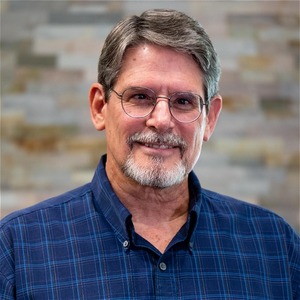
Welcome to Delight in Grace, the teaching ministry of Rich Powell. Pastor of Grace Bible Church in Winston-Salem. Alexander Graham Bell said, When one door closes, another opens, but we often look so long and regretfully at the closed door. that we do not see the one that has opened for us. How do you handle change?
See, God cares how we respond when things don't go the way we had planned. Daniel chapter one introduces us to four young men whose lives took a sudden and dark turn. What will they do, captive in a new land with culture, laws, and gods that violate all they have ever known? Will they assimilate? or maintain a clear contrast.
Let's listen to this message from Daniel one, three through seven. Scriptures for us. We are now going through the book of Daniel in exposition.
So you have your copy of the scriptures open. The theme of the book of Daniel is The statement that is made by even a pagan king. And it is this. The Most High rules in the kingdom of men.
So, as we go through the book of Daniel, the things that we learn, the things that we're reminded of, the things that we face in our day-to-day, and we see, we identify how Daniel is written for us. It was written to a people. The people Israel, but it is also written for us today because God is an infinite and sovereign and timeless God. Then let us remember in everything that we encounter. that the Most High rules.
in the kingdom of men. Let's pause now for a moment and ask the Lord to guide us. and to aid us in order to hear. and heed his word this morning. Father, we are so grateful.
That you are Our Creator and our Redeemer. You have made yourself known to us.
so that we can know you. And walk with you. and serve you with delight. And so, Father, as we open your word today, I pray that you would open our hearts and our minds, that we may come to you with great expectancy and at the same time with humility, Father. Looking to you to mold us more into the image of your Son, the Lord Jesus.
Teach us. from your word and by your spirit today, I pray, Father. In Jesus' name, amen. As we go through the first chapter of Daniel, We are introduced to the history, and last time we considered the history, and it looked like. If you were these guys It would look like evil winds.
These are God's people, these are God's chosen. And yet they have forsaken and they have been overrun by a pagan nation, and it looks like. Evil wins. Today, we are going to look at encountering change. Four young men specifically who encountered a great deal of change in their lives.
And as we continue, then they're going to encounter this change. But next Sunday, we're going to look at the fact that they stayed. focused. And even while it seemed that evil winds by the casual observer. And by the nations themselves, it would look like Israel's God.
was made better of. by another God. It looks like evil winds, and God's people encounter significant change. Yet God's people stayed focused and because of that, in the context of that change. they became shining lights.
So let's heed. the exposition of the word of God. in that way. encountering change. Daniel, Hananiah, Mishiel, and Azariah.
These were promising Young men. And Nebuchadnezzar Now, the ruler of the Babylonian Empire had taken captive some from. bet from Jerusalem And then in 586, Jerusalem was burnt, the temple was destroyed, the walls were torn down. And all those that he had taken captive, Nebuchadnezzar, like Alexander the Great, a little bit later on, enlisted the most promising young men of his new empire into government service. If you were to look at the description of these young men, look at the second half of verse 3.
Some of the children of Israel and some of the king's descendants and some of the nobles.
So this was royalty, kings, descendants, and nobles. This is, and then look at what he says in verse 4: Young men in whom there was no blemish, but good looking, gifted in all wisdom, possessing knowledge and quick to understand. These were the guys who would be voted in the senior high. yearbook in the senior yearbook the most likely to succeed. All right, these guys had it all.
Yeah. And yet these young men who were nobles in Jerusalem. They could look at this and say, we had such a future in Judah when we lived in Jerusalem. What a future we had. And now look at us.
We're exiles.
Now look at us. We're serving a pagan king. This isn't home. We don't belong here. Everything has changed for us.
And so it becomes very clear that they had a very different. outlook on life now. A very new outlook on life.
So, what was their new outlook? What were the things that were changing for them? They were taken from their homeland and now they were in a new country. And this new country became their new home. Because as far as they were concerned, there was no way back to go back home.
It's not like this was a temporary stay. Listen, I was. Island hopping for 18 days. And that was kind of nice, you know, being in Haiti and then going down to St. Vincent.
And I'll be sharing all of that tonight and things like that. I'll be honest with you. That was nice for a while. But I was looking forward to getting back home. Because when I'm down there, that's not home.
There's no place like home. And I was looking forward to getting back. These guys didn't have that. They didn't have that to look forward to.
So they were in a foreign place. Away from what they knew to be home. This was their new home. This was a big change for them. But also, not only did their country change, but their jobs changed.
Their jobs in terms of who's in charge of them. They had a new supervisor now. And he was a pagan. He didn't know Jehovah God. And they were serving A foreign king with a foreign culture.
This was all new for them. very, very much change in their lives. Not only did their country change, their homes changed, not only did their jobs change, but their education changed as well. their education. And there was a specific purpose behind the education that they got.
And the purpose of their new education was to separate them from their previous culture and environment. They needed to be re-educated. They needed to be educated in such a way that pulled them away from what they were before and everything that they identified with before, and now they're going to be identified with new philosophies. A new world view, a new faith system. It says that they were taught Look at the end of verse 4.
The ability to serve in the king's palace, and whom they might teach the language and literature of the Chaldeans.
Now, that Chaldeans. Refers in a general sense to the Babylonians and their culture and their literature and their language. And we recognize not everyone was literate back then. These guys had literacy entrusted to them. Oftentimes, ancient kings themselves were illiterate, but they counted on the wise men.
to do their research. And and counsel for them. But also, Chaldean also sometimes refers to. A special class of men. who were highly educated.
And that's what these guys were. But their education had the specific purpose of. redirecting their whole Worldview. because they were in a new service now. Their country was new, their jobs were new, someone else was in charge of them now, their education was new, specifically, targeting.
But their diet was new also. They had new food.
Now, you might think, well, that's not such a big deal. I've been introduced to all different kinds of diets in different places of the world. I've been to Egyptian diet, I've been to Indian diet, I've been to Haitian diet. And St. Vincentian diet, grew up on Colombian diet, and then there's good old American food, right?
Now their diets were very different. That is significant for these guys. You remember why? These guys worshiped Jehovah. Did Jehovah have something to say about diet?
Yes, he did. He had a lot to say about diet. And the diet that these guys were introduced to was definitely not according to the Mosaic law. The environment. that these four young men We were now introduced to, and the change that they encountered, their new environment and circumstances presented real challenges.
To their worship of Jehovah. I want you to remember two things, all right?
Okay. This, that we're saying, the reason why I started last week the way I did, is to help you put this in the context of. Real history. Right? Please understand with me.
This is not something that happened in a vacuum. This is not myth. This is real people. in real history. All right.
They had to experience this. Yeah. Let's you and me step back from that history and now place ourselves back in our 21st century context. Is there change going on? in our environment and in our culture.
Are we encountering circumstances that present real challenges to our worship of God? We don't face near as much as some of our brothers and sisters in different parts of the world. And I'm going to end today's message with a video from Voice of the Martyrs. that will help us appreciate. The level of change that some of our brothers and sisters have encountered.
I met with Boil yeah. who is a representative of Partners International. I and a couple members of the missions team met with him. this last week. And he is from Africa, from Zambia, I believe.
And he has encountered many different aspects. of the church. in all parts of the world. And there is still a big distinction between the Eastern and the Western. There is a lot of comfort in the West, there is a lot of persecution.
And death. in the Eastern Church. And he has encountered some of that himself.
Some of the very missionaries that we support are in the very middle of that. James Alexander, if you were here when he came to speak. He said, please don't ever stop praying for us. But don't pray that the persecution will be taken away. Pray that we will have confident faith in God and that we will have bold compassion.
And James Alexander in the Sudan, in South Sudan, he has been on our prayer focus list. every week without exception since exactly a year ago. And we come together midweek to pray. For our brothers and sisters. who have to encounter this kind of change on a regular basis.
Voila. I asked him this question. If you were to characterize The chief difference between what they have to experience in the West, what the church is in the West, and what the church is in the East. How would you characterize that? He only thought for a couple of seconds and then he said this.
Choice. I said, okay, you're going to have to expand on that. And then he said this. In the East, there are so many Christians. who every day have this choice to make.
Am I going to follow Christ? Or am I going to die? It's that stark. He says The choice is easy. But in the West, where you don't face that.
where you have many other choices. And you don't really have to follow Christ. You don't really have to survive. It gets more complicated, he said. It's interesting, isn't it?
Will Daniel, Hanani, Mishiel, and Azariah find themselves. In this kind of a context, in this kind of a change. Not only did their country change, not only did their jobs change, not only did their education change. and their diet, but also their very names were changed.
Now this is significant, much more significant than and in that context than it is for us today. We choose names by looking in a baby name book and say, oh yeah, that's a beautiful name. I love what it sounds like and I love who it's associated with. And you know, we didn't call our kids some certain names because that name was associated with certain individuals that we considered distasteful. That's how we choose names today.
Oftentimes, others of you are getting more biblical in your name choosings. But these guys had their names changed. Daniel. Daniel means God is my judge. God is my judge.
These names, every one of their names was an indicator of their relationship to God. God is my judge. Daniel's name was changed to Beltashazzar. Belteshazzar means Bel protects. his life.
Hananiah. means Jehovah has been gracious. Michiel Who is what God is? You can see the words Jehovah and Elohim, Yah and El. Any element of a name that is Yah, like the A-H or the E-L, those are direct references to God in the name.
Jehovah has been gracious. Who is what God is? Azariah, Jehovah has helped. You see it. Their names were significant.
It was that it was about their identity and their purpose. It was an indication of their relationship with God. And then Daniel, they come into their new context and they encounter this change. And in their new context, Daniel's name was changed to Belteshazzar, which means Bel protects his life. Really?
His name changed from God is my judge to Bel protects his life. Bel was a pagan, mythical, non-god. Because there is only one God, and so anything that is a false God is a non-God. She's Daniel understood that. And Bel was related to, remember the Canaanites?
The God that they served, Baal? Vicious. Vicious. Being.
So they thought. Shadrach. His name was changed to the command of Aku. Aku was the moon god of the Babylonians. Meshach.
Mishiel's name was changed to Meshach. Who is what Aku is? You see the parallel there? Mishiel means who is what God is. Ashpenaz changed his name to Meshach, who is what Aku is.
You see what they're doing? They're replacing. Their identity with God And they're giving them an identity with their national gods, their false gods, which are non-gods. He is an impersonal god. He is not communicated.
He is not person. He is a false god. He is a non-god. He is a projection of man's thinking. But these guys have their names changed.
And Azariah, who means Jehovah has helped. His name was changed to Abed Nigo. servant of Nebo. Nebo was the son of Bel. the chief Babylonian god.
So here they are introduced to a pagan polytheistic system. and their names are changed to identify with that.
Now, let's consider some observations here. These guys were given these tags, they were given these labels. You and I might be given some labels today too. Dang. But just because they were given these labels doesn't mean it became their identity or characterized their behavior.
Do you remember in the early church The followers of Jesus Christ were called Christians. Christians, because They behaved like Christ.
So they were called little Christs. And that stuck. That was a compliment. That's a good name, isn't it? And we might have lots of labels slapped on us today, but just because we're given these labels doesn't mean it becomes our identity or characterizes our behavior, as it was with these young men.
And we're going to see that as we study the rest of Daniel. Here's a second observation, God's purpose. God's purpose for you. is not necessarily tied to context. I want you to think through this with me, okay?
God's purpose for you and me is not necessarily tied to context. It's not necessarily tied to location, vocation, culture, and whatever other context you want to put yourself in.
Some of us might be thinking, well, you know, when things become right, when, you know, when When my family does this, or when we move to this place, or when my circumstances look like this, then I will be able to know and understand and live God's will for my life. No. God's purpose, listen to this please. God's purpose for you. It is to know him and walk with him in whatever context you find yourself.
God's purpose for you. is to know him and walk with him in whatever context you find yourself. This is what these guys had to learn. in all the change that they encountered. It is not for us to wait until our environment or our circumstances are just right before we can follow God and serve Him.
If you've grown up in America, Do you feel like your faith is being threatened and you're not going to be able to live out your faith because of all the cultural changes that are going on? And that's why some of us are fighting so hard to get back to where we need to be so that I can live out my faith in a comfortable way? If that's what we're pursuing, maybe we're missing our mission as a church. Maybe we're missing our mission as a people. Like I said last time.
It seemed like evil one. for God's people. It looked like evil one. But let's remember. That God gave Jehoiakim into the hand of Nebuchadnezzar.
The most high rules in the kingdom of men. What do we learn from that? God is more interested in our character than he is in our comfort. And God's purpose for you and me is to know Him and to walk with Him in whatever context. we find ourselves.
and not wait till environment and circumstances are just right. Alexander Graham Bell said, When one door closes, another opens. But we often look so long and regretfully at the closed door that we do not see the one that has opened for us. Church, listen to me. Christians, listen to me.
We have before us a wide open door to be salt and light. Do you find yourself looking back at the closed door, looking back at what was and how things used to be and saying, I wish we were still back there? God calls us to know Him and to walk with Him. in this context. Today.
Not what was yesterday. Encountering change in our culture, we've encountered quite a bit of it. In the last 100 years, now think of this, in the last 100 years. And I have expressed this to my kids. I want my kids to understand that you live in an historic anomaly.
Over all of the history of mankind. Only a tiny percentage of people have lived. anything like the way we live today with all the conveniences and the technology and stuff. It's a historic anomaly.
Now, that doesn't mean it's taken God by surprise. God is the one who is orchestrating this.
Okay. Media and technology. That's change. That's encountering change. They are not evil, but they are tools.
They are tools, and tools can be used for good, and they can be used for evil. It's interesting enough to know to look back at some of the records. Even as recent as 1995, there was an economist who. Forecasted. that the internet would just simply be a fad.
Can you imagine that? The Internet, just a fad. I don't think so. There's a lot of you right now who are counting on the Internet just simply for your whole entire education.
Some of us do banking on the internet. Any of you text? Or, you know, Facebook Messenger. How many of you are on Facebook? the social media.
That's not a bad thing, it's a tool. It's just a tool, but it can be used for good and it can be used for bad. And we need to understand that things are just tools.
So those are not the only changes that are going on. There are cultural changes that are going on as well, and we're pretty aware of that, aren't we? Cultural changes that are happening, the values and definitions and laws. are changing. Our very context is changing.
Legal systems are redefining institutions that God has established from the beginning. And that is becoming the new norm. the new normal for our culture and our context. Are we simply going to resist that and try to get back to what we used to be? Or are we going to, in our context, B, salt and light.
Are we going to walk with God and know Him even in our context and the changes that go on? There is a new normal coming for us. Are we ready for it? the level of suffering. The level of suffering that many have to endure.
James says, God is more interested in our character than in our comfort. Count it all joy when you fall into various trials. Because God's at work on our character. Johnny Erickson Tada can use her as an example. She had to encounter a great deal of change in her life when she was 17.
And she's been in that condition now for 47 years. Every morning when she wakes up, Someone else has to come in and get her ready for the day. She can't do any of it on her own. And that's a great challenge during every day before she opens her eyes. She has to ask the Lord, I need your strength.
to make it through this day. That's change. Now, that's a physical change, and that has completely changed. how she does life. And yet Has she lived her life simply trying to buck that change?
How much of a minister to us do you think she would have been had she decided to spend her life trying to resist that change? No, she's been a huge minister to many, many of us. She says this in a recent article. She says, We as Christians here in the United States don't know what to do with suffering. Surveys have shown that many Christians feel physician-assistant suicide is an end-of-life option.
is not all that bad. Of an idea. And Johnny says, That's abhorrent. It shows that we don't know how to grapple with suffering and find God and embrace Him in the midst of our suffering. We want to erase the word suffering out of the Christians' dictionary.
We're going to ibuprofen it, drug it, institutionalize it, do everything but live with it. And yet, people with disabilities have to live with it each and every day. As these promising young men Encounter change. Are they going to assimilate to the corrupt influences of the new culture or will they maintain a contrast? That's the question.
Daniel, Hananiah, Mishael, and Azariah were subject to intense pressure from peers and teachers to do what everyone else was doing. Just do what everyone else is doing, and we'll get along just fine. You and I will sense the same thing. As we continue in our culture. we will continue to face a growing pressure from peers, from authorities, from teachers.
to do what everyone else is doing. for the good. of society. Will we cave to that? Or will we maintain a contrast?
Jesus sent his disciples. into the storm. Didn't he? As he did with the church, he sent them into. The storm, not around it, not away from it.
He sent them into it to go through it and to come out the other side with a different perspective, an improved look. And a stronger character for his glory. Many of our brothers and sisters today live. in a new normal. Where every day they have this choice: Am I going to follow Christ or am I going to die?
Or am I going to follow Christ, or am I just simply going to live? That's the choice that they face every day. They have to choose between faith in Christ. and just living something of a normal life. There is a video.
I told you that there is a video that I wanted you to see. Let me give a disclaimer this morning. This is from Voice of the Martyrs, and viewer discretion is advised. If you have young children, And you are If my children were very young, I would keep them in here, but that's me. I'm a missionary kid, okay?
But if you have young children and there might be some. Scenes and themes in this video that you might not want them to see.
So I give you that warning ahead of time. Watch this video. It was the same God that Daniel, Hananiah, Mishiel, and Azariah worshipped. The Most High rules in the kingdom of men.
Would you stand with me, please? With me, please. Father Today we want to remember Our brothers and sisters in Christ. who encounter these changes. Who have these choices in front of them on a daily basis?
Father, challenge us in our hearts and our minds. May we ask the same question: is this what it means to be Christian? To have this outlook, to have this mindset, to have this willingness, to have this level of obedience, to have this kind of love for you. Father, guide us as your church and as your people through the changes that we encounter, that we will fix our gaze upon you. That we will stand on your truth and on your promises, Father.
And that we will not find ourselves rocked by the waves. or brought to fear and despair by them. Father, I conclude this morning with a prayer by Sir Francis Drake. Yeah. May it be our prayer this morning, Lord, all of us.
May we be willing to say Disturb us, Lord, when we are too well pleased with ourselves, when our dreams have come true because we have dreamed too little. when we arrive safely because we have sailed too close to the shore. Disturb us, Lord, when, with the abundance of things we possess, we have lost our thirst for the waters of life. Having fallen in love with life, we have ceased to dream of eternity, and in our efforts to build a new earth, we have allowed our vision of the new heaven to dim. Disturb us, Lord.
To dare more boldly, to venture on wider seas, where storms will show your mastery. where losing sight of land we shall find the stars. We ask you to push back the horizons of our hopes and to push into the future. In strength. Courage.
Hope. And love. To dismiss this morning, I just want the instruments to play the song It Is Well With My Soul. I ask you to contemplate. The words to the song As the music plays.
and be before God. Do you love him? to this level. Such a practical message for us today. The title of today's message is Encountering Change.
It was first preached on november second, twenty fourteen. You can hear the next message in the Daniel series here at www.delightingrace dot com. every Monday.