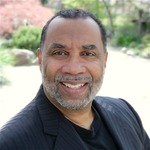
This is Connect with Skip Heitzig, and we're so glad you joined us for today's program. Connecting you to the never-changing truth of God's Word through verse-by-verse teaching is what Connect with Skip Heitzig is all about.
That's why we make messages like this one today available to you and others. Before we begin the program, we want to invite you to check out connectwithskip.com, where you'll find resources like full message series, daily devotionals, and more. While you're there, be sure to sign up for Skip's daily devotional emails, and receive teaching from God's Word right in your inbox each day. Sign up today at connectwithskip.com.
That's connectwithskip.com. Now, let's get started with today's message from Pastor Skip Heitzig. Pastor Skip Heitzig is a member of the Church of Jesus Christ of Jerusalem. He announced he was going to Jerusalem.
He had been a few times, but he had one special, final trip to make to Jerusalem. Paul also has to go to Jerusalem. And I believe Luke parallels, or draws the parallel between Jesus going to Jerusalem, which Luke wrote about in Luke Volume 1, called the Gospel of Luke, and Paul going to Jerusalem, which Luke writes about in Luke Volume 1, that we ask about that.
And we'll be back after this in just a bit. to or the book of Acts. What are those parallels? First of all, Jesus went with disciples. Disciples went with him. Disciples also went with Paul the Apostle. Number two, Jesus was opposed by hostile Jews on his way to Jerusalem throughout his ministry, but especially those last few months.
Paul the Apostle is also opposed by hostile Jews especially on this trip and once he gets to Jerusalem. Number three, Jesus and Paul both made predictions that when they get to Jerusalem they're going to face suffering. In fact, it gets even more interesting, Jesus made three predictions that that would happen when he gets to Jerusalem. Guess how many Luke wrote that Paul records?
Three, same. Fourth, both Jesus and Paul were determined to go to Jerusalem. Jesus had his face set toward Jerusalem. The Samaritans even noticed that he said, I'm going to Jerusalem, can't spend much time here.
They took umbrage to that. Paul's going to Jerusalem everywhere he goes, people are warning him not to go, chains and tribulation await this man who owns this belt, etc, etc. Paul's determined to go. And finally, both Jesus and Paul are ready and willing to die if need be for the cause of Christ in Jerusalem. It's just interesting that the author who writes both Luke and Acts includes those facts about it. And I think it's important because what is the main theme of the book of Acts, you remember? It's how the gospel goes from Jerusalem to Rome, from Jerusalem to Rome. It's showing how the gospel message penetrates the very center, the very heart of the Roman world into Rome itself. That's the theme of the book of Acts.
So naturally Luke would probably follow that outline. Verse 2, now when he had gone over that region and encouraged them with many words, he came to Greece. How did Paul encourage them? With words. Not just with words, with many words. He believed in teaching. Obviously, you're going to see that in a few verses. This boy, give him a, give him chance to talk and he'll, he'll talk.
He'll give you the word, the more words the better. He wants really to encourage people, so he encouraged them with many words. And there's nothing like being encouraged over the Word of God.
It encourages us. And he stayed, verse 3, three months. And when the Jews plotted against him now, he stayed three months. Why? Well probably, I'm guessing, it's wintertime. Not a good time to travel on the sea, even the Mediterranean. It can be quite treacherous, especially going west.
It would take you so long. So he's waiting, probably, till the three months of winter subsides and it gets into fairer sailing weather. He stayed three months and when the Jews plotted against him, there's the hostility, as he was about to sail to Syria, he decided to return through Macedonia. And Sopater of Berea accompanied him to Asia, also Aristarchus and Secundus of the Thessalonians and Gaius of Derbe and Timothy and Tychicus and Trophimus of Asia. These men, going ahead, waited for us at Troas. Now those verses don't mean much to us because we, most of us, have no idea who these people are, but probably these are the representatives of the various churches that Paul had taken an offering from. So they get to represent their congregation. They're accompanying Paul to Jerusalem to offer this great financial encouragement to the church. So they came, part of the team, and you know Paul rarely traveled alone, you know that. He always had a team. Sometimes he traveled alone, but he didn't like it and he often got discouraged when he was alone.
He got encouraged when people were around him. And if he was absent too long from fellowship, he would even say, you know, due diligence to come to me shortly. And so he has this gang, this group, these representatives of those generous churches going to Jerusalem, but they go to Troas first.
And I've been to Troas, I always wanted to go there, and every guy that I told you this before said, don't go there, there's nothing there. I go, I know, but I just have to see it, because to me it was such a pivotal point for Paul as we discussed earlier. But we sailed, verse 6, we sailed away from Philippi after the days of unleavened bread, which takes place after Passover, and in five days joined them at Troas, where we stayed seven days. Now on the first day of the week, when the disciples came together to break bread, just make a note of that, it was the first day of the week, a Sunday, that the disciples gathered together to break bread. Paul, ready to depart the next day, spoke to them. He's teaching them. Now watch this, he spoke to them and continued his message until midnight.
Now you see where I get it. It's Paul's fault. This is where I take my scriptural authority for many words to encourage you. I believe in expositional teaching and biblical preaching, and I believe that you have to lay a foundation and give background and give context and talk about the words and talk about the history to get someone to really understand the biblical text. Now I know some people don't like that, they think that I preach too long, and they don't want sermons, they want sermonettes. Paul didn't do sermonettes, he's going till midnight. And likewise, I don't like sermonettes. Sermonettes are for Christianettes.
You're Christians. You can take a sermon. You can take an hour of Bible study.
Heck, our kids go to school and they have to take integrated zoology or applied biology or English for an hour. They can do it, you can do the Bible. You don't need a sermonette. So Paul spoke until midnight, but noticed when they met and what they did. First day of the week, it's Sunday, they gather together to break bread. That is to have the Lord's Supper communion preceded by a love feast. A love feast was an ancient meal like a potluck. People brought food, ate together, then shared the elements of communion, the Lord's Supper afterwards. That was called the agape feast, the love feast. In fact, for many poor slaves who were believers at that time, it was the only real meal like it that they got all week. People brought sumptuous food and shared it together, and it was a way to help bear the burden, bear the load for the needs in the early church.
So that's what it means. They got together, they broke bread, and they did it on the first day of the week. A question I have gotten asked a lot over the years is when did the Sabbath day change?
And my answer is always the same. It never did change. The Sabbath is still the Sabbath. It's Saturday. It is the Sabbath that has always been the Sabbath. It will always be the Sabbath. Well, why don't Christians worship on Saturday? Why Sunday?
It's mentioned here. It was the first day of the week. Now we who worship on Sundays, and by the way, we have a Saturday night service. If you are a devoted Sabbatarian, no problem.
We got you covered. But we get accused by people who are strict Sabbatarians who worship only on Saturday, and there are some Christian groups that do that. And what they say is is that Sunday is a pagan day to worship. It's like the name implies, Sunday, worshiping the Sun. Ancient peoples used to worship the Sun on that day of the week. Well, perhaps they did.
I don't, but perhaps they did. But you should also know that Saturday was Saturn's day. It was the ancient day when pagan peoples worshiped Saturnus, a god depicted by a planet in our galaxy.
Saturn, part of the ancient mythology. Well, it was Constantine that changed the Sabbath to make it Sunday in 321 AD. No, he didn't change the Sabbath. He may have said that's the day we're gonna worship now, but nobody changed the Sabbath. The Sabbath is the Sabbath. We don't necessarily worship on the Sabbath. Now if you want to worship on the Sabbath, the Bible says keep the Sabbath. That was a covenant for Jews, not Gentiles.
Feel free, but you don't have to do it. In fact, if you do a serious study of Paul the Apostle, he calls worshiping on holy days and Sabbath days and going through those rituals, he calls that in Galatians the beggarly elements of this world. That's his description. You're listening to connect with Skip Heitzig. Before we return to Skip's teaching, God's peace, his shalom, can penetrate every aspect of your life spiritually, mentally, physically, and emotionally. In his book, Unleashing Peace, Experiencing God's Shalom in Your Pursuit of Happiness, author Jeremiah J. Johnston helps you understand shalom and guides you into the peace that passes all understanding. And when you give a gift of $50 or more today, we'll send you Unleashing Peace. Our thanks for your support to reach more people with God's love through Connect with Skip Heitzig.
Go to connectwithskip.com slash offer or call 800-922-1888 and request your copy when you give. Now let's get back to Skip for more of today's teaching. Then he says this, and I am doing what he says in Colossians chapter 2. He says, let no one judge you in food or in drink. You want to eat that cheeseburger and fries?
It's not good for you, but you want it? Feel free. Let no one judge you in food or drink or regarding a festival or a new moon or Sabbaths. Paul says, don't let anybody judge you in the Sabbath. So I don't let them judge me in the Sabbath. They don't like it, they can lump it.
I'm not gonna let them judge me about that. And he says, which are a shadow of things to come, but the substance is of Christ. Why did early Christians meet on the first day of the week? What happened in the first day of the week? The resurrection of Jesus Christ happened on Sunday.
Early morning, first day of the week. That's why they met on the first day of the week. It was celebrating a finished redemption. The seventh day celebrated a finished creation and God rested on the seventh day. That became the pattern picked up later by the Torah, by Moses, and God gave that to Israel as a covenant to Israel. Jesus, Paul, the Council of Jerusalem in Acts 15, none of them said you have to keep the Sabbath. In fact, it says you can basically keep any day you want to worship. Romans chapter 14, one man esteems one day of the week over the other days, one man esteems another day of the week over the rest of the days of the week.
Let each one be persuaded in his own mind. So are you persuaded Saturday is the day to worship? Then worship on Saturday. Are you persuaded Sunday is the day to worship? Worship on Sunday. I like every day.
I think they're all great days. It's Wednesday and we're worshiping him today. Don't tell anybody.
Don't let anybody judge you. Okay, so here's Paul, he's preaching until midnight. He's going for many words, many words, many, many words all night. He's speaking after supper, he's talking. Verse 8, there were many lamps in the upper room where they were gathered together, and in a window sat a certain young man named Eutychus. Now young man is the Greek word nēanios, and nēanios, young man translated in English here, nēanios, describes somebody between the ages of 8 and 14 typically.
So a youth, a young teenager perhaps. He was sinking into a deep sleep, verse 9 tells us. He was overcome by sleep, and as Paul continued speaking, he just keeps going, ever ready bunny, there goes Paul. Keep going, keep going.
It's midnight, he keeps going. He fell down from the third story, so he falls out the window onto the street below and was taken up dead. Now who wrote the book of Acts?
Luke. What was his profession? Doctor. So if the doctor pronounces him dead, he's probably, he's probably dead. He's probably not mostly dead, he's all dead.
He would know. So kid falls out and he's dead. What a night. Unforgettable message, right? They had eaten a big meal, there's not great ventilation, they're on the third story, heat rises, BTUs increase on the upper level.
There's a lot of oil lamps burning, low ceiling probably in those days, so it's just kind of stuffy and the heat is accumulating with the oil lamp, so this kid's smart, he's gonna go buy a window where there's some fresh air and cool, but you know he just gets drowsy and just falls out the window. I take great comfort in this text. I take great comfort because I've had people fall asleep on me. As I give many words, it's like, oh hallelujah, it happened to Paul too, that's awesome. Thanks Paul. But Paul went down, fell on him and embracing him said, do not trouble yourselves for his life is in him. Now if you remember your Old Testaments, Elijah the prophet, there was a young boy who was also dead. Elijah the prophet stretched himself over the boy three times and prayed to God that God would raise him up back from the dead and it it happened, there was a resurrection. Likewise Paul, no doubt taking his cues from Scripture, does the same thing, embracing him, falls on him, embrace him, don't trouble yourselves for his life is in him. Now when he had come up and broken bread, that is he's having a late night snack now, it's after midnight, he'd eaten, give him some strength, and talked a long while, even until daybreak he departed. So Paul preaches, guy falls out of the window, dies, Paul raises him from the dead, feeds a meal, and keeps talking. I'm not done with my Bible study yet.
I'll leave in the morning, but it's not morning yet, so he just keeps on talking. Fascinated. Again, I'm comforted. By the way, Eutychus is a name that means, wait for it, fortunate. Well he had a very unfortunate thing that happened to him, Mr. Fortunate did that night. Reminds me of that ad in the newspaper that said lost, a dog with a broken leg, blind in one eye, deaf in both ears, answers by the name Lucky.
This is Tychicus, lucky, fortunate. Falls down dead, they raised him back to life. Now verse 13, then we sailed ahead to the ship and sailed to Azos. That's 20 miles away from Ephesus. Intending to take Paul on board, for so he had given orders intending himself to go on foot. Now this is interesting, it's 20 mile walk. Paul goes, you sail, I'll walk. What kind of a guy preaches all night, raises a kid from the dead, keeps preaching till morning, then decides let's go for a 20 mile walk. Why would he do this?
I can only guess, I can't tell you why, the text doesn't tell us why, but I'm guessing. Paul believed in what he wrote when he said to the Ephesians, redeeming the time because the days are evil. Paul knew I may never see these people again. These are disciples of Christ, they're still eager to hear, let's take a walk, I'll spend more time with you in the fresh air on the way to the next city and my discipleship will continue. So verse 14, and we're only gonna do a couple more verses then we're gonna stop because I want to leave the speech to the Ephesian elders for one setting. And verse 14, he met us at Azos, we took him on board and came to Mytilene. So they come to an island, a prominent Greek island, the island of Lesbos, it is still there, and they go to the place, incidentally, the city where Homer, the Greek poet and author, was born.
It's just a little bit of FYI. We sailed from there and the next day came opposite Chios. Now that happened to be where Pythagoras, the mathematician, was born, but again just a little FYI, tidbits of info along the way.
The following day we arrived at Samos and stayed at Tragilium. The next day we came to Miletus. Now Miletus is 30 miles away from Ephesus, so here's what he's doing. He's going from Macedonia now back past Ephesus toward Jerusalem. He has a small window of time, he doesn't want to go back up into Ephesus because that would probably take just a little too much time, but he wants to meet the leaders of Ephesus, so he's gonna have them go here to Miletus and he'll give them a final word of encouragement before he goes.
We're gonna get to that next time. I've also been to Miletus, this is also one of the places I've always wanted to go because I absolutely love what he shares with the Ephesian elders, which we'll talk about next time, but let's finish this time out and pray. For Paul had decided to sail past Ephesus so that he would not have to spend time in Asia for he was hurrying to be at Jerusalem if possible on the day of Pentecost. So what an interesting time Paul had, right? Just in Troas, speaking, speaking, speaking, speaking, speaking, speaking, speaking, speaking, people dying, raising them, speaking, speaking, speaking, speaking, speaking. Mr.
Many Words. Now I kind of kidded that I've had people fall asleep on me and that I'm comforted by Paul. Now I have, and from my vantage point I can see pretty well, and I know where the people sit who fall asleep. And I'll watch him after and I'll just sort of get drowsy, and I've seen some with mouths like this, sleeping. I don't want to disturb them.
If I am helping cure insomnia, hallelujah, that could be a ministry God has given me. And by the way, I also know there are many reasons that people can fall asleep. It could be they've worked all day or they've worked all night and they come to a service at the tail end of that. They're exhausted. I understand that. They're unsure.
Thank God for that. They're falling asleep. They caught part of the message.
I don't care. Could be they're on medication that causes them to be drowsy. They could have narcolepsy. Or I could just be boring.
All of those are plausible and I'm good to go with any of them. And honestly, I'm not bothered by sleeping bodies as much as by sleeping hearts. What bothers me is people who occupy chairs, their bodies are there but their hearts are far from God.
They're there because a cute girl is there, a business opportunity is there, a number of other reasons. Their heart isn't in it. Tychicus fell asleep where the heat was hot and the light was bright. And if we just gather together and let our light shine only when we're together and let our fire burn only when we're together, we're gonna be like what Keith Green said, that great songwriter of the 70s.
I remember him. We fall asleep in the light. We're in the light and we fall asleep in the light.
And so we have to guard ourselves. Paul said it's high time, he wrote to the Romans, it's high time that you awake from your sleep. And so if you found yourself drifting away from the Lord, now is the time to make it right with him.
We're glad you joined us today. Before you go, remember that when you give $50 or more to help reach more people with the gospel through Connect with Skip Heitzig, we'll send you Jeremiah Johnston's powerful book, Unleashing Peace, to guide you into the peace that passes all understanding. To request your copy, call 800-922-1888.
That's 800-922-1888, or visit connectwithskip.com slash donate. For more from Skip, be sure to download the Connect with Skip Heitzig app where you can access messages and more content right at your fingertips. Come back next time for more verse-by-verse teaching of God's Word here on Connect with Skip Heitzig. Connect with Skip Heitzig is a presentation of Connection Communications, connecting you to God's never-changing truth in ever-changing times.