What's going on guys? This is David here, the world's best radio engineer and the most humble, and I'm just here to let you know that today's episode of Clearie Today Show and today's secret word is brought to you by Lebleu Ultra Pure Water. Unlike other bottled waters, Lebleu's Ultra Pure filtration system provides water that's free from contaminants and infused with only the essentials your body needs. Make the smart choice today and experience the difference of Lebleu Ultra Pure Water.
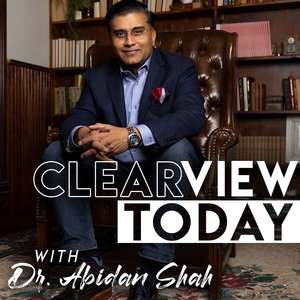
You can order online at Lebleu, that's L-E-B-L-E-U dot com, and when you check out, use the promo code today, that's T-O-D-A-Y, to get 10% off your next order. It'll save you money and supports us here at the Clearview Today Show. Today's secret word is banal, and today's secret word contestant is Dr. Shah. You're listening to Clearview Today with Dr. Abbadan Shah, the daily show that engages mind and heart for the gospel of Jesus Christ. I'm Ryan Hill. I'm John Galantis.
You can find us online at Clearview Today Show dot com, or if you have any questions for Dr. Shah or suggestions for new topics, send us a text at 252-582-5028, or you can email us at contact at Clearview Today Show dot com. That's right, and we want you guys to help us keep the conversation going by supporting the show. You can share it online with your friends and family. Leave us a good five star review on iTunes or Spotify.
Absolutely nothing less than five stars, because why would you? Because why? Who goes on?
Here's an actual question. Who goes onto a platform to leave anything other than one or five? I don't know.
I don't know who's leaving. I really want to go in here and leave a three star review. Like why? It's just like I nothing this product.
Here's the thing. Like if you have a two to four star review, you better have an explanation. Yeah. Everybody knows what a one star review means. Everybody knows what a five star review means. What is the three star review? If it was like meh? Yeah. If you leave like a four star review or a two star review and you don't write nothing at all, just kind of you lose all your credibility with me.
Explain yourself. You can't leave anything on the Clear View Today show other than a five star review, because we are here with our host, Dr. Abaddon Shah, who's a Ph.D. in New Testament textual criticism, professor at Carolina University, author, full time pastor and the host of today's show. Dr. Shah, welcome. Welcome. Welcome, welcome. Welcome, my friend. It's good to be here.
Absolutely. Our verse of the day today is coming from Second Chronicles Chapter 12, verse 12. When he, Rehoboam, humbled himself, the wrath of the Lord turned from him so as not to destroy him completely.
And things also went well in Judah. Dr. Shah, sometimes we just got to humble ourselves and the Lord will turn his wrath away. You know what's kind of funny? I used to think, like, if you're chill and you're laid back and you don't really care a whole lot, then you're automatically humble. And then it's funny how life will, I don't want to say turn against you, but life will just work out in that way where it really actually humbles you. And you start to realize that I wasn't really humble.
I just hadn't had a lot of stuff happen to me or I hadn't I didn't really know what life was actually like. And I think kind of in that growing up and in that maturing, you start to realize what humility actually is. Right. Right.
See, I feel like it was it was different, a different experience for me. I thought, like, if you think less of yourself, like if you just kind of like put yourself down and just kind of are hypercritical, you just are overly, you know, just putting yourself down. That's humility.
But that's not you. You're still thinking about yourself. It's just like pride wrapped in a negative skin.
That's a good point. One of the things that I've learned in the Christian life is that God will take you through a process of humility and he will allow you to fall. He'll allow you to continuously fall and fall hard.
And what happens is through that time of falling, you learn to be less secure in yourself. And that's we think that's a bad thing. We want to be like like like an athlete going into a game or a sport or whatever it is or a match. We want to be at our best.
Right. But when God begins to use us, he wants us not necessarily to be at our worst. You know, like like we didn't do our preparation.
We're not studying when I prayed up. No, that's not what we mean. What we mean is not having that confidence in our self. Right. Right. Right. It's one thing to be sure of what you're about to do. It's quite different to say, I am good.
I am so good. That is not a good thing. Great point. That's a great point.
And even if you do that, let me let me maybe maybe we're getting entangled in words and statements. Even if you feel like, hey, I'm good. I hope it is with the understanding that I'm good because of the gifts that God has given to me. I'm good because of how God has worked out the circumstances in my life so that I have the opportunities or I've had the opportunities to learn and grow and become. So everything I am, I am good, but it's because of God. Right. Using people or circumstances in my life. Amen. That, I think, is the essence of humility. Yeah.
There's a there's an assurance in what God has done and God's timing of your life. So I had this whole segment planned. Dr. Shaw, I was going to ask you, have you ever tried Oreos and sour cream? We've had some people write into the show. They love they love our takes on food and our takes on snacks. And we've mentioned this on the show before the whole Oreos and sour cream thing.
And someone actually texted in earlier and was like, those of you don't know, it's supposed to taste like cheesecake. Why would you spoil it? Why did you spoil it? I thought. No, I'm just I thought you're moving on to a different story. No, no, I was going to I was going to bring it. No, you're just sorry. I'm messing around. You can spoil it if you want. So someone said you were segue into something else. I was like, I don't know what that means. It's all good. Really? The whole point of this is just to say that segment's not going to happen because we live we work in a church full of wild animals who ate all the Oreos.
There's no more. I was going to give you an Oreo with sour cream and say, would you try it? Because it's supposed to taste like cheesecake. Someone texted in and said, hey, I tried the whole Oreos and sour cream thing.
I was shocked that it actually tasted like cheesecake. I was going to give you one and say, would you try it on the show? Yeah. Would you try it?
Sure. We had no Oreos. Now I've got a tube of sour cream if you want that.
I don't think that has the same effect myself. So here's here's another question that I was going to because the last time we talked about this among the staff. If you eat Oreos and sour cream, it tastes like cheesecake. Nicholas said, I don't think so. I said, why don't you try it? He's like, no. I was like, why won't you try it?
I don't want to. I said, if I give you $10, will you try the Oreos and sour cream? He's like, yeah. I was like, I'm going to Apple pay you $10.
Will you try the Oreos and sour cream? He's like, yeah. Apple paid him $10. I'm like, Hey, did you get it? He's like, yeah, I just got the $10. I'm like, all right, try the Oreos and sour cream. He's like, no, no.
Oh, are you serious? So I was like, I was kind of dumbfounded. I was like, what do you mean?
No. He's like, no, I'm not going to. I was like, so he's robbing you.
So I was like, okay, that's fine. Apple pay me the money back. He said, no. Yeah. I said, well, what do you mean? No.
You see where you made your critical error? No, we had a deal. I said, I said, I'm going to Apple.
No, no, no. You, you made a deal on your side. There was never a deal on his side. I said, I'm going to Apple pay you $10.
You try the Oreos. He said, good. I Apple paid him. He didn't try it. I said, give me the money back. He said, no. So now it's like, what do I do?
I just love that this segment in our show notes is called Nicholas the thief. Yeah. Uh, yeah. He swindled me. Swindled. If you did that, what would you do? Like, like for you, if someone was like, I'll do this, you Apple pay on the money. You're like, do it. They said, no. And you forgot, I will give me my money back. And they're like, no, what do you do? Do I take him to small claims court over $10 and some Oreos?
Yeah, that's so banal. I wouldn't worry about it. Ah, you. I was really, I really thought, I thought in the middle of the bamboozle, it would kind of go more long. I hesitate. I was like, you kind of looked at me and I was like, no, it can't be swindled. Swindled is too, that's too, uh, what does banal mean?
Banal is like overused. Yeah. Oh God. You got you. Yeah. Uh, so what would you do if, if he, if he just robbed you of your $10? I would just say it's kind of hack night. You're afraid to kill it.
What if there's multiple secret words? Oh, anyway, long story short, he eventually gave me the money back like a month later. A month later? I just dropped it. I was like, are you, I was like, okay, maybe. Cause then it's sort of that little high school thing where it's like, I didn't say when I do it.
That's the, that's the anathema of giving money back. So was banal the secret word or banal was the secret word? I don't know what the secret word is. I'm going to just keep going. What about the other two?
No way he had the other two just ready. Uh, anathema? Anathema? Anathema? I've never heard of that. What is anathema? I got no clue. It's like something that is, um, so like almost heretical, something that is like, so wrong, like against orthodox values. I'm going to assume that banal was the secret word and I'm just going to go banal banal banal banal banal.
Uh, I don't really know where to go from here. I really wanted to, I really want us to eat the Oreos and the, uh, and the sour cream on the show, but that didn't happen. I think David ate the last of the Oreos. That's an anathema.
Yeah, that's an anathema. A hundred percent. Oh, man.
Well, don't go anywhere. We're going to take a quick break and be right back with more Clear Read Today. Hey, Clear Read Today listeners. We want to take a quick moment to thank you for tuning in. As you can imagine, producing a show like this takes a lot of time, effort and resources. And we're grateful for the Truth Network for giving us a platform to syndicate our show. But the vast majority of our support comes from listeners just like you. If you enjoy these talks with Dr. Shaw and you want to see Clear Read Today continue to grow, consider making a donation today. Because your contributions help us deliver fun, relevant and biblical content right to your phone every single day.
That's right. Every single donation, big or small, goes directly to the production of this show. It helps us keep the lights on in the studio.
It helps keep the mics hot and running. So if these conversations are making a difference in your day, or if you just want to help us keep the gospel of Jesus Christ in the airwaves, we would appreciate your support. You can give by visiting our website, that's ClearViewTodayShow.com, and just click on that button that says Give Today. And remember, your support truly makes a difference in our show.
Thank you for being part of this community. Now let's get back to the show. Welcome back to Clear View Today with Dr. Abbadan Shah, the daily show that engages mind and heart for the gospel of Jesus Christ.
You can visit us online at ClearViewTodayShow.com, or if you have any questions or suggestions for new topics, send us a text to 252-582-5028. Yes, right. Dr. Shah, if you were to ask most people today, most Christians, what is the biggest issue in the church? What is the biggest issue facing Christianity?
You'll probably get answers like sexuality, gender, justice, cancel culture, all of these things that are significant issues, significant talking points. But I think underneath all these issues is probably one that lifts up all the others, and that is the resentment or the shying away from biblical authority. And I know that's something that you are super, super intentional about, not only from the pulpit, but also in your scholarly work, that biblical authority is tantamount. I know you talked about that a little bit in your first book, Changing the Goalposts of New Testament Textual Criticism, is that when you start to get away from an authoritative text, you get away from an authoritative Christian life. And it's a Christian life that's sort of robbed of its power.
Right, right. I've spent a lot of time studying that subject of authority. Authority meaning who calls the final shots in your life?
Where is the point where you say, oh, discussion stops, I have to obey. And that better be the word of God. This cannot just be intuition, cannot just be, oh, the Holy Spirit made me do it. Because, you know, some people may think, oh, well, come on, Holy Spirit trumps the Bible. Because here we're talking about the third person, the Godhead. How can you say the Bible? Because the Holy Spirit has inspired the word of God. That is his breath that is coming through in the Bible. So the Holy Spirit and the word of God are not distinct, OK?
They're not necessarily the one and the same things, but it is the voice of the Holy Spirit. Good point. So I would say biblical authority is very important. So that's where the buck stops.
Yeah. So whether it has to do with sexuality, whether it has to do with ethics, morality, values, all of that. Biblical authority.
This is where you say discussion ends. I'm going to obey God. Do you think this is this points to a lack of respect for biblical authority or is this indicative of a larger problem with authority in general?
Great question. In our culture today, I think it has a lot to do with the further we're getting away from the Christian foundation, the Judeo-Christian foundation. The further we're getting away from a foundation of biblical authority. So people are making decisions just like they did in the time of the judges.
There was no king in Israel. Everyone did what was right in his own eyes. So now we are, everybody has become like an authority to himself or herself.
Right. What do I do with my body? I decide that. I decide whether or not I'm going to have this child. I decide whether or not I want to be a girl and I'm a boy.
I decide if I'm going to be married and have sex or not. So authority is right now a big issue. I saw a debate one time. It was a few years back, so this is sort of dated, but it was Ben Shapiro on the Joe Rogan podcast. And he was talking about, you know, they were having a debate about homosexual marriage and homosexuality in general. And he was saying, you know, do you do you believe it's wrong? And Ben Shapiro said, are you asking me as a politician?
Are you asking me as a religious person? He said, just religious. And he said, you know, of course, I think it's a sin.
It's you know, it's not we don't the Jewish people are not cool with that. And he said, but how can you say that? And he said, you know, if you want I don't this is where I think we would part ways with Ben Shapiro.
Ben Shapiro said, I don't care what you do. You can be gay. You're free to do that. I'm not telling you that it's wrong. I'm telling you, if you want buy in into the Jewish faith that these are the ground rules.
But whether whether you do whatever you want. And I think Christianity would go one step further than that to say, no, there is a standard. You know, it's not just, hey, if you want to be a Christian, can't be gay. It's that this is a moral wrong, whether you're a Christian or not. Right.
You know, and I think there's that's where people. They they resent that because it's now presenting this view, not as like, hey, that's just what we believe. Now it's an authoritative statement. Well, when you bring morality into the discussion, you have to derive morality from somewhere. Right. It's got to it's got to come from a source.
I think we would say that source comes from the Bible. But I mean, if people are pointing pointing to a source of morality, most of the time, they're going to be informed by those biblical principles and may not even realize it. But I think what I like about it is that it isn't like, hey, this is for us. We don't do this. It's not that with with at least with true Christianity, with evangelical Christianity.
I feel like like you have no problem at all. Dr. Shaw saying from the pulpit, you shouldn't do this. People ought not do this, which is an authoritative statement. Right.
And people balk at it. And just keep in mind, for those who are listening, viewing, when I say that I'm standing on the word of God. It's not my authority. Right. It's not my credibility.
It's not my ethos or pathos. It is a logos. It's the word of God.
And so I get up and preach that way because I believe God's word is the final authority in our lives. Right. Right.
Yeah. People have often asked me about Roman Catholicism. What is one of the biggest differences between Roman Catholicism?
Is it that they pray to Mary or the saints and we don't or they believe in purgatory and we don't? I believe the bigger difference is regarding authority. When they talk about authority, they're not just talking about the Bible, but they're also talking about other things. Right. They're talking about the pope's word or tradition.
Right. These are just as authoritative as the Bible or the New Testament. That's where we have to part company and say, no, your tradition cannot trump biblical 66 books, 39 in the Old, 27 in the New.
Your tradition cannot go beyond that. Do you think that's where a lot of the conflict with the Catholic Church was coming in back in those days, like in the Reformation days is that it wasn't that they were arguing biblical principles as they were arguing tradition. They were arguing preference. Yeah.
I mean, if you want to go back to the indulgences. Right. What was the big issue with that? The big issue was that is you don't find that in the Bible.
Right. You find that in the Catholic tradition, they were using that to build St. Peter's Basilica. So where is that coming from? Where in the Bible do you find, you know, thou shall pay so much to have your sins forgiven? So that you can go to heaven and live in heaven forever.
And so pay this money. And that money will be used to build St. Peter's Basilica. Do you think that's still the case with Catholicism today where we have to leverage biblical authority with the Pope's authority? Oh, yeah.
That's still 100 percent true. Hypothetically, if the pope ever said something or if if tradition was established for the Roman Catholic Church that went against scripture, would they say... It has. So would they say that that will trump biblical authority? Yeah. OK. Oh, yeah. In practice, hundreds of times. And they would go with what the pope says over the Bible.
Yeah, they will go with that 100 percent. It's not necessarily that they even take the time to compare and say compare and contrast. For example, the whole sexual movement that's happening in the Catholic Church, right, becoming more open to homosexuals or transgender and all that stuff.
What are they doing? Yeah. Because the pope said it's OK. So we need to find that article where it talks about that. So we need to stop and say, you know, the Bible should be your authority, not any man. Doesn't matter how highly esteemed that man is. Doesn't matter how much he has been ordained for that task.
It doesn't matter. The Bible says what needs to be said about the sexuality. What do they do with the passage about adding to or taking away from scripture? Great question. Yeah, maybe. Great question. Maybe they don't know it as well. While he's looking for that article, I feel like there's like two extremes almost, where you've got these people who are like, all the authority belongs to the pope or to this man or to a pastor or whatever, and he is going to tell me what to think and how to live.
And I don't really care what the Bible says if he doesn't say it. Yeah. But on the opposite side, you've got the Follow Your Heart Disney Princess, you know, musical number songs.
It's like, what is that? That might be true for you, but it's not true for me. Like, that sort of...
I do love a good Disney musical number. Not in this case, but just in general. Well, that's what I'm saying. Like, it seems like you've got people on either of those extremes, whereas I'm my authority. No Bible, no man will ever tell me who I am or who I need to be. And it seems like somewhere in the middle, there's a place to really sit and find that groove of...that groove, but you know what I'm saying? That sweet spot of submitting to actual biblical authority in a way that helps.
Yeah. Well, talking about this whole Catholicism, I'm sure some of our viewers and listeners were like, what are you talking about? Well, so here's an article that came out January of 2023, where the pope clarified his remarks about homosexuality and sin. So it all happened because something was said about being a homosexual is not a crime. It is not a crime. And then he defined as unjust laws that criminalize homosexuality on and on, urging the people, especially the bishops, to show tenderness as God does with his children. Laws? Unjust laws like biblical laws? No, civic laws. Okay. Yeah.
So then in an interview, the pope said, we are all children of God, and God loves us as we are, and for the strength that each of us fights for our dignity. Being homosexual is not a crime. It is not a crime.
I get it. It's not a crime. Right. Right?
You're living in a free country, so you can do that. Right. But then he goes on to say, yes, but it is a sin. Fine, but first let us distinguish between a sin and a crime. What is the difference between that?
Right. So then you're playing with this nuance. What is sin? Sin is to lack charity with one another.
It's also a sin, yeah. But who is arguing that being homosexual is a crime? Who's arguing that?
Right, nobody is. But see, I think what you see here is a classic example of backpedaling. Right. That's not what he meant. He meant what he meant. Yeah.
And what he meant was, this is not wrong. I mean, where's the pope? In Italy? In Vatican City? Yeah.
I don't know what the laws are there, but I don't imagine that being homosexual is a crime. I mean, unless I'm wrong. Then he says here, when I said it is a sin, I was simply referring to a Catholic moral teaching, which says that every sexual act outside of marriage is a sin.
Of course, one must also consider the circumstances which may decrease or eliminate fault. Oh, right there. Leave the door open. There you go. Give me some wiggle room here. Because it might be fine. Who knows?
Unless you're born that way. Yeah. You have to consider the circumstances.
Used to say, or not to say, let's ask Dr. Dre. Yeah. Just joking. Then he goes on to say, all right, as you can see, I was repeating something in general. I should have said it is a sin, as in any sexual act outside of marriage. This is to speak of the matter of sin, but we know well that Catholic morality not only takes into consideration the matter, but also evaluates freedom and intention, and this for every kind of sin. My problem there is this, a lot of backpedaling happening here.
One is the crime versus sin. Right. Okay. And if you're just reading it at face value, your response is, of course, you got to clarify because one is not the other. Like, okay, yeah. But that doesn't seem to be the intention the first time. Who said, I mean, again, who said that it was a crime? There's no- Right. That's what I'm, what was the original statement that he's backpedaling on here? What was the original- I think something about it's not a crime, but kind of left it. Yeah.
And at that point, people called him out and he's like, wait, wait, wait, wait. I did not say it is not a sin. And then towards the end of that article, what he's saying there is, hey, listen, what we have said, and the Catholic church always stands on, is that any sex outside of marriage is sin.
Homosexuality is sex outside of marriage, hence it is a sin. See? See?
Jump to conclusion. Yeah. What I mean by that is homosexuality is not just any kind of sexual sin. Right.
That's right. You can't lump it in with all the others. It is different. It's a different category. Read Paul's letter to Romans.
Romans chapter one. It is the last step on the way down. Yep.
That's true. Yeah. He didn't, he didn't lump it in with having sex out of wedlock or- Yeah.
Adultery or whatever. No. Not for a moment. But we say that it's okay to do that. Right. And as long as you do that, you're better than the homosexuals. No. All of it is sin.
But the moment somebody says, hey, listen, this is no different than that, at that moment they are mitigating what God has said. That is a big problem. Yeah. Right. Sexual sins are a problem. Homosexuality is the worst kind of sexual sin.
Yes. That's true. That's true. That goes back to our discussion. That's compromising on biblical authority.
The Bible says that this is a sin and categorizes it as the last sin on the way down. We've got to hold that with stricter harshness than the world around us would have us do. Yeah. It's not a matter of bigotry or hate. It's a matter of submitting to biblical authority.
Yeah. And so it's just like Ryan said, if the Bible says it, it doesn't mean that I hate you. It doesn't mean that I think less of you or that I think you're scum. It's that God has said that this activity, this behavior is an incredibly horrendous sin.
Right. So for me to have this false compassion, this opening up of, well, I'm just going to ignore that. No, I'm no longer submitting to biblical authority. And as a Christian, you just can't do that.
Our researcher, David, sort of pulled up a little bit of history on Pope Francis back in 2013, which is going back about 11 years. He said, if they accept the Lord and have goodwill, who am I to judge them? A few moments ago, I said, he's talking about homosexuality is not a crime.
It seems like, wait, wait, wait, wait, wait, wait, wait. I did not say it's not a sin. No, he said what he said. So, and then when you go back to look at the history of this person and what he said before. Yeah, he meant it. What he meant by it's not a crime is to say, stop trying to judge.
Yeah. Homosexuality. I can understand some dude off the street saying that, but if he's talking about gay priests, if they accept the Lord and have goodwill, who am I to judge them? You're the Pope. I thought that was the one thing you're supposed to do. I thought that was the one thing the Pope was supposed to do.
He goes on to say back there up on top. He said, if they, meaning gay priests, accept the Lord and have goodwill, who am I to judge them? They shouldn't be marginalized. The tendency, talking about same sex attraction, is not the problem. They're our brothers.
Pope Francis. Hence, we said, the fact that you said it's not a crime, oh, wait, wait, I did not say it's not a sin. It's very hard for us to believe that you just misspoke. Yeah, because you said the tendency- Based on prior rhetoric.
Yeah, the tendency for same sex attraction is not a problem, but it's still a sin. Right. And then back in 2014, he said, 2015, sometimes it happens that you feel disappointed, abandoned by all, but God does not forget his children. He never abandons them. He's always at our side, especially in trying times. And he joined about 50 prison inmates during his visit to Naples.
This is in 2015, where he visited this ward, which houses those who are gay, transgender, or have HIV or AIDS. Yeah. You know, I've done this before, where I've said something and then realized, oh, I just implicated myself. I have to kind of backpedal and clarify what I meant, even though I knew what I meant at the time. But you know what's funny is when you stick to what the Bible says, I never have to do that. Funny how that works.
Yeah, that's one thing I love about Dr. Schein. You're 20 something years, almost 30 now of preaching, years of preaching. I don't think I've ever heard you retract something and say, hey guys, what I meant was this. Y'all misunderstood it.
Y'all took it for granted. I don't know. I mean, correct me if I'm wrong, but I don't think you've ever had to do that. No, not. I may have to backtrack on some theological nuance that I've learned or some hermeneutical principle that has, that has been developed. And now we're able to read the Bible in a fresh, new and more authentic way. But that's not regarding cardinal doctrines. That's not regarding those things that God has since eternity past called an abomination.
We're not talking about that. I think already, maybe, maybe you can kind of weigh on this. We got about two minutes left in the show, but there doesn't seem to really be absolute truth anymore. It used to be there's a standard and this is true. And now it's like, I don't know what true is. And I don't really care what true is.
It has been coming for a while. I remember back in the nineties, we used to talk about relativism. Truth is relative. Truth is relative.
Now it's gone a step beyond that. It's not just truth is relative, but now it's about, there is no truth, there is no truth. And now we're living in a world where falsehood and falsity has become the truth in every aspect of life, whether it has to do with crime or Bible or authority. Now the lie is the truth. So we've gone from relativism to denial to now a swapping of what is truth and what is a lie. That's right.
Wow. Make sure you guys join us tomorrow. Same time, same station. We're going to be diving into another great topic here on the Clearview Today Show. Big thanks to Mighty Muscatine for sponsoring today's episode. And don't forget that you can support us by subscribing to the show on iTunes. If you want to re-listen to an episode or maybe share it with a friend and you can always support us financially at ClearviewTodayShow.com.
Jon, anything you want to plug? Yes, we're going to be going live on January 3rd from 7 p.m. to 9 p.m. That's a two-hour live stream for our 24-hour prayer vigil. Make sure you call into the show, 2525825028, and we will pray with you live on the air. Also make sure you pick up Dr. Sean Nicole's book, 30 Days of Praying for America, Daily Devotions to Heal Our Nation, available on Amazon right now, as well as our debut worship album, Heaven Here and Now on iTunes, Spotify, Amazon, anywhere digital music is sold.
That's right. We'll see you tomorrow. Same time, same station. We love you guys. We'll see you tomorrow on Clearview Today.