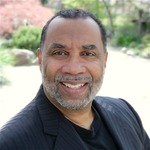
In a world filled with devices and social media, might we be less connected than ever? We're not skilled to know how to act, react, communicate, respond. And many of these things we have to unlearn in order to learn how to relate and engage in the healthiest way possible. Welcome to Building Relationships with Dr. Gary Chapman, author of the New York Times bestseller, "The 5 Love Languages" .
Today a practical conversation about improving your people skills. Author and counselor Deborah Fileta wants to help you reclaim the art of connection. Our featured resource at buildingrelationships.us is her book, People Skills. Its subtitle, Your Relationships Are Only as Strong as Your Skills. And again, you can find out more at buildingrelationships.us.
Gary, you have really good people skills, as I've seen over the last couple decades. You probably were born with a certain amount of that. Have you had to work on any relational skills through the years? Yeah, I think, you know, Chris, by nature, I'm an introvert. And I had to learn, you know, how to take initiative to reach out to people.
It's more natural for me now, you know, and people would look at me and never probably even realize that. But, you know, it took me a while to realize if I'm going to help people, I got to relate to people. I got to be more, take more initiative, you know, to reach out.
Now, my wife, you know, she's an extrovert. I mean, she can strike up a conversation with a stranger in the grocery store and 30 minutes later knows her whole story, you know. But yeah, that's probably the area where I had to grow a lot from my natural inclinations, you know. Yes. And part of that, as we've talked about through the years, and we're going to talk about today, part of that is listening.
I think that's one of those lost arts. And we're going to hear Deborah Fileta talk about that. She's a licensed professional counselor, best-selling author of eight books. She's the founder of the Deborah Phileda Counselors Network, hosts the podcast and nationally syndicated. Radio show Talk to Me.
She and her husband John and their four children live in Lancaster, Pennsylvania, and her featured resource at buildingrelationships.us is People Skills. Your relationships are only as strong as your skills. Again, find out more at buildingrelationships.us.
Well, Deborah, welcome to Building Relationships. Thank you for having me. I'm excited to be here.
Well first, for those who don't know you, I don't know who that would be, but tell us about yourself, your story, a little bit about your family, why you decided to become a counselor. Just let us get to know who Deborah is. Yeah, well, like you mentioned, I'm a licensed counselor. But first and foremost, I am a woman who loves the Lord. and his plan for healthy relationships.
And so God has really put that on my heart to help the church go deeper in our healing mentally, emotionally, and relationally. And I get to live that out each day. My husband and I have been married for almost 19 years, and we've got four kids who we actually homeschool.
So you can imagine the learning, the people skills that are involved in the day-in, day-out interaction with our family and ministry. I'm so grateful I get to write books and teach all about healthy relationships. And it's such a privilege to get to do this.
Well, let me say first of all, I admire anyone who does home schooling. I was in a restaurant not long ago. A lady walked in at lunch. She walked in with eight. children.
I didn't know whether they were hers or not. You know, and later the the husband walked in, at least I assumed it was the husband. It was a man. They all had lunch together. When I got ready to leave, I walked over to their table and said, Excuse me, may I ask you all a personal ask you a personal question?
Because the husband had already left. I said, are these all your children? And she kind of smiled and said, yes. Do you homeschool? Because it was the middle of the day, you know.
Right. And she said, yes. And I said, God bless you. Oh, it is. It is lots of lessons to learn.
And I'm telling you what, the process of sanctification as we lead these kids. And, but it is such a privilege to be able to invest. I always think of it for me as, you know, God has given me the opportunity to invest in the body of Christ, but it's such a privilege to be able to invest in my own house first before I invest outside of the house.
So it's been a great privilege. And I couldn't do it without an amazing, supportive husband. We kind of tag team this whole thing.
So I'm so grateful. Yeah. Yeah. Yeah. That's wonderful.
Now on your podcast and radio program, What's one of the tough questions that you've been asked recently? Because sometimes on those kind of programs you you kind of just hit cold with the question, but does anything come to your mind just off the top of your head?
Well, I'll tell you a theme that comes up a lot, a theme that is coming up constantly in my podcast. You know, it's a hotline style show. People call in with their questions and I answer. And I think a big theme that comes up is people calling in asking how they can fix. Change, adjust, or transform someone in their life.
You know, maybe it's their husband is doing A, B, and C, or their teenager is doing A, B, and C, or a coworker. And it's an interesting theme because I think it's in human nature to want to adjust and transform and fix, but we seem to quickly focus on what needs to be adjusted and shifted and changed in the person in front of us without realizing that. Really, adjusting and changing and transforming us, ourselves, is the most powerful ingredient that we have. And so, when it comes to that conversation, I always find myself reminding people that. Relationships are like an equation.
They're like a recipe. You know, I hold a certain set of ingredients and the person in front of me holds a certain set of ingredients. And I can try with all of my life, with all of my might, with all of my energy, with all of my words to change the ingredients of the person in front of me. And it's going to get me nowhere. It's not going to get me very far at all.
If anything, it might add more conflict and tension and isolation in the relationship. But if I were able to focus on my ingredients, to transform my ingredients, to swap out the bad ones for better ones, to refine the ingredients that God has given me, that in and of itself changes the entire recipe.
So we have a lot of influence in relationships, but that influence really does begin with how we show up and what we're bringing to the table of a relationship.
Well. That alone is powerful. I was just sitting here nodding my head as you were talking because so many times we want to change the other person. And I don't care how many times we hear you cannot change another person, we still have the sense. They need to change, and that can help them if I point it out to them, you know.
Right, right. And I don't think this is a new thing. You know, when I think of Jesus in Matthew chapter 7, where he says, First, remove the plank from your own eye. And then you will see clearly to remove the speck from your brother's eye. And I think there's something to that.
Jesus isn't saying, don't ever confront people, don't ever say what you need, or let them know. That's not what he's saying. What he's saying is that the majority. Of the equation falls in our responsibility. We've got to focus on our role first, and when we do that, we can then see clearly to offer feedback, critique, to give our two cents of, hey, could you could you change this?
Could you alter this? Could you help here? Could you consider this? But we often do that first. Before we've taken the plank out of our own eye.
And so I think that's a really important relationship principle for us to remember. Absolutely.
So as you fail questions and take a look at today's culture, What are you seeing in terms of people's mental, emotional, relational heal health? Yeah. We're in an interesting season with the introduction of social media and technology and screens. I mean, I think we're facing. Problems And Obstacles that maybe we didn't face 20, 30 years ago because of the nature of living in such a tech-saturated world.
And it's starting to have an effect on Our mental and emotional health, as well as our relational health. I mean, sadly, I think we're just at the brink of this. I think the wave hasn't even crested yet with the impact and effect that a tech-saturated culture is going to have on our mental, emotional health, and our relationship health. I mean, where you used to have to go to the grocery store. and have an interaction with the cashier and talk about your groceries and your day.
Now you pick up your phone and with a click of a few buttons, you've ordered your groceries and you can even select leave it at my front door so that you don't even have to interact with anybody. And we know that we are the most connected online. But research shows that we're feeling the most isolated and alone. And so we've definitely lost those connections in the way that God intended for us to have them. And it's it's concerning.
It's concerning to see how that's starting to seep into our relationships, our marriages. You know, more than ever before, screens are becoming part of the conversations. And conflict in relationships.
Someone's distracted, they're not prioritizing their spouse or their children because the screen is constantly part of the relationship. And so we're in an era where we have to be really intentional not to allow the inanimate objects, the phones, the screens, the devices, to rob us of these intimate relationships that God has given us. Yeah, it's easy to say that. It's more difficult to actually put it into practice, right? It is, you're right.
I think it starts with an awareness. of why we pick up our phones to begin with. Is something that I call technoference. It's this technology that's interfering. in the intimacy that we're supposed to have in our relationships.
A guy the other day said to me, I sat there and realized one evening, my wife and I were watching television, And when the commercials came on, she would cut them off and we'd each pick up our phone and look at text messages and whatever. And we did that the whole the whole time. And I remembered we used to talk during the commercials. We don't talk here. That's just a simple example of what you're talking about, right?
Yeah, we fill in the space with screens, devices, audio books, podcasts. And not only is it detrimental to our relationships, but it's also detrimental to our spiritual Journey. We're not taking a pause to allow the Holy Spirit to speak, to convict, to transform, to sanctify. There's no space in our mind to do the work that needs to be done for healing. And we get to the end of the night when we're finally able to kind of take a little rest.
We have a little bit of space, you know, as you're falling asleep, and we wonder why our minds are bombarded with thoughts and worries and fears and anxiety and why we stay up till two in the morning. Thinking and fixating and obsessing and ruminating, but we haven't given our minds and our spirits even a pocket of time. To think and process during the day.
So, so you know, it's really an epidemic. Yeah. It'd be interesting to know in the average Christian's life the amount of time they spend online observing, listening, watching. and the time they would spend sitting down with God. You know, and reading the scriptures and talking and interfacing with God.
It would be interesting. And convicting, I think, for most of us, very convicting.
Well, another topic. In the book, you say marriage is a mirror to our childhood wounds. Yes. Unpack that for us. You know, it's interesting when you're in close proximity to someone.
And this is a really important people skill to understand. When people get close to you in intimate relationships, they have a tendency to kind of rub against certain sore spots in your life. I call them emotional sore spots. And what I mean by that. You know, if physical sore spots are these physical wounds that we have.
One time, my husband came to give me a hug at the end of the day. And what he didn't realize is that earlier that day, I was rushing to get out of the house with the kids and I wasn't paying attention. And I had hit my shoulder on the coat rack and it left a sore spot. There was a black and blue bruise that he could not see. And he leaned in to give me a hug, and I winced and pushed him away because it pained me, it hurt me.
He didn't cause that wound. But he pushed on it. And when we are in intimate relationships, especially marriage, I mean, marriage is one of the most intimate relationships of all. We are. Getting our emotional wounds pushed up against, they are getting pressed.
And there's often a reaction, an emotional reaction, just like I reacted when he pushed up against my bruise. Ow, you know, and even a pulling back, like, stay away, that hurt. But what we have to understand is that much of the wounds that are surfaced in marriage are wounds that we have carried. Previously, wounds that have been caused by someone else in a different stage of life, in a different season, in a different time. For example, The wound of inadequacy.
I worked with a couple who. Every time the wife would suggest something, Or ask a question, the husband would react in a really strong way. One time they were outside pulling weeds in their garden, and she came over and said, Oh, are you gonna get those weeds over there? And he just reacted, Of course, I'm gonna get those weeds. What do you think?
Do you think I'm stupid? Do you think I'm not good enough?
So, really, what it came down to as we processed in our counseling session is, He grew up in a home with a father. Where it was my way or the highway. Never feeling like he was good enough, never feeling like he was adequate for his dad, always feeling like he was picked apart and critiqued and criticized and put down. And he never really faced, addressed, or healed that wound. And now he's in marriage.
And every time his wife says something that even feels remotely close to that wound of inadequacy, I'm not good enough. It causes an emotional response. He didn't realize that. He's thinking it's his wife. She's a nag.
She's constantly telling him what to do and what not to do. What he didn't realize, though, is that a Maturity. Of that wounding was from his childhood, and it was coming out through the context of his marriage.
So, I always remind couples, especially when you're triggered, and when you feel this exaggerated emotional response. to an interaction. That is always an X marks the spot moment. This is where the Lord wants me to do some digging and some healing because there is something here that God is revealing. that he wants to heal inside of me.
And that's how marriage functions as a mirror to our heart and our soul and the things where we need to pay attention to. I think that's an insight that a lot of people do not have. They don't understand their reactions. And what you just said is super, super helpful to them.
Now the title of the book has to do with skills, people's skills.
So let's talk about that. How do you define people's skills and why are they so important? It's interesting because in the past, there have been books written to help you become more popular or more influential or more likable. And I do think when you address these skills, because really how we relate to people, how we engage with people, is a skill set. But In my heart, the goal of this book and these 31 principles, these 31 practices, these 31 skills, the goal is not just to become more likable.
The goal is that, so that we can convey God's love to this world in a clear and effective way without our own stuff getting in the way. We don't want to convolute God's love, we want to convey it. As Paul says in 1 Corinthians 9. I have learned to become all things to all people so that by all means possible, some might be saved. And I think that's the goal of people skills: we learn how to engage with all different types of people in different ways so that we're effective in conveying the love that God has given us to convey.
And especially these days, Dr. Chapman, I mean, we live in a season of life where. The world is dark and desperate and hurting, and in need of God's love. And we have that love. We get to convey it.
But sometimes it's not a lack of love that gets in the way. It's a lack of skill. We're not skilled to know how to act, react, communicate, respond. We're not aware of our body language. We're not aware of our tone.
We're not asking questions. We're coming across cold when we don't mean to be because some of these skills are things we learn by default along the way for good or not so good. You know, a lot of our default mode is what we've experienced along the way from our family of origin. Yeah. And many of these things we have to unlearn in order to learn how to relate and engage in the healthiest way possible.
So when you're talking about your book to others, what's been the most unexpected or maybe surprising reactions that you've heard?
Well, what's been most interesting Is how many people think they have people skills who actually don't? That's been the most interesting. Because Oftentimes, someone might assume that if they are good with people or extroverted, that they have people skills. But that is not what we interpret our people skills by, because you can be an extrovert and still have poor people skills. An example would be an extrovert who walks in a room and all of a sudden they hog all of the attention.
They're like an attention vortex. It's kind of all about them. And they're laughing and they're cracking jokes and they're the ones taking all of the attention in the room. That is not good people skills. People skills is the ability to honor my story, my perspective, my needs, my feelings, all while honoring your story, your perspective, your needs, your feelings.
It's bringing balance to the equation of a relationship. And it requires things such as empathy. Humility, good listening skills, vulnerability, being able to go first, having emotional intelligence and emotional awareness, and learning how to have emotional connection with people. It's about learning how to repair after conflict instead of running away from conflict. And I unfortunately think we live in a world where we We've kind of overcompensated.
I mean, I don't know about you, but you've probably noticed that. We live in what we call the cutoff culture, where somebody hurts you. Or says something that you don't like, and now it's almost as if we have permission to cut people out of our lives or go no contact, as they say, for minor things rather than learn how to stay and repair relationships, how to practice some of those necessary skills of repair after rupture, which is something that I really believe is getting lost in our society today. Hmm. I do know there's a lot of people who have broken relationships, and often with family members, you know?
Yeah. But you said. Yeah, it's becoming more and more common. And what people call boundaries are not actually boundaries. They're an excuse to avoid or deal with difficult things.
Because, as you and I know, Dr. Chapman, boundaries are not what we tell people to do: stay away from me, don't call me. That's not a boundary. A boundary is what I'm going to do in response. And so sometimes we get confused with these terms.
And we're actually doing damage to relationships instead of healing our relationships. Yeah. So how could even a small improvement in people skills transform someone's personal or professional life?
Well, let's think about a basic people skill of our communication style. There is the passive communication style.
So, I'll give you a quick example. Let's say you're at a restaurant. And the waiter brings out your meal, and it's not what you wanted, it's not what you expected.
So, a passive person, passive communication style, would say nothing. They would think, well, this waiter is really busy. He's had a long day. Look how crowded the restaurant is. I'm just not going to make a big deal out of this.
I can live with it.
So they. Honor the waiter and the waiter's story and the waiter's perspective, but they don't honor their own needs, feelings and perspectives by not saying anything. And then we move on to the aggressive communicator. They honor their perspective, but not the perspective of the person in front of them.
So the aggressive person might say, Well, this meal is messed up, and you owe me an apology and a refund, and you need to make this right instantly.
So they're honoring their version of the story, their feelings and needs, but they're not honoring the person in front of them. And then there's the passive-aggressive communicator who neither honors their feelings, needs, experience. Nor honors the person in front of them. The passive-aggressive communicator wouldn't say anything. They just let it slide.
You know what? I'm not gonna make a big deal out of this. But then when the waiter comes, The rude They're short. They hardly look them in the eye. They leave them a bad tip.
And then later that day, they write them a negative review on Yelp. They're not honoring themselves or their stories and needs, and they're not honoring the person in front of them. But really, what we're called to be. In healthy relationships, it is an assertive communicator, someone who's able to honor their needs and feelings and experience, all while honoring the person in front of them. In this example, it would sound as simple as, Hey, I know you're so busy.
I really appreciate your hard work. I noticed that my meal didn't come out right, and it would mean a lot to me if you could make this right when you get a moment. I'm able to honor my needs, but I'm also honoring and respecting the person before me. And I'll tell you, out of all of these 31 different skills, If we could start there, if we could start by learning to honor the person in front of us, their needs, their feelings, their experience, all while honoring our needs, feelings, and experience, What we could do. is limitless.
Our relationships would become so much healthier. You know, intimate relationships as well as superficial relationships would become so much healthier if we were able to go into them with that perspective. At the front of our minds. This is the Building Relationships with Dr. Gary Chapman Podcast.
You can find out more about today's program topic at our website, buildingrelationships.us. Our featured resource is the book by Deborah Faleda, People Skills. Find that and more ways to strengthen your relationships at buildingrelationships.us or go to fivelovelanguages.com. Deborah, I was thinking when you were given the illustration about the restaurant and being an assertive communicator there, kind but sharing your concern, that I think if there were waiters and waitresses hearing you say that, they would be saying, yes, yes, yes, yes, please, please, please. Because I'm sure they've had many who just blew up at them, you know, and just made things awful.
Well, let's talk a little bit about the life of Jesus because he, I'm assuming, modeled maybe some of these people's skills. And what were some of the things that come to your mind? that he either ex uh exhibited or taught uh about people skills. Yeah. He certainly did.
practice healthy people skills. You know, the more that I sit In the Gospels. The more that I study the life of Jesus and his heart, And his, his, who he was as a person. The more it challenges me. Jesus was such a good friend, you know.
He knew how to engage in relationships with people. And something as simple as how good he was at asking questions. He asked over 300 questions in scripture, open-ended questions. that invited us to think, to process. to dig deeper, to have insight.
He had so much compassion for people and empathy.
So to put Himself in their shoes to know what they felt like and what their experience was. You know, even as he was dying on the cross. It was empathy. That allowed him to move into forgiveness when he said, Father, forgive them, for they know not what they do. He was able to put himself in their position to feel and experience what they felt like and be able to judge them from that perspective.
He's like, I know where you're at and what you feel like. And so often We judge people from our perspective and not from their perspective. What might it feel like to be in their shoes? Empathy. Is a really important people skill that Jesus had.
And another one that I think of that Jesus had was the ability to engage in give and take relationships. He didn't just give, give, give, give, give. He also Received. He asked for things in relationships because he knew That give and take is what leads to deeper intimacy.
So he asked his disciples, will you go to the next town and prepare Passover? Will you go and find the colt that I need to ride into town? Will you stay up and pray with me? When his friends gave to him, for example, when Mary came to wash his feet. He didn't push her away.
He allowed her to serve him in such a way. And I think sometimes we prevent ourselves from going deeper in relationships because we're not willing to be vulnerable. We're not willing to receive from friends or even ask for things that we need. But really, vulnerability is what paves the way for intimacy. And so, Jesus just modeled so many things that we can learn from as we grow in our own people skills.
Yeah. You alluded to this earlier, but a statement in the book which says It's not a deficit of love. It's a deficit of skill. Speak to that again with the to us. Yeah, I think that's really important for us to understand because sometimes we just assume.
When we are in relationship with someone who is not acting, The way that we want them to act, or responding the way that we want them to respond. we can get discouraged pretty quickly because we can start to assume they must not love me. Because if they loved me, they would fill in the blank. But really, in most situations, And I see this as a counselor all the time. In most situations, what it actually is, is not a deficit of love, it's a deficit of skill.
These are skills. That they have never been taught. These are skills that most likely you have never been taught, the person that's coming in and complaining about it. And so, the beautiful thing about that. Is that skills can be learned, skills can be practiced, skills can be honed, skills can be strengthened.
And when we strengthen our skills, It strengthens our relationships. It's funny because I think, as Christians, we expect to just be good at relationships when we haven't actually put in the work, we haven't learned, we haven't dove into classes, learned "The 5 Love Languages" , all of the different things that are literally skill sets that if we could learn them and practice them, we would see a remarkable difference in the way that we do relationships. Yeah. As a licensed professional counselor, is there one people skill that you see most people struggling with? I would say it's the skill of ownership.
And that kind of goes back to the equation that we talked about in the beginning. It's being able to own my role. In this relationship, rather than focus on the other person's role. What's my role in listening? What's my role in healthy communication?
What's my role in conflict resolution and proper boundaries and in conveying my emotions? Because if I were to take ownership and practice doing things a little bit differently inside of me, It would change the equation of every single relationship that I am in. When I change me, it begins to change every single person that I touch. And so I think there's something to be said of that. And not only that, Dr.
Chapman, when we begin to take ownership and start to shift and change, it starts to motivate the people around us. They start to shift and change. They start to see the difference. They get motivated too. If you've ever been married, for example, and one of you says, Hey, I'm going to go on a diet and I'm going to start to eat healthy and exercise.
You do that long enough.
Next thing you know, the people around you start to get motivated too.
Well, I'm going to do that too. It's having positive effects on your life. And that's one of the number one ways we motivate people. Is by starting to do the work in our own life and watching how it begins to impact the people around us. Hmm.
What's the most underrated yet powerful tool in building strong relationships? I would say in this day and age, It would be the skill of really listening. Yeah. I think We think we're good listeners. Just because we hear something, we're hearing, but we're not necessarily listening and processing.
Oftentimes, we're focused on what we're going to say next. We're focused on the distractions around us. We're listening to validate our own opinion rather than listening to learn. Yeah. And if you think about it, if we miss what's being conveyed to us.
That's 50% of the conversation that we've missed. You know, if we have 50% and they have 50%, if I'm missing your 50%, then I have missed half of the conversation. And 50% is a failing grade. I am not going to succeed in this interaction if I'm not able to listen and listen well. And so.
Simple strategies like making sure when someone's talking to you that you're in an area where you're not distracted. Asking follow-up questions to make sure that you're receiving the information as it was meant to be conveyed to you, and repeating what you heard so that A, it shows the person in front of you that you're listening. But B, it also solidifies that conversation and interaction in your mind. And so those are just some simple things. But I think we can really do a better job with listening to the people that we're interacting with on a daily basis.
And I think that alone could really have an impact on our interactions and our people skills. We we're not necessarily listeners by nature, are we? Yeah, I would agree with that. I think it takes work. And I also think social media culture.
has wired us to output without input. We get online, we leave our comments real quick, we post things, we're outputting a lot more than we are inputting in a healthy way. And sometimes we take the things we learn on social media and we play it out in real life without realizing that that's actually harmful in everyday relationships. Deborah, in the book you say that there are four levels of conversation. What are they, and what is understanding that matter?
Yeah. I think sometimes, especially when I'm working with a couple, Or somebody who is in a close relationship with someone else, I might hear one of them say, I don't feel like we're really connecting. And the other person might say, well, I don't understand why. We talk all the time. We talk a lot.
Why aren't we connecting? But The the point here is that there's levels. Of connection, there's levels of communication, and it's kind of like a pool. There is a shallow end. And a deep end.
And I think this the shallow end is important because it's the entry point into an interaction.
So if we had to kind of put it in terms of what that looks like in communication, level one is the most superficial, the most basic form of communication. Are the facts? What are you up to today? What was the weather like? What's your schedule?
Where are you going? What's the grocery list? Those are the facts, the things that we could engage with, even with a stranger. The next level takes us a little bit deeper in interaction. And that's level two, our opinions and ideas.
What is my opinion about the weather? And what is my opinion about this political situation or that? What is my favorite thing? What is my favorite type of food? Rather than just what's on the menu tonight.
That takes us a little bit deeper with somebody because it's requiring a little bit more about them, a little bit more of them attached to the conversation. Level three takes us a little deeper, now we're in the deep end of the pool, and level three is all about our feelings. What are you feeling? I'm feeling Embarrassed? insecure, inadequate, excited, hopeful?
All the different feelings underneath the surface take us into that deeper territory of a relationship. And why that's deeper is because it's 100% of who you are. Your feelings are about your experience in the world, not just what's happening and not just your opinion about what's happening, but how you're experiencing it. And I would say level four takes us a little deeper. It's about our underlying beliefs: what God is teaching us, what we're learning.
Really comes down to meaning. Not just how I'm experiencing something, but even deeper than that, what's the meaning I'm getting from this particular experience? And what's interesting, Dr. Chapman, is I think a lot of people might be good conversationalists. They can stay at level one and two really easily.
But they're not very good at going into level three and level four. And most of the time. That's less about their gender. It's not a male-female issue as much as it is how we've learned. To experience those things, how we've learned to have those conversations, or not learned to have those conversations.
And the beauty of it is like I said earlier, So much of this is a skill set. that you can learn. And practice. And when you do, it starts to impact your relationships. It starts to take you deeper in your relationships.
And so keeping those levels in mind can be really helpful when you're interacting with someone. And specifically, if you're married, it's a great place to kind of consider the different levels of your conversation throughout the day. In the book, you say that humility is perhaps one of the greatest people's skills. Why would you say that? I think humility is really our ability to have a proper evaluation.
Of the person in front of us and ourselves. A proper value that's placed on you and me. And when I can genuinely believe. that the person before me is just as valuable before God. I will give them my time.
My energy. My honor, my attention, when they're talking, when they're interacting, when they're feeling something, if I truly believe that you are valuable in God's eyes. It changes the way that I approach you, the way that I interact with you, the way that I engage with you. And I truly think that that Is a really important people skill because if we elevate ourselves, we're gonna find our relationships struggling. But if we demean ourselves, we're also gonna find our relationships struggling.
And so I think the beauty of this is learning to love others. As we love ourselves, to have a proper valuation of who they are before God and who we are before God and treat them accordingly. I think what you just said has tremendous implications. Because if we value that person, whoever they are, they are as valuable as I am. That will have a lot to do with how we communicate with them.
But in the book, you talk about there's a formula for connecting with people. Can you walk us through that formula? Yeah. What it comes down to at the end of the day. is realizing that We are a big portion of the equation of a healthy relationship.
You know, I think sometimes it's easier for us to focus on what the people around us need to change and shift and adjust. But really What healthy relationships remind us. Is that It's our responsibility. To focus on our portion in an interaction.
So if somebody is being Rude. I think it would be easy to say, hey, stop being rude to me. And we just kind of focus on their portion and what they're doing wrong and what we need them to change. But instead, if we focused on our portion, we would be much more effective in the interaction.
So if somebody's being short, for example, and it's coming across as rude, I could easily adjust my portion by saying, hey, You seem to be Upset. You seem to be short today. Is there something going on? Is there something that I can help you with? Is there some way that I have hurt you?
And all of a sudden, I've taken ownership. I've Asked for clarity, I've confronted the situation, and now it changes the entire equation.
So that's just a small example of one thing that I can do differently. When I start to see the formula, as I have the responsibility to change my actions, reactions, and responses, I have the responsibility. It begins to change the entire equation of the relationship. And this applies to our closest relationships with our spouse. It applies with interactions we have with strangers.
It applies with how we engage with our kids and learning to set proper boundaries, expectations, learning to take ownership of how we show up in relationships, because that begins to change the entire dynamic with the people that we're engaging with. Everybody, as we come toward the end of our time, let me ask this. Speak a word to the business leader. or person who is a leader in ministry. What are the key takeaways for people skills with these people?
Uh I think it's important to remember that the best people skills Are caught More than they're taught, which means It's our responsibility as leaders to be paving the way for how healthy interpersonal skills look and sound. It's our responsibility to take charge of our people skills and our ability to take ownership, our ability to apologize, our ability to model humility and empathy and vulnerability. Our responsibility to take ownership of our tone and our body language and our listening skills. And when we begin to do that, we begin to model it for the people around us. And especially for you in a leadership or ministry position.
As you begin to model these things, it begins to overflow into the culture of your business, of your ministry, of your organization, of your family.
So, not only do you have a role to get this right, you also have a responsibility because, at the end of the day, we can't afford to get this wrong.
Well, Deborah, I want to thank you for being with us today. This has been a very enlightening conversation, and I'm sure that our listeners are going to feel that way. And the book itself, I would just really encourage our listeners to get a copy of it because I think all of us can improve. None of us are perfect in our personal skills. And so I just want to encourage our listeners to get a copy of this book and use it in small groups in the church or wherever.
And thank you for all the effort you put into writing the book. Again, thank you for being with us today. Thank you for having me. My guess is today's program has made you think more deeply about your own relationships and if Deborah is right, there's real hope for you to connect with those you love on a deep level. Here's the title of our featured resource, People Skills.
Your Relationships Are Only as Strong as Your Skills by Deborah Fileta. Find out more at buildingrelationships.us. Again, go to buildingrelationships.us. And next week, we'll talk about light bulb moments in marriage. Don't miss the help and hope for your marriage in one week.
Our thanks to our team behind the scenes, Steve Wick and Janice Backing. Building Relationships with Dr. Gary Chabman is a production of Moody Radio in Chicago in association with Moody Publishers, a ministry of Moody Bible Institute. Thanks for listening.