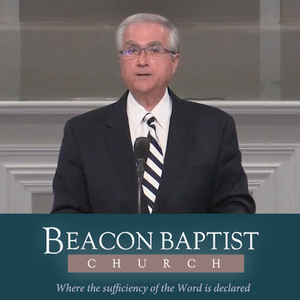
When we celebrated our 50th anniversary last year and that was a wonderful celebration and people came from many other states to join us for that special occasion, that seemed like almost an impossibility that we had enjoyed 50 years as a church, some of our people being with us that whole 50 years. And yet now we can say we have moved into the last half of the first century.
Wow, that sounds even longer, doesn't it? It's only one year more, but it tips the scales in a whole new direction. And here we are at anniversary number 51. And God has been so wonderfully kind to us all of these days. We pause to reflect and to think about what God has done and to give Him praise and thanks for His blessings to us to fix in our minds what God has done because many of our people, many of you have not been with us for all of those years and some of you rather recently. And so you really do not know the history that God has brought us through and though it's impossible for you to understand it the way that a few of us do, nevertheless, it's helpful, I think, for you to understand where we have come from and where God has brought us. And I trust by His grace where we are going. We don't know what the future holds. We do know who holds the future.
We don't know what God has in store for us in the days to come, but we do know what He is able to do and what we long to see Him do and what we shall surely pray for Him to do. Today, to stir up our hearts to new devotion, new commitment, new dedication of our hearts and lives to God and to be His instruments as we move forward into the second half of the first century of our existence as a church. Well, I'm going to do two things in my message today. Number one, briefly expound the text. I can't get away from that totally.
Don't want to really, but it's hard to get away from that totally. But then number two, to apply the text and that will take the bulk of what we're going to do today to remember what God has done. The text that I read in Exodus tells of the time when the children of Israel, having escaped from Egyptian bondage, found themselves by the direction of God in the wilderness right up to the mount of the Mount Sinai where God was going to give the law to Moses.
That had not yet taken place. And word had come to Jethro, Moses' father-in-law, who was, we're told in the text, the priest of Midian, that Moses and the children of Israel had come out into the wilderness. And his daughter, Zipporah, who was Moses' wife, and I don't have time to review the details of that story, how that came about, but Jethro brought Zipporah and Moses' two sons out to meet Moses in the wilderness and to deposit them into his care. And so they talked together and Moses gave more details about what God had done. Jethro had heard some of the reports which were spread far and wide. We can tell very clearly from the biblical account that what God did to the Egyptians and on behalf of the Israelites was reported far and wide throughout the world of that day.
And many, many, many countries were keenly aware of what took place. And so it's not surprising that Jethro knew some of this, but of course he didn't know all the details and he wanted to know more. So after Moses greeted him, he invited Jethro into his tent and they sat down and talked about what the Lord had done. And then taking up in verse 8 and going through verse 12, here's what we see. We see, number one, that Moses and Jethro testify of the blessings of the Lord, verse 8. Number two, they rejoice in the goodness of the Lord, verses 9 and 10. Number three, they proclaim the greatness of the Lord, in verse 11. And number four, they worship the person of the Lord, in verse 12. They testify the blessings of the Lord.
Look at verse 8. And Moses told his father-in-law all that the Lord had done to Pharaoh and to the Egyptians for Israel's sake, all the hardship that had come upon them on the way, and how the Lord had delivered them. Moses told Jethro in detail of the deliverance that God had accomplished in bringing Israel out of Egypt.
And of course we have those details recorded for us in the book of Exodus and we marvel at what God did. We marvel at the stubbornness of Pharaoh, whose heart was so hardened against the Lord that he would not yield in spite of the near ruin of his country, but he still wouldn't yield. And finally, when the death of the firstborn, of Pharaoh himself and all of those in Egypt transpired, then finally he said, go ahead and go. And then he changed his mind and chased after them and thought he had them trapped by the sea, the Red Sea, and God miraculously opened the waters of the Red Sea and his people marched through on dry ground. And then God caused the waters to close back up and consumed Pharaoh's army, destroyed it virtually. And so in this way, God miraculously delivered Israel from Egypt and Moses gladly testified.
He was there, he was testifying. Not hearsay, not secondhand, he was testifying what God had done for Israel at that time. In addition to the early months of their journey and the difficulties that they had already encountered in the wilderness and yet God was faithful, they had no water, but God supplied. They had no food, but God supplied. Whatever their needs, God supplied. In all of their difficulties, God supplied what was needed, how faithful was God at this time. He delivered them from their trials. And so he delivered them though great obstacles confronted them. The obstacles were no barrier to God's design for them, they were no barrier to God's power for them, no barrier to God's mercy being poured out upon them. What wonderful things to talk about, what wonderful things to testify.
And we could testify to many similar things, not identical of course, but many similar things in our journey as a church. But then they rejoiced in the goodness of the Lord. Having heard all of this, Jethro and Moses rejoiced. Verse 9, then Jethro rejoiced for all the good which the Lord had done for Israel whom he had delivered out of the hand of the Egyptians. And Jethro said, Blessed be the Lord, who has delivered you out of the hand of the Egyptians and out of the hand of Pharaoh, and who has delivered the people from under the hand of the Egyptians. And so they rejoiced and they praised God.
There's some overlapping there of course, but that's what they did. They rejoiced in their hearts and their souls. They were glad when they heard what God had done, and they directed praise to the one who had done it. That's what God's people do. They rejoice, they celebrate in what God has done, and they praise the God who has done it.
But then they proclaimed the greatness of the Lord. Verse 11, Now, said Jethro, I know that the Lord is greater than all the gods, for in the very thing in which they behaved proudly, he was above them. Now, there are a lot of questions about Jethro which I cannot definitively answer because the answers are not given to us entirely in the Bible.
Who exactly was Jethro? What did he represent in the way of religion and the way of worship? He is identified as the priest of Midian. We don't find Midian being a nation that is worshiping Jehovah as we find them described in the Bible. Midian was one of the six sons of Keturah, the wife that Abraham took after Sarah died. And so the Midianites, like the Israelites, were physical descendants of Abraham.
So we really don't know how much of the knowledge of the true God they had, how much they had and rejected, how much this generation had lost. And yet the description we find here of Jethro leads us to believe that there still was a testimony to the true God of Abraham, Isaac and Jacob in the land of Midian. The Midianites lived on the east side of the Jordan River, on the east side of the Dead Sea. Their land stretched south of Moab and north of Edom, if you know anything about your Bible geography. They are closely aligned in the Bible with both the Midianites and with the Ishmaelites, the sons of Ishmael. All of these are relatives of Israel. They're all descendants of Abraham in one way or another. And Jethro is described as, he's labeled as, the priest of Midian, not a priest of Midian, the priest of Midian, who makes a sacrifice, in verse 12, we'll be there just a moment, to the one true God, the Lord God of Heaven, Jehovah, the sacrifice which apparently Moses and Aaron and the elders of Israel all acknowledged to be a genuine sacrifice to the one true God, they all joined in with it.
They worshipped with him in this sacrifice which he made. So again, who was Jethro? Jethro, that name is thought by some Bible scholars to be a title rather than a personal name. A title like Pharaoh, it means something like excellence or excellency.
So that could be his title rather than his name. There may have been a succession of Jethro's. But his name, another name is given to us elsewhere in the scripture which is Ruel, and we think that probably is his personal name. But the reason I'm bringing all this up when we come to verse 11 is because in reading verse 11, it almost seems like Jethro was not completely convinced about which God was the one true God, but now that this testimony had come to him from Moses, he was convinced that the God of Israel, Jehovah, was indeed the one true God. That's the way verse 11 sounds upon first reading where Jethro says, Now I know that the Lord is greater than all the gods, for in the very thing in which they behave proudly, he was above them. Some commentators believe that that's a reference to the drowning of the Egyptians in the Red Sea, which was God's, what should I say, his ironic punishment upon them for what they had done in killing the children, the boys, of the Israelites in the waters of the Nile. They drowned the Israelites.
God drowned the Egyptians. That very well may be what is referred to here. But it is possible with what I've already suggested about Jethro and the possibility that he is a true priest of the true living God, something like Melchizedek, who we've already discussed in the book of Hebrews. It may be that he's simply saying, This gives me proof for what I already believe. This gives me testimony to declare to others what I know, namely that Yahweh is the true and living God, and all of these other gods that people in my country are worshiping are no true gods at all. They need to put them aside. They need to join me in worshiping Jehovah.
That may be what he's saying. Because there's no question about his worship of the person of the Lord in verse 12. Then Jethro, Moses' father-in-law, took a burnt offering and other sacrifices to offer to God.
And Aaron came with all the elders of Israel to eat bread with Moses' father-in-law before God. So, testifying of the blessings of the Lord, rejoicing in the goodness of the Lord, proclaiming the greatness of the Lord, and worshiping the person of the Lord, that is the expounding of this text. Now, the rest of my time will be spent applying the text to us as a church.
And I'm going to do that in three areas. Number one, to commemorate what God has done, that is, remembering the past. Number two, considering what God is doing, the present.
And number three, contemplating the future, what God yet may do. First of all, we want to spend a few minutes commemorating what God has done, remembering the past, our humble beginnings. Our official Constitution as a church took place on the third Sunday in May 1973. That's why our homecoming and anniversary service is the third Sunday of May of each year. And so here we are at another third Sunday of May, remembering what God did on the third Sunday in May in 1973. And of course, what took place then, when this church was officially constituted, it depended upon some events that took place prior to that time, over preceding months and even maybe a year or two, and even longer than that, depending on how far back you want to go. But those days are difficult for people younger than myself, which are the majority of you, to fully understand because things have changed.
The landscape has changed from what it was in that day. But in that day, the Southern Baptist Convention, the largest Protestant denomination in America, was precipitously and unquestionably descending into apostasy that looked like it was so deep that it would never recover from that. The evidence was there. All of the seminaries were staffed by professors who were not true to the word of God, did not believe in the inspiration and infallibility of scripture. The publishing houses were turning out material, Sunday School material and commentaries, that were filled with higher criticism and other ways of undermining the Bible, God's word. And in that context, there were voices raised up against it who were warning, Baptists, get out! Baptists, wake up!
And people were hearing these voices. And nobody knows how many churches removed themselves in those days from the Southern Baptist Convention to become what was generally called independent Baptist churches, even though it can be argued that Southern Baptist churches were also independent. That they were only voluntarily associated with their denomination. They weren't tied in in quite the same way that Methodists are tied into their church and have to have to their denomination and have to get permission from the denomination to depart. That's not true of Baptists.
There's a different structure in place. But nevertheless, thousands upon thousands upon thousands upon thousands of churches removed themselves in those days from the Southern Baptist Convention to become independent fundamental Baptist churches, independent of the Southern Baptist Convention, fundamental in the faith, believing the doctrines, the orthodox doctrines of the Christian faith that were now being denied in the leadership in the SBC. And there were a group of people in a church in this area, a church which was part of the Southern Baptist Convention, who were concerned about this, and they were talking about the need to do something. And as events unfolded, which I won't go into all of those details now, but what eventually happened was they were, I started to say, politely excused from their church, but it wasn't so politely, as some of you know. They were chased out of their church, told to get gone, and they said, what will we do? And they said, we'd like to continue worshiping together as we have in this church together for many years. We would love to start another church.
And that's what they did. That's what God brought about in those days. And so there were actually 19 adults who signed a paper and said, we will commit ourselves to fully and wholeheartedly backing the establishment of a new independent Baptist church in this area if Greg Barkman, the young man living in those days in Greenville, South Carolina, who had just finished his education, if he will come and start with us, and as we pledge ourselves to giving him our full support. And with that pledge, that list of names, I went home and prayed about it, and within a couple weeks I was satisfied that that is what the Lord wanted. And so we came together and we began to worship together, and on the third Sunday in May we organized. And at that time we picked up a few other people beyond the original 19 so that when we chartered there were 29 charter members whose names are in the back of your bulletin.
If you leafed through your bulletin you found that place. And you can find there a short history of our church on the left page and a recounting of the beginning of our church and the charter members listed on the opposite page. And of those 29 charter members, a number of them are with the Lord, some have moved to other places, there are eight that are still living, some of whom are not able to attend church, they're what we call shut-ins, but eight who are still living, and I'll mention those in particular, that is living and still part of our church. Of course it's my wife and I who were very young in those days, younger than most of the others who became a part of the church. That's one explanation of why we're still here, because we started young. But May Counts, who is in I think Tennessee today, is one of those charter members along with her husband Gerald who's with the Lord. Joe and Gail Davis, they're right over here, raise your hand, Joe, again, are charter members. You didn't look like that when we started.
Neither did I. 51 years have gone by. Those were blessed days, weren't they?
We saw the hand of the Lord upon us, we saw trials that almost seemed beyond bearing up under, and yet God, like the children of Israel, brought us through all of that. And we met in Joe and Gail's house, I think on a Friday night, to talk about starting the church, and yeah, so glad that the Lord has allowed them to still be with us. Donnan Fawcett, who is not able to get out, she's still living. She's pretty much confined to her home.
We're in the process of building a ramp at her house so that she can get down the ramp and maybe get outside a little bit more. But Donnan and her husband Ralph, who has been with the Lord for a number of years, were part of that group. And then two others, Sue Vestal, who sings in our choir.
51 years, Sue. Isn't that amazing? And Lori Craig Vestal, back there, yeah. And then, well, that's what we started with, and here we are. And who knew what the Lord was going to do? We were meeting at that time in E.M. Holtz School, and we just said, okay, here we go, kind of like throwing yourself in a swimming pool and hoping you don't drown.
And here we go, let's see what happens. And the Lord has been so good to us. So that's remembering the past. By the way, I think I've already explained this, but let me just make it clear that in those days our church would have been described as an independent, fundamental Baptist church along the lines of, and again, you'll have to be probably as old as I am for these names to mean anything to you, but along the lines of the Sword of the Lord, John Rice, who was the editor of the Sword of the Lord, Jack Hyles, who disgraced himself horribly but was a leader of independent Baptists in those days, the Southwide Baptist Fellowship, which was a large movement. I attended a number of their meetings in Charlotte at Northside Baptist Church when Jack Hudson was pastoring there. I remember, and they had various speakers come in. One of the speakers who came there at least once, maybe more than once, was Warren Wiersbe, who's now with the Lord.
He was an interesting guy in a lot of ways. Jack Hudson's church was so large. How many of you have been in that church, Northside Baptist? Okay, huge church, big church, seats 3,000 and a big circular auditorium. And then there are wings that go out, wing A, wing B, wing C with classrooms, two-story classrooms moving out from the auditorium, and I think a smaller wing for the offices. And Warren Wiersbe got up and he said, Well, somebody told me that they just moved their letter from wing A to wing B. All right.
I thought it was funny. So that's where we were in the 70s and moving into the early 80s. But then there were some significant changes. We moved out of E.M. Holtz School cafeteria to a building God provided at 2228 Moran Street, a wonderful provision of God. And then after nearly a little, around three years, we moved out of the building on Moran Street into the first building in this complex that the Lord provided in this property. And we've been here, of course, ever since then. So we were moving along nicely in some ways. But what was going on, even I'm trying to get the sequence in my mind.
Yeah, this would have been after we had moved into the new building. But I was beginning to see some things in scripture that I had never seen before. I had them pointed out to me, but I was not convinced that they were true. But as I studied scripture, considered passages that I had not looked at carefully before, was expounding passages, carrying on an expositional style of ministry and having to dig carefully into passages to understand them properly. In 1979, so this would have been six years after we started, I yielded reluctantly to believing that the Bible does, in fact, teach what we sometimes call the doctrines of grace or Tulip theology or Reformed soteriology or Calvinism, various names that are applied to it. And I say I was reluctant because I had had a pretty strong upbringing in rejecting those doctrines and considering them to be erroneous, if not heretical. And here I am. I used to consider Calvinist heretics. I don't know if I ever personally did that, but so many people of my friends did. And now, gradually but unmistakably, I've become one.
And what do I do about that? And it was a slow development even after that to figure out what to do about that. That's not an easy thing to do. But it required some serious and significant changes in the direction of our church, and I knew it couldn't be done quickly or the church would implode or explode, whichever direction it went. And so little by little, gradually, we began to teach these doctrines in bits and pieces. And the wonderful thing about it was the one thing we had agreed upon together from the beginning was that the Bible was our supreme rule of faith and practice. A lot of people say that, but when it comes down to it, a lot of people aren't willing to actually follow that, but we were committed to that. And so with that commitment, I had come to a new understanding of doctrine, of theology, and I believed that the majority of our people could be brought along if they were brought along gently and carefully and could be shown these things from Scripture to overcome their built-in hostility toward these doctrines. And in fact, that's what took place. We weren't able to bring everybody along.
There were some who bailed out along the way. But the majority of our church came to believe that with us together. Okay, I see that.
I think you're right. I don't know how to reconcile that with this exactly, but I can't deny that the Scripture does teach the sovereignty of God and salvation. I can't deny that the Scripture does teach unconditional election. I can't deny that these things are in Scripture.
They're there. And so we'll accept that as true, and we'll ask God to help us to sort it all out. And we took that position, and we moved forward from there. So there was doctrinal development, and with that, necessarily, and boy, I'm going to have trouble getting all of this squeezed into my time this morning. But with that, we also underwent what I will call identificational development because two things happened. And the first one was when I became known as a Calvinist in our community, an awful lot of my independent Baptist pastor friends turned their back.
Not all. There were some that continued to be friendly and supportive, and what I've learned over the years is that some of them were actually closet Calvinists, but they were afraid to say so. But that's why they were friendly.
There are more of those than you'd think because a lot of them are afraid to say anything. But that was the first thing that happened. I was getting a lot of hostility from some of the men that I had formally had good fellowship with. And then there was something else that came along. I really hadn't expected this, but the issue of the King James Version came along and became stronger and stronger and stronger. The independent fundamental Baptists seemed almost unanimously, not quite unanimously, but almost unanimously to agree to a KJV-only position and a militant KJV-only position so that they were lashing out against and separating from all those who didn't take that position with them.
And again, after struggling with that issue for I don't know how long, but it took a little while, I became convinced that's not correct. We thank God for the KJV. We revere the KJV as a faithful representation of God's eternal Word. But we revere any faithful translation of the Bible as God's Word delivered to us.
And that position even drew a bigger barrier between us and our dear friends in the community. And so by default, as much as anything, we quit being known as independent fundamental Baptists and became known basically as Reformed Baptists. And that's what we identify as today, because we are Baptists who are Reformed. We believe Reformed soteriology. So that's some of the significant changes that took place along the way, and God was good to bring us along. A lot of churches have been destroyed in trying to make that transition.
And I have had, I don't know how many people over the years, when they've met me, people from other places, and we talked together and I give a little bit of my history, they say things like, wow, I've never heard of that happening. I've never heard of a church making that transition. All I hear of is churches that try that and then they go out of existence.
Split all the smithereens. It does happen. I heard about a church last night at supper that has gone out of existence.
I don't know why we didn't get into that, but it just blows my mind. That was one of the strongest voices for a fundamental Baptist position in North Carolina for many years. And evidently it's gone.
I don't know what happened, but it does happen. But by God's goodness, we weathered that storm. Through many dangers, toils, and snares, we have already come. Tis grace has brought us safe thus far, and grace will lead us home. Amen.
But I've got to hurry. Well, we maintained and expanded our strong commitment to missions. We're evangelistic Calvinists, we're missions-minded Calvinists, and we were very committed to that. We continued and even strengthened our commitment to an expository pulpit.
In the early days, I thought I'd do something clever. From my background, almost all the churches I'd been in had only topical preaching most of the time. But the Lord had put me actually in a church in Greenville, South Carolina, where the pastor did half and half. Half exposition, half topical. His exposition was not consecutive exposition. He wasn't preaching through books, but about half of his messages were taking a passage of Scripture, like I did this morning in Exodus, and the whole sermon was an exposition of that passage.
And then his next one would be topical and so forth. And under that ministry, I grew a love for the expositional sermons more than the topical ones. I appreciated any any preaching of God's Word, but I enjoyed the expositional ones more. So I decided I was going to do the same thing that my pastor had done. So I started out doing about half and half. And I can still remember it almost as if it were last week, one of the men in our church over on Moran Street, after I'd finished up an exposition of the kingdom parables in Matthew chapter 13.
I wasn't doing whole books at this time, but I was doing sections. And I brought seven or eight messages on the kingdom parables in Matthew chapter 13. And he came up to me after the service that day, he's now with the Lord, and he said, wow, that's the most interesting series of messages I've ever heard.
What in the world are you going to be able to do next? It just seemed to him like there wasn't anything else that could ever be as interesting as that. But that was just an encouragement to my own soul.
And it took, I don't know how long exactly, but little by little I just shifted and said, you know, we don't need half and half, let's just do all the good stuff. And so it's been exposition ever since, except for occasions like this. But for those of you who are visiting today, our Sunday morning pulpit is preaching through the book of Hebrews right now. Next Sunday, Lord willing, we'll take the last few verses of chapter 7. And then there'll be a short break before we move into chapter 8. Buckle up your seatbelt when we get to chapter 8.
You've got some interesting things coming. Be ready to think, be ready to have your theology challenged as we move into chapter 8. But the whole book's been that way, really.
It's been a wonderful series, and we'll be back to it shortly. Well, that's what God has done. In two minutes, what is God doing presently, considering the present? He's bringing growth and development. During the time that all this took place, all the original charter members got old, died, walking around with canes and walkers. The church said in the beginning had been just overflowing with young people, didn't have many young people. And then here, I don't know, two, three, four years ago, we started seeing younger families coming with children. We actually need help in the nursery. We haven't needed anybody in the nursery for ages, and now we're over.
Help, help! We need more workers for our nursery and for our children's classes. And, yep, that's something that the Lord has been doing of late that we're very grateful for. He saved people.
We would wish He would save 100 times more. But one of the most encouraging things, and a couple of you are here today could stand and testify as being part of this, but what God has done is saved a handful of the young people who grew up in our church but were not truly converted and went out lost. And then after some time, God saved them and brought them back. We could have some stand and give their testimony today if we had time. And there are a whole lot more like that that we're praying for. We want to see them all saved.
We want to see them all brought in. And we're seeing some of that, and that's been so encouraging in the present. We're seeing young leadership developing, and that's critically important.
God has sustained our present leadership amazingly. Most of you know that I had cancer that was very aggressive and serious when I was 36. And the doctor at Duke who treated me said, this aggressive cancer can be treated if it's treated very aggressively. So we're going to, with your permission, we will throw massive amounts of chemotherapy at you and some serious surgery as well. And what we think that will do, we think we can stop the cancer, and we think that will give you about 15 good years of health and then about 10 years of failing health when the organs that have been severely damaged by the chemotherapy begin to shut down. And he said, don't plan to live much past the age of 60. Okay, so let's make the most of what's left.
Didn't think it would be all that long, but let's roll up our sleeves and go to work because I expected he knew what he was talking about. And I just celebrated my 76th birthday, and I'm still going strong. And that's the way God's been. Greg Phillips, another amazing story, started with us here in 1984, living in Greenville, South Carolina, and coming up every weekend, still doing that. This fall, he will have completed 40 years, he and Sueann, and Maria, who came along. You haven't been 40 years because you weren't born when that started.
And Nathan and Melissa, up in New Hampshire, and Nathan in Texas, and Matthew, who married a wife in Greenville, South Carolina, and is here with us today with the brass. But 40 years, that's pretty, what should we say? That's pretty stable leadership, wouldn't you say?
Yeah, I would say, amen. Mike Carnes, this fall, will complete 29 years. Bob Latour, on staff, will be completing 19 years and has been part of our congregation for 40-some years. When did you start, Bob? 79? 78.
That would be about 46 years. You don't see that very often, but that's what God has done. Well, quickly, in about two more minutes, what may God do in the future?
We pray that he will help us maintain the biblical foundation. There is a tendency to let it slip. I mentioned a church that's gone. I don't know what happened. I mentioned a denomination that looked like it was gone, and then, in God's goodness, it was revived.
It really was. We all kind of scratched our heads and said, well, that doesn't happen very often, but it did. The Southern Baptist Convention is much, much, much more conservative than it was in the days when our church started.
Doesn't mean it doesn't have any problems, but it's, yeah, it managed a turnaround of quite amazing proportions. God can do that, but it's not the norm, and the norm is to slide gradually away, away, away, like has happened among the United Methodists and among so many others. So we pray that God will help us maintain our biblical foundation. We pray that God will continue to strengthen the present congregation to see more souls saved, to attract more like-minded believers. It's wonderful to see the visitors God has been bringing, and the people that God has been bringing seem to be coming because they have a hunger for the word.
They like to hear the word expounded, and it's not always easy to find that everywhere. So God is bringing my like-minded people, and one of my goals in the future is to see more cultural diversification in our congregation. We're seeing a little bit of that, but sometimes that's one of the hardest things of all to see develop. People seem to have an affinity to group among themselves, and so white believers go to this church, and black believers go to that church, and Hispanic believers go to this church, and so forth, and that's not the way the Church of the Lord Jesus Christ is in its totality, and it seems to me that local congregations should be a better reflection of the diversity that's found in the community, and we're seeing some of that, and we thank God for those who have joined us, even though we're not a majority of whatever background you come from. But when people come to understand that our greatest identification is not in our race, but in Jesus Christ, and that we're all one in Christ, there's only two kinds of people in this world, believers and unbelievers, born-again people and those who aren't.
Just two kinds, and all the people that are born again are in the same family and ought to get along fine. So let's learn how to do that and work at it and see more of that in our congregation. And we want to see an increase in the number of committed young people.
We want to see more young families and children by the grace of God. And in this closing word, we're praying for God to guide the inevitable transition that must come in leadership. Nobody lives forever.
Nobody stays strong forever. The time comes when everyone who serves the Lord comes to the place where they have run their course and can't continue forever. So what do we need?
We need and earnestly pray that God will guide into the right transition leadership that will take our Church on. You've heard it said that one of our Founding Fathers, and I couldn't remember which one and I didn't take time to look it up, but when asked, when they had completed, I think, the documents of the Constitution, said, what kind of a country have you delivered to us? And his answer was, a republic if you can keep it. Personally, I don't want to get sidetracked here, but I don't think we've kept it. Most people today don't even know the difference between a republic and a democracy, and I won't get into that now.
But a republic if you can keep it. We haven't kept it. I don't know if we can get back to it or not. Only God knows that. But we haven't kept it.
It's already slipped away from us in our nation. What do we want for our Church? A biblical Church if you can keep it. And that's up to us, all of us, to do everything we can to keep it biblical, founded and continued upon the word of God.
And I trust you are committed to that goal. Let's pray. Father, thank you for this great day of celebration. Father, please honor the desires, the requests that we have articulated today. Please protect us, preserve us, and keep us in the years and the decades to come for the honor and glory of Christ, in whose name we pray, amen.