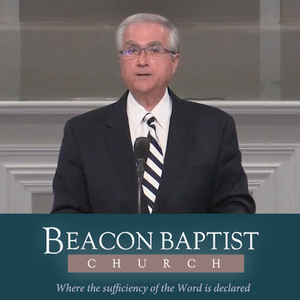
Well, good morning. What a joy and privilege to be with you. For Paula and I on this Easter Sunday morning. I've been with you a number of times, never on Easter Sunday. And that is a special treat.
Uh, to be reacquainted with so many uh old faces, uh, yes, I'm getting a little older over the years. I uh Um Sometimes think looking in the mirror, I'm looking across the room in a dark room at myself and I don't look that bad. Turn the lights on, get a little closer, ooh, it gets a little scary. Dark and fuzzy is a pretty good look for me, anyway.
Well, it's so good to be with you and see your pastors again, various friends that we've met and come to know over the year and meet some new faces as well. and to be here and hear the music, I hope you never take for granted. the gifts that God has blessed you folks with here. I've been seven or eight different places just in the last couple of months, and I don't hear I mean We'd all love to have that in our churches, but God has blessed you guys abundantly, Brother Gerald and the choir and the accompanists. Y'all keep running these people in and out like substitutes in the final four, you know.
All of them just as good as the one that left.
So what a blessing to be here and to worship with you on this Lord's Day. I bring you greetings from our home church. Of course, We're trying to think how long it's been since we were actually there. We're about the most irregular, regular members you'll ever meet on the road a lot this time of the year. We are not yet.
Several have asked me, how are things out in Wyoming at our ranch? We're not out there yet. We've got about three more weeks or so towards the end of this month. Our plans are to head out that way. We've got to wait for winter to get over with, and it takes a while out there.
You never know when the snow will end. And so it's been terribly dry out there. You might pray for us, pray for rain out west. We have a lot of dangers with wildfires when it's this dry, so we're not sure what we're heading back to. But remember us, and you get a chance, come by our way and say hi.
Well, as you have already learned, we are dealing this morning the first of five messages on 1 Corinthians 15. And we were dealing this morning with the first 11 verses of that wonderful chapter. 1 Corinthians 15. We're going to handle this morning, Lord willing, verses 1 through... Eleven.
We just got through reading this. Your pastor read it to us. Let me give you just a little bit of background.
Some of y'all may remember a year ago when I was with you, we dealt with 1 Corinthians chapter 1. And let me sort of remind you of some of the historical setting. We know that Paul was in Corinth. During his second missionary journey, right around the year 51 AD, he was there for about a year and a half.
Now, we can peg his time in Corinth externally. I was in Corinth, by the way, at the ruins of old Corinth several years ago with my friend Nico, pastor of a Baptist church in Athens, Greece, and we stood at the Bima. It's the place where the Roman ruler would sit to pronounce judgment. If you remember from Acts chapter 18, when Paul was in Corinth, the Jews finally went on the warpath and dragged him before this Roman deputy. His name was Gallio.
And there, to the irony of the thing, they thought he would be beaten. Instead, it was Sosthenes, the ruler of the Jews, that got beaten before it was all over.
Now that's important because at Delphi, you've heard of the Oracle of Delphi up north of Corinth. There was an inscription found by the Roman Emperor Claudius. That gives the year of his reign, and it's an inscription of thanks and dedication to the Roman governor Gallio, who was then in Corinth. And that was in 51 AD. And that helps us peg the exact timeframe.
And by the way, you know, there are those who say that all of this stuff, all this history in Acts, is just made up in fiction, but we keep finding: no, these are historical places. Historical people, and we have the relics, the archaeological evidence of that confirms the history that Luke wrote in the book of Acts. It placed Gallio there in 51 to 52 AD, so we have a very firm handle on when Paul was actually present. You recall that at the end of that year and a half, he returned back to Antioch. And then on his third missionary journey, instead of going back to Corinth, he made a beeline back to Ephesus.
And that became for three years the center of his ministry. And it is from there in Ephesus, after learning of some problems in this church in Corinth. that he wrote this particular letter. more than likely 55 AD. A year later, he will write 2 Corinthians 56 AD, and shortly thereafter, he will write from Corinth, as he returns there finally, he will write from there the book of Romans.
So all of this is happening right in that 55, 56 AD timeframe.
Now, notice that what has been going on here among the problems in the Church of Corinth are a number of questions they have for him. Back in 1 Corinthians chapter 7, as you begin that chapter, he refers to some questions about which they wrote him. There's all this exchange of letters going back and forth. In fact, what we call 1 Corinthians is, in fact, 2 Corinthians. We learn from the interior evidence here that he has written a prior letter to them.
We don't have that in the canon of scripture. God did not see fit to include that. But there was an earlier letter, then this letter is written, and there will be a third one before we get to 2 Corinthians. 2 Corinthians is actually 4th Corinthians. Are y'all confused?
There's this back and forth of these letters, and one reason for that, as we see here in 1 Corinthians 7, starting in about verse 1, is that they have some questions for him, some things that need to be straightened out. And you'll see from there on to the end of the book, him deals with a number of subjects: the subject of marriage, questions relating to that, questions relating to eating things sacrificed to idols, spiritual gifts, and especially questions regarding the doctrine of the resurrection. of Christ. And that is what we're going to center on this morning. and through this rest of these meetings.
Notice that he mentions that this gospel that he has proclaimed to them is based especially on uh Some historical facts, and he says that if you have received it, I preached it to you, you received it, and you're now standing in it. And you're being saved by it if you hang on, if you keep. What I have preached unto you, unless you have believed in vain.
Now, notice this is saying that there is such a thing as spurious faith. You recall that Jesus talks about the spreading of the gospel of the kingdom as a sower sowing seed, and so that seed fell on the shallow soil, the stony soil. And he says this, sprouted up. For a while. But it had no root in itself.
And when the sun comes up, what happens? It withers away.
Okay? Jesus in explaining here that some receive the gospel and to use Luke's language in Luke chapter 8, they believe for a while. It's temporary faith. If you've been around the block a few times as a believer, you know those who have expressed this kind of temporary faith. It didn't take.
Now, that's not to say that they lost their salvation. The truth is, they never had it in the first place. Remember Jesus talking about that seed on shallow soil, it had no root. It didn't lose its root. It never had a root.
Looked like it did. Right?
So we have a number of examples in Scripture of those who for a while seem to exhibit signs of true salvation, but after a while, through tests and trials, they drift away. I'm thinking of John writing in 1 John 2 about those who he said were with us for a while, but they were not of us, and they left us. They went somewhere else.
Now that's not like somebody moving around Burlington to another church. Remember, in the apostolic times, there was no other church out there. When they left the apostolic church, they were leaving Christianity.
So they are turning their back on the Christian message. And John makes it plain they were with us. But they were never of us.
So again, there is this danger of someone exhibiting a spurious, temporary faith that is not a saving faith. We see it. Throughout the Gospels, John chapter 2, many believed on his name when they saw. The miracles that he performed, but he did not. commit himself unto them?
Literally in the Greek, they believed in him, but he didn't believe in them. He didn't. offer himself to them. He didn't commit himself to them. And my friend, if Christ doesn't commit himself to you, I don't care what you do, you're not saved.
That salvation is Christ committing himself to you. to you.
So You understand the warning that we see here in these first two verses. You may indeed have believed in vain if that faith is not an enduring and lasting faith.
Now we, believing in sovereign grace, believe that faith comes as a result of being born again. Right?
I was always taught growing up that Being born again is a result of my faith. But studying the topic, it becomes very plain to me that faith is the evidence of life, it's not the cause of life. And if we're born again, Are we ever going to be unborn? God who saves us will also be the God. who keeps us.
And so notice in verse 3, as we continue through this chapter, Paul talks about what he delivered unto them, that which he had received. And that's interesting language that it, what he's about to share. These evidences of Christ's resurrection were things that Paul himself learned from others. Notice that there are three facts that are so very important. That are pointed out to us here in verse 3 and 4.
I delivered unto you, first of all, a first importance, primary importance. that Christ died for our sins. according to the scriptures.
Okay. This is the heart. of the gospel. Who and what Jesus is and did. Earlier in this same epistle, Paul has given us a brief definition of the gospel back in chapter 2.
that when he came to Corinth he was determined to know nothing among them except Jesus Christ, and him crucified. Remember that? Who he is? And what he did. In chapter 1, he talks about the preaching of the gospel, is the preaching of the cross.
It is to preach Christ crucified, even though that was a rejected message by most people, Jews and Gentiles, in his day. This is the very heart. of the gospel. Now, when I was a child, I grew up in a Southern Baptist Church in rural Texas.
Sometimes I remember the people would say, well, the pastor didn't preach the gospel tonight. And what I thought they were saying is that he didn't give an invitation. If you grew up in a church like I did, the Every service ended with pleading with people to come forward to receive Christ, to come down and shake the preachers. I call it off the magic carpet. Come down and shake the magic man's hand, say the magic words, and pray this little prayer, and bingo, you're saved.
And so, if he didn't give an invitation, he wasn't preaching the gospel. I had the idea that the gospel is basically the invitation. But notice that's not what Paul is saying here. Yes, there is an invitation connected with the gospel. That's certainly true.
But the gospel itself is not a good deal. It's good news. It is the proclamation of facts. Historical facts. And we see the first of those here.
That Christ died for our sins according to the scriptures. Do you see the difference? Yes, as a result of that, we invite sinners to come to Christ. That's true. But the gospel itself is based on these historical things.
It speaks of both the manner of his death. and the mechanism that results from his death. His death was, we use the term, vicarious. That means substitutionary. I think Charles Hodge helped me more than anyone else.
theology teacher at Princeton years years ago. In saying that, and he was learning this, he said from older preachers that Christ. took our law place. At the cross. In other words, our sins, to use other scriptural language, were imputed to him.
They were not imparted to him. That's an important distinction. Christ himself was not contaminated by our sin. He didn't become sinful. Do you see the Distinction?
But he bore our sins. He took our place. He became liable. to our punish for our punishment. He bore our guilt.
And Hodge goes on to point out that Christ, even as he's being punished and judged for our sins, By the wrath of Almighty God, he was at that very moment the spotless, holy Lamb of God. That's such a mystery, isn't it? That's one of those things Luther couldn't quite get his mind wrapped around. And I have the same difficulty. That at the moment that he is being judged for our sins, He is in the act of greatest obedience.
That this universe, this world has ever seen. Because you see, behind the son going to a cross is a father sending him to the cross. Let me stop there for a moment. We sometimes have this erroneous idea that the kind, loving son went to a cross to try to get his wrathful, stern, judgeful, vindictive father to change his mind. No.
Christ is going to the cross because his father is sending him to the cross. This is the plan. This is the reason. It's also why no human sacrifice, I mean, animal sacrifice. Could ever possibly atone for sin.
I mean, the animal just, you know, he thinks he's hot stuff. Right up to the point, the priest slits his throat. He doesn't know what's going on. What's different with Christ is that he willingly goes to the cross. And that's what's so hideous about sin: it's willful.
You said the devil made me do it. No, he didn't. You did it. You will to do it. That's what makes sin so exceedingly sinful.
And that's the element that Christ brings. He comes, we read in the book of Hebrews that his first words upon entering this world is: I come to do thy will, O Lord. This is what I've come to do. What you will for me to do.
So, this is an act of obedience that this world has never seen. He says it's according to the scriptures. Would you hold your finger here in 1 Corinthians 15? Go back to Isaiah 53 a minute. We're going to flip back and forth here for a few moments.
We said that his death was vicarious. It was substitutionary. And starting in Isaiah 53, and I hope that I don't need to give you too much background information about this. This is written 700 years. before Christ is born.
By the prophet Isaiah. It is describing the servant of Yahweh, the servant of Jehovah who is going to come. and do something. to bring about God's kingdom. in this earth.
And here from verses 4 through 6, we have seven descriptions. of this death as being substitutionary. Count him with me. Surely, in verse 4, he has borne our griefs. That's one.
carried our sorrows. That's two. Verse 5, he was wounded for our transgression. That's 3. He was bruised for our iniquities.
That's 4. The chastisement of or brought that brought about our peace. was upon him. That's five. and with his stripes We are hell.
That's six. And then the one I really like: all we like sheep have gone astray, and we've turned everyone to it, but the Lord laid on him. the iniquity of us all. Do you understand? Seven times in these three verses.
Does the prophet specify that's what's happening to this servant of Yahweh? is for us. The one who is seeing this vision says, We saw him stricken, smitten, and afflicted, and we thought God was judging him.
Well, it was. But he was not judging him for his fault. He was judging him for our faults. That he took our place. bore the guilt and the penalty for our sin, in order that salvation might come.
to us.
So notice how this is being expressed. What is happening in the gospel was prophetically prophesied. 700 years before it happened.
Now, there are many other places we could go. I don't think none is as clear as Isaiah chapter 53. Do you remember when Philip was standing there by the roadside in Gaza, and along comes the chariot with the treasure of Ethiopia, the queen of Ethiopia, this Ethiopian eunuch, we call him. And the eunuch is reading from where? He's reading out of the scroll of Isaiah.
this very passage. And here's Philip standing, you know, he's a hitchhiker, okay? Standing on the side of the road. They get into a discussion. Philip says, Do you understand what you're reading?
And the guy says, No, not really. I don't know who Isaiah is talking about. Is he talking about himself or somebody? That's the question, isn't it? Who is this person?
And Philip climbs up into the chariot and preaches to him Jesus. And then they come to the water, and he is baptized as a convert. to Christianity. That's the significance of this passage. I don't, you know, if I had to pick a passage I wanted somebody to be reading before I come along and witness to them about Jesus, this is the one I would pick.
And in God's providence, that's what this Ethiopian eunuch was reading.
So we know that this is speaking about Jesus Christ. Then, as we go on in 1 Corinthians chapter 5, don't lose your place in Isaiah 53 just yet, okay? As we go on, he says not only that, that he died for our sins according to the scriptures, and then verse 4 he says, and that he was. Buried. Uh We don't really talk much about Christ's burial, do we?
But it also fulfills Scripture. Again, if you'll turn back to Isaiah 53, and we're going to skip a couple of verses here. In our text, in our version, Isaiah 53, verse 9, it says he made his grave with the wicked. and with the rich in his death. I like the translation that the NIV and the NASB use, because I believe it hits the mark here of what the text originally is saying.
that he was assigned his grave with the wicked, But he yet he was with the rich. In his death. You hear the difference? He was assigned His burial or his grave with the wicked, but he was with the rich in his death. In other words, it's the irony of the situation.
It was unexpected. that he would be buried like a rich man would be buried. You know the story, don't you, that after his crucifixion, who is it that goes to Pilate begging for the body?
Now remember that a crucified victim, if he's going to be buried at all, a lot of times they just left him on the cross for the birds to pick the flesh clean. And then when they were finally buried, they're buried in some mass grave. That would have been the expectation. of Christ's burial as a crucified victim. But irony of irony, what happens?
A rich man, Joseph of Arimathea, isn't it interesting that some have said it like this, that at the moment Christ's public disciples went secret, His secret disciples, Joseph, Armathea, and Nicodemus, become public. And that's what happens. Here's Joseph Armathea going before Pilate, begging the body of Jesus. And then, when Pilate allows him to take that body, where does he bury it? In a new tomb.
Do you realize what an unusual thing, what an unexpected thing this would have been? We do find some cases of these sepulchres, they're sometimes called. I saw some examples of these over in Israel a few years ago. But this is rich people burial. This is not the common man's grave.
They couldn't afford it. This took a lot of trouble to dig a cave out of sometimes solid rock. And inside that cave, they would place the body. The custom was basically to put the body in that cave, seal it up. And then let it decay, and about a year later, go back into the sepulcher, collect the bones, and put them in, well, we'd call it a bone box.
It's an oscillary is the word. And then you could bury others. See, normally you're going to go to the trouble to dig out one of these sepulchres for burial like this, you're going to bury a lot of people in there. Over the years, your whole family and their descendants, you're going to have a lot of folks. That's why they would go and collect the bodies.
Okay? You get the picture? In this case, we are told in Scripture it's a new tomb. It's fresh. It's never been used.
And do you see the distinction why the burial of Christ is important in that it confirms to us his death? and his resurrection. That if he'd been buried in a mass grave somewhere, how would you know, even if he appeared, who it was that was appearing? But in this case, how many bodies went into this tomb? One.
How many bodies came out of that tomb? One, do you understand? The same body that went in that tomb came out of that tomb. It confirms to us both the death of Christ and the fact that it was Jesus. The Jesus, whose body was placed in that tomb, who was resurrected, on the third day.
So there's the significance of his burial. Then notice a fourth fact here in verse 4. He rose again. The third day. If you're expecting me to solve for you this question of.
When exactly was Christ crucified, you know, some say, well, it says over here that he was, you know, like Jonah was in the belly of the fish three days and three nights. And for that to work out and then he'd be resurrected, he would have had to have been crucified on Wednesday. to be in there a full three days and three nights.
Well, I have been down that rabbit hole several times over the years, and I always come out of that rabbit hole holding to what we traditionally believe. Because you've got a problem. You can't have Jesus in the tomb three days and three nights and have him resurrected on the third day. You you see the contradiction there? The solution is to understand that Jews didn't count time exclusively like we do.
They counted time inclusively. You say, what do you mean by that? That any part of a day was seen by Jews as a complete day, a day and a night. They view the whole day as being fulfilled if you're just doing it for a partial day. I can give you some other scriptural evidences of that.
Now own your own time. We don't have time this morning. Go to the book of Esther. In chapter four, you remember Mordecai is wanting her to go before the king, and she thinks she's easily be put to death. You go into the king and not being called for.
view it as an assassination attempt and you're put to death. I want you to go in to the king. She says, Well, have the maidens fast for me. Three days. Day and night.
Then in chapter 5, verse 1, on the third day she went in. You see the problem? How do you have them fast for three days and three nights? And then she goes in, not on the fourth day, by our the way we count time. But on the third day.
Let me just put it like this. Are you confused yet? Let me help you. that when Jesus appeared to those disciples on the road to Emmaus, You remember? They don't know who he is.
He's walking alongside them. And they're telling him, crazy, isn't it? They don't have a clue. They're walking right next to the guy all this happened to. They're telling him what has happened in Jerusalem the past few days, you know, about this man, Jesus of Nazareth, how he was crucified and put to death.
And they say today is the third day. Since these things happen. Jesus said he would arise what? On the third day. And these guys are saying today is the third day.
That's the important thing. That to them he arose the very day that he said he would arise. from the dead. Are you still in Isaiah? Turn back there just a moment.
Isaiah 53. Notice Verse 10. Verse 10, yet it pleased the Lord to. Bruise him. The Hebrew word here means to crush, like you would crush grapes.
He has put him to grief. And when thou shalt make his soul an offering for sin, that is, he's going to die as a sin offering. He shall see his seed. His descendants, if you will. His people, his children, if you will.
He will see his seed. He shall prolong his days. And the pleasure of the Lord shall prosper in his hands. Here's the effect of the cross. There will be a new family born through his death.
The fact that his days will be extended, this will not be the end of his life. And that God's pleasure, God's will, will be exercised by Him. The pleasure of the Lord will prosper in His hand. Remember that his resurrection is not just from a grave, it's to the throne. But what's he doing on the throne?
He's exercising the will of God his Father. God has turned over, we'll talk more about this in our study, the running of the universe into the hands of His Son. He is the God-man seated on the throne. exercising that authority. Following in verses five through eight.
We have a, and I'm back in 1 Corinthians 15. uh that we have now six Different evidences of people who witnessed the resurrection of Christ. Uh notice that In verse 8. I'm sorry, I got ahead of myself here. Verse 5.
That first of all he mentions that he's seen of Cephas or Kephas as the Jews pronounce it. That's Peter. In Aramaic, the word means a stone. Peter in Greek means a stone. You do understand that Peter's original name was not Peter Archephas, it was Simon.
He was Simon Barjona. the son of this man Jonas. But this was a nickname that Jesus gave him. Apparently, there at Caesarea Philippi, when he says, Upon this rock, thou art Peter, you know, this stone, and upon this rock shall I build my church. That opens up another can of worms, but that seems to be when this name is bestowed by Jesus upon Peter.
Kephas or Cephas is the Aramaic word that means the same thing.
So notice this is talking about an appearance to Peter.
Now, we don't have anywhere else a record of this appearance, except for the fact that when those disciples that were on the road to Emma, remember when they return and they find the apostles or the disciples gathered in the upper room? You remember they're saying, hey, boys, Christ is alive. We just saw him. And what do they reply? Yeah, we know.
He appeared to Peter.
Now, so we don't have really the Details of this appearance, but we know it happened, and we would, you know, partially understand why with Peter having denied the Lord. three times there at his trial that Christ would specially meet with Peter. Then notice Then of the twelve, recall that when those men on the road to Emmaus returned, they've no sooner told them that they just encountered the risen Christ than Christ suddenly appears inside that room. Apparently, in a closed room, Jesus suddenly appears. We'll talk about that as we go when we talk about Christ's resurrection body.
What exactly was the nature of this body? I do know that for me to try to go into a closed room generally is going to involve some pain. You know, I hit the door as hard as I can, but it doesn't let me just suddenly appear. I can't appear and disappear. Christ could.
So he appears with the twelve they're called here.
Now that's just the title of the group. Judas obviously is not here at this time. Neither, do we learn, is Thomas. Thomas won't be with the group until a week later.
So there's really only 10 of the disciples that are present, but they're referred to here. as the toilet. Notice as well that it is at that meeting that and then a week later that Christ invites them to look at his hands and feel the wounds in his side. Then notice another account in verse 6 that we don't know about anywhere else except here, that he was seen at one time by. Paul says over five.
hundred brethren. Five hundred brethren. I'm thinking this was probably in Galilee. Jesus on his resurrection day, when he appeared to the women, said, Go tell my disciples, I'm going ahead of them to Galilee, and I'm going to meet them there. That's probably what this is referring to.
The important part, though, is that he's saying many of these are still alive.
Some sleep, some sleep the sleep of death, sleeping in Jesus, the term is called. But the greater part of them are still alive. What is he implying? Then if you don't believe me, you can go talk to them. They're still out there.
You can hear it straight from the horse's mouth, as we say. Then notice in verse 7, After that, he was seen of James. That will be important as we go. Because remember, James is his half-brother. the son of Mary.
I'm a son of Joseph, the natural son of Joseph and Mary. Jesus being the son of Mary, but not the son of Joseph, so James is his half-brother. And what do we know about Christ's brethren. In the New Testament. Back in John chapter 7, you know, they were almost mocking him, saying, going up to Jerusalem.
That's where you've got to go. You want to show off what you can do? You've got to go up there. They're mocking him. We're told that his brethren didn't believe in him.
His own family, at one time, they came up to Capernaum to fetch him home. Because he's lost they said he's gone mad. He's lost his mind. And if anybody would know whether this is actually Jesus or not, some imposter, wouldn't it be his own half-brother that he grew up in the household with? Of course it would.
So notice that this explains then why it is this James.
Now I realize we've got a Peter, James, and John. You see them a lot in the gospel record. That James was beheaded very early in the book of Acts. This James The half-brother of Jesus becomes the de facto leader of the Jerusalem church. We see him there at the Council of Jerusalem in Acts 15, sort of being the one that sort of issues the verdict of their finding about this question of whether you had to circumcise Gentiles or not.
We do learn from secular history, from the writings of Josephus, that it is this James that about the year 62 AD was martyred. In Jerusalem before the Roman War broke out, that would eventually lead to the destruction of the city.
So the question is: how do you account for this change? From being a mocker of Jesus, a rejecter of Jesus. from this brother. To become a follower of Jesus. And this verse explains it, doesn't it?
Jesus appeared to his half-brother. And that is why he then becomes this. leader of the church. in Jerusalem. And then finally, He says he appeared own to me.
Okay. He speaks of himself here in interesting ways. He said. as one born out of due time. There's various ways people have tried to translate that.
I think the best way to think of it, you know what a premature birth is. This is more like a post-mature birth. He was born late. He wasn't born early. He is born after the other.
disciples in the Christian sense. Get it? Uh i it's uh funny that his his testimony, if you will, was backwards. Whereas with the other disciples, they spent three years with Jesus and then saw the resurrected Christ. Paul saw the resurrected Christ and then went three years into Arabia, where I think he spent with Jesus in a spiritual sense.
It's backwards to everybody else, and that's what he's referring to. I had a very unnatural birth when it came to my Christian birth, my Christian life. I was born out of sequence. with the other apostles. Um Yeah.
Out of sync. backwards. But I want you to notice the emphasis he places here. By the grace of God. I am.
What I am. I became one of the apostles, one of the sent-out ones by Christ. And I'm not worthy, he says in verse 9, not fit to be called an apostle. Because what was this man, Saul of Tarsus, doing? Everything he could to persecute the Church of Christ, to blot out the name of Christianity under the sun.
everything in his power. He was, of course, the point man. in the persecution Of the Christian church. He was sort of the head of the spear as the Jews tried to silence this new thing that was erupting there in Jerusalem. And now they're hearing about a group up in Damascus.
Damascus, of course, is not in Israel, it's the capital of Syria. It's a foreign land, if you will. They're hearing about Christians arising there. And who do they send to do the dirty work? It's this man Saul of Tarsus.
He's on his way to Damascus, on the Damascus Road, we call it, when he has this encounter. With the risen Jesus. Last of all, he says, he was seen. By me. He had been the star student, apparently, of Gamaliel, one of the great teachers there in Jerusalem.
We learned that he held the cloaks of those who stoned Stephen to death. And now he is leading the charge in the extermination of Christianity. He is the devil's secret weapon. He's their cruise missile. If you will.
The devil has chosen him to lead the charge against Christianity. He only has one problem. God chose him first. Six sea. Right?
That's what Ananias, you remember, Christ appears to him in the vision, says, I want you to go lay hands on this guy. And man, I said, man, he's a bad ombre. I don't want anything to do with that guy. You go and you do what I tell you because he is a chosen vessel. to me.
To take my gospel to the Gentiles. to preach it before kings. and to my people, Israel. Christ has made him his number one draft pick. Right?
To go out into the Gentile world and to proclaim this gospel. I was thinking of how. Christ used him in all his infirmities and all his weaknesses. You remember, he's giving us a list of the things he had suffered there in 2 Corinthians. And the last one he lists, which I think is the greatest one of all, he says, the care of all the churches.
Uh brother Gregg, I uh The weight of responsibility for one church would sometimes just crush me. Let alone the Apostle Paul, who has responsibility for all these churches he established. I got to thinking and counting up. All the churches in this These missionary journeys that Paul established over there in Asia Minor, there in Ephesus. You remember the seven letters to the seven churches?
It's through Paul's Message that those churches were established. And now he's gone over to Greece. And you have a church up at Philippi, you have apparently one at Berea. You May have had a church, a small group in Athens, but you certainly have one here in Corinth. We read about one in Cancrea, a little seaport.
This lady, Phoebe, is a deaconess, the scriptures say, from that church. In other words, I started counting up 15 or 20 churches just in this general area. that Paul has to ride herd on. No wonder they said he was 5 feet 11 and bald-headed. I mean, one church just about got all my hair.
Can you imagine 15 or 20 churches that you must deal with problems like this that have risen? in this church. And you talk about someone who's absolutely undeserving of mercy. Or salvation. This is the God.
Spurgeon once in one of his sermons mentions the fact that had we been there to be God's advisor, You know, we would have gone to God and said, God. You know Pardon Judas. I know he did a terrible thing. But you know he was weak He caved in to the love of money. He was trying to cut his losses.
He couldn't see any future. And he tried to make it right. You remember, he gave the money back, he made restitution. Lord, pardon Judas. But slay Saul of Tarsus.
He's breathing out threatenings and slaughtering against your church. He's bringing your people in chains and compelling them, beating them, compelling them to blaspheme the name of Jesus. Spare Judas, but slay Saul of Tarsus. And God replies, No. I will have mercy on whom I will have mercy.
and I will be gracious to whom I will be gracious. And there on that road to Damascus, this light shines brighter than the sun. And those words, Saul. Why persecutest thou me? Have you ever thought about that one of the Great evidences of the truth of the resurrection of Christ and the truth of what we call sovereign grace.
is the conversion of the Apostle Paul. This transformation from The name he first bore, Saul of Tarsus, to the name we are more familiar with, Paul the Apostle. How in the world? Do you explain that? There's just one thing.
It's what Paul himself relates to us. He had an encounter. It's not a close encounters of the Third kind is close encounter of the best kind. Close encounter of the Savior. Our brother, as he was telling us this morning, as he was about to read the scripture earlier, talked about how he was sitting out here and he had an encounter like that, right?
There's no other explanation. for the change, the transformation. of this man we know as Paul the Apostle. And notice he says it's by the grace of God. I am what I am, whatever I am.
It is purely by God's grace. And I think all of us here this morning who are saved can echo those same words. Whatever it is, I am. I don't know. I may not be much.
Paul says, I'm not even worthy. I'm the least of the apostles. Have you ever noticed how Paul sort of worked his way to the bottom? The older he got. Here he calls himself the least of the apostles.
In Ephesians 3, he calls himself the least of all saints. And over in 1 Timothy 1, a little later, he calls himself the chief of sinners. Down, down, down. In other words, I have no reason why God should have done this. For me.
I gave him every reason. to throw me into hell. to damn me forever. and instead God met me on that road, not to slay me, but to save my soul. What an amazing testimony to this grace that comes to us through Jesus Christ our Lord.
We don't deserve it. We haven't earned it. We haven't done our, you know, the old idea, God does his part and you do your part. I think I told you one time about an old fellow in my church used to say that to me. He knew it'd get under my skin.
He said, yeah, I believe it works like that. We do our part and God does his part. He said, I do the sending. He does the saving. Yeah, that's pretty good description.
I have nothing to qualify me. No reason. I think I shared with you one time one of the killers in the Manson game. Tex Watson, you know him as? Grew up.
couple of miles from my farm. I was in Boy Scouts with him. He worked for my dad, chopping onions one year. I mean here. We came out of the same same place.
He became a serial killer, a mass killer, killed about nine people that we know of. They're at the Sharon Tate home and the LaBianca home the next night. I became a preacher of the gospel. You say, well, you you must have been A whole lot better now. Oh, my friend, that's what so shakes me.
I look at our lives, and if you knew the whole story about me and him, you would say your lives were so parallel. That it could have just as been easy that it was you who was the serial killer, the mass killer. And he the preacher of the gospel. Oh, yes, that's exactly right. That's what strikes me.
And that's why I say with Paul, whatever it is I am. It is by the grace of God I am that thing, whatever it is. And then notice he says, and this grace that he bestowed upon me wasn't in vain. I worked harder than all the rest of them. He said, wait a minute, oh yeah, won't I?
Sort of proud of yourselves here. You know, I worked harder, I suffered harder. And he's stating fact, I think that's probably true. But then notice, did you notice that in the last part of verse 10? I labored more abundantly than they all, yet not I.
But the grace of God Which was with me. Whatever fruit I have born in the kingdom of God. It didn't come from me. It came from him. I have people sometimes, Brother Greg, I'm sure you have the same experience, walk up and say, man, what a wonderful sermon.
It's been several years since somebody said that. But anyway, you know it happened. And I always want to reply: if there's anything good about it, you know where it came from. It didn't come from here. It came from there.
And that's what Paul is emphasizing here. We're just instruments in the hand of God. You see a man go and build a house, frame up a house. And then you say, I want to do something to honor the author of this house. I'm going to frame the hammer.
that the carpenter used. What a stupid thing to do You don't give glory to the hammer. The hammer is the instrument in the hands of the skilled craftsman. And so it is that Paul will constantly remind his readers, he does it earlier here in 1 Corinthians. They're dividing over, I'm of Peter and I'm of Paul and I'm of Eciphas and Apollos.
Don't you realize, he says, that we're just stewards of the mystery of God. We're like the guy that brings you the mail. You get a a check for a million dollars in the mail. Do you uh give all the credit to the mailman? You know, he's just handing to you what was being handed to him.
That's all he's doing. He's not the source of it, and so it is that the ministers of the gospel, that's why there's such confusion in the Church of Corinth. We get our eyes upon the human instrument and forget the power. that he's employing the instrument. That's what I tell people.
My job is just to deliver the mail. Just take what I've been given, pass it on to you. and not mess it up. in the process. That's the hard part.
Try to keep me out of it as much as I can. and give to you precisely What has been given to you? to me. Let's close with the fact of this last verse, verse 11. Therefore, whether it were I or they, So we preach.
And so ye believed. What he's referring to, it really doesn't matter who it was, the human vessel. that presented to you the facts. of Mount Jesus Christ. and unpack the meaning.
of those facts of his death, burial. and resurrection.
Sometimes it's even reduced. Remember in Romans 10. If you confess that Jesus is Lord and believe in your heart that God has raised Him from the dead. You shall be saved. You say, well, what about all the other facts?
Well, if you believe Jesus raised God raised Jesus from the dead, you must have believed that he died. Right?
And if he died, he must have lived. And if he lived, he must have been born. Do you realize that in saying that one thing, confessing that one fact, that God raised his Son from the dead, you're comprising all the rest of the facts? that surround the life of Jesus. And Paul is stressing here, it doesn't matter whether it was me or Peter or Apollos, whoever preached this gospel unto you.
We're just servants. We preach not ourselves, he will say in Ephesians. But Christ Jesus. the Lord. That's the question.
Have you believed on him? Have you come to know him? I can echo the words of our brother that he shared with us earlier this morning. because it was over 65 years ago. I was just a young guy.
And that same power that he spoke about. the power of the Holy Spirit. Came upon me one night. I was at camp. I wasn't in the middle of a service.
We had been. had some preaching go on. I couldn't tell you who the preacher was or what he was preaching about. But I was brought to church when I was a baby. Been in church.
all my life to that point. I knew the facts. I had heard the stories. But I was not a believer. Until that night.
Up in the top bunk about two in the morning, I wrestled. wrestled with the Lord. Like Jacob wrestled with God at Penile. And I remember coming to the point. of finally Saying I surrender.
Um I give up. I confess my sins. I confess I need a Savior. and Christ. I'm throwing myself.
On your mercy. Enjoy. Flirted. My soul. And here I stand over 65 years later.
standing in these same truths. that I received and I believed back then. My friend, I don't know your heart. I can't see what's going on within you, but perhaps there's someone here today that you're outside of Christ and you know it. Oh, may I urge you, yes, there is an invitation that goes along with these facts that comprise the gospel.
We read it, we kept on reading over there in Isaiah 53. Get over to Isaiah 51. Hey, are you thirsty? It's like two caravans passing in the deserts. Are you thirsty?
Come over here and get you some water. We got water. Why are you spending your life, your time, your money on things that won't satisfy? Come over here and get some of this water. There's the invitation of the gospel.
Are you thirsty? Come. to this one who is in truth the fountain of life. Drink deeply. of Jesus Christ.
You say, but I don't have any hope. You don't know my life. You don't know what a wicked man I've been. I know Paul's life. I know what a wicked man he was.
And he will later say that what Christ did for me was a pattern. of long suffering, to all who would believe in the future, I mean, in some ways, Paul's conversion is unique. You know, we don't see. the risen Christ, okay? But in another way, it's the pattern.
We're not saved because we're good. We're not saved because we're righteous, because we've earned it, we deserve it. We're saved by His mercy. It's by his grace alone. And he invites sinners.
Oh, wonder of wonders. That Christ Jesus came into the world. to say Sinners. Like me, and I want to say to Paul, move over, buddy. I think got a new chief of sinners.
That's the only thing I'm going to be chief of. You know, you have the chiefs and the Indians. I'm. Never been chief of anything, but I think I can say along with Paul. That's the one thing I can say.
I was the chief of sinners. And yet, Christ, in his mercy, saved me. Might it be today, Easter Sunday, here at Beacon Baptist Church. that the Lord comes upon you and draws you to his son. You say, well, am I just to sit here like a stump, a bump in the road?
What am I? You need to come to him. You need to turn to Christ, seek him. You say, well, where is he? Is he down there at the front where I can walk down the aisle and meet Noah?
He's up there on the throne. And you say, well, how am I going to get up there? The only one way I know. Prayer. Pour out your heart to him.
Come to the throne of grace to find mercy and grace to help in a time of need. Do you need him? Come and welcome. to Jesus Christ. Let's bow.
Father. What a Savior you've given us, in every way suited to our lost and ruined condition. the one who could and would do for us what no other could and would. Thank you for such mercy and such grace, and thank you for opening our eyes to see it. For the fact that the gospel, this word of salvation, has come and fallen upon our ears.
And the fact that your spirit has attended it and opened our heart. to embrace it with all our heart. Oh, thank you for that work you did, and may you do it again. Father, our eyes want to see it, and what better day than today? to behold again the miraculous power.
of the resurrected Christ. Do it for His sake, Father. In Jesus' name I plead. Amen.
Okay. Pastor.
Okay.